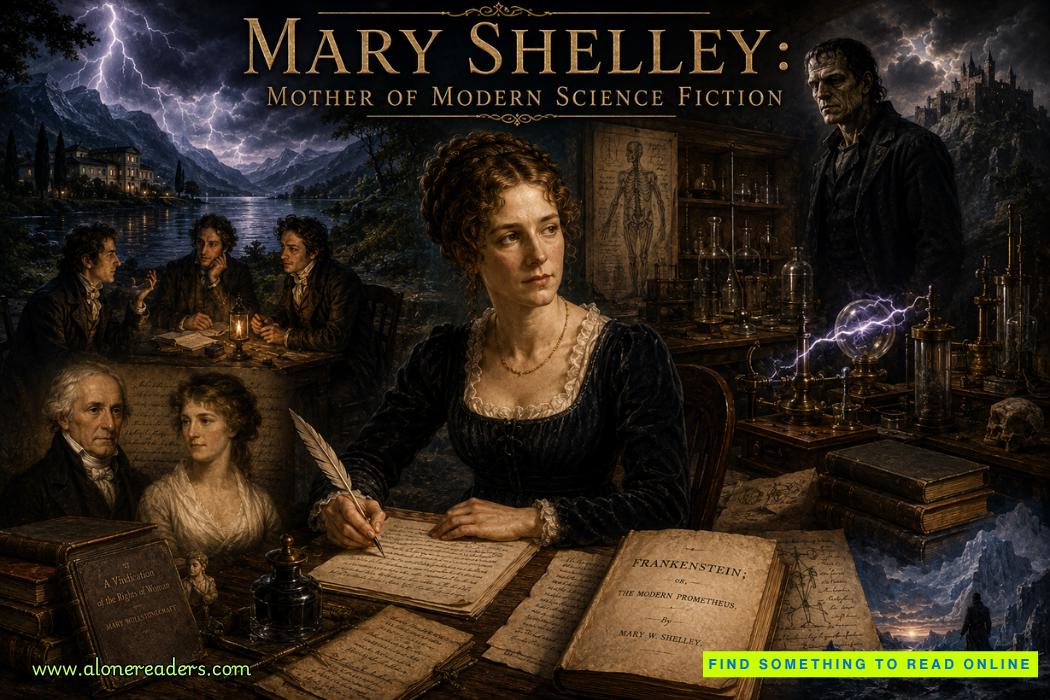
Few writers have altered the direction of literature as profoundly as Mary Shelley, and fewer still accomplished such a transformation while barely out of adolescence. When Frankenstein; or, The Modern Prometheus appeared anonymously in 1818, readers encountered something more intellectually unsettling than a conventional Gothic tale. Its central question was not simply whether the dead could be brought back to life, but what happens when human beings acquire the power to create life without possessing the wisdom to accept responsibility for what they create. That question has remained extraordinarily relevant through two centuries of scientific and technological change.
Mary Wollstonecraft Shelley was born Mary Wollstonecraft Godwin in London on 30 August 1797. Her intellectual inheritance was exceptional. Her father, William Godwin, was a prominent political philosopher and author who questioned established institutions and emphasized reason and individual judgment. Her mother, Mary Wollstonecraft, had written A Vindication of the Rights of Woman, one of the foundational works in the history of feminist political thought. Wollstonecraft died from complications following childbirth only days after Mary's birth, meaning Mary grew up knowing her mother largely through her writings and reputation.
Godwin's household nevertheless provided an extraordinary intellectual environment. Writers, philosophers, scientists, political thinkers, and reformers passed through his circle. Mary received less formal education than a boy of comparable intellectual background might have received, but she read extensively and absorbed history, philosophy, literature, politics, and contemporary debates. She grew up surrounded by the radical proposition that established assumptions could be questioned, an attitude that later became fundamental to Frankenstein.
Her life changed dramatically after meeting the young poet Percy Bysshe Shelley in 1814. Shelley admired Godwin's philosophy and became a frequent visitor to the household. Mary and Percy fell in love despite Percy already being married. They left England together, accompanied for part of their journey by Mary's stepsister Claire Clairmont. Their relationship brought Mary intellectual companionship and literary stimulation, but also financial instability, social condemnation, bereavement, and personal upheaval.
These experiences matter when interpreting Mary's fiction. Her life repeatedly confronted her with birth, death, abandonment, parenthood, and loss. Her first child, born prematurely in 1815, survived only a short time. Several of her children later died young. Although it would be simplistic to reduce Frankenstein to autobiography, Mary's intense experiences surrounding motherhood and mortality gave extraordinary emotional force to a novel obsessed with creation and its consequences.
The decisive moment came during the famous “Year Without a Summer” in 1816. Mary and Percy travelled to Switzerland, where they spent time near Lake Geneva with Lord Byron and Byron's physician, John Polidori. The weather was unusually cold, dark, and rainy, partly because the enormous 1815 eruption of Mount Tambora in Indonesia had injected material into the atmosphere and disrupted global climate patterns.
Confined indoors by bad weather, the group read supernatural stories and discussed philosophy, literature, and contemporary science. Byron proposed that each person write a ghost story. Mary initially struggled to find an idea powerful enough to satisfy her imagination.
Their conversations included speculation about the principle of life and experiments involving electricity and biological tissue. European scientists had already demonstrated that electrical stimulation could make dead animal muscles contract. The work associated with Luigi Galvani had generated widespread discussion about electricity's relationship to living organisms. Galvani's nephew Giovanni Aldini later performed dramatic electrical demonstrations on animal and human corpses. Mary did not simply convert one particular experiment into fiction; rather, she wrote within an intellectual culture increasingly fascinated by whether science might penetrate mysteries previously attributed to divine or supernatural forces.
Then came the image that transformed literary history. Mary later described imagining a “pale student of unhallowed arts” kneeling beside the thing he had assembled. The creature showed signs of life. The creator, horrified by his achievement, recoiled from what he had made.
That reversal was crucial. The frightening element was not merely that a creature had been created. It was that Victor Frankenstein succeeded.
Mary developed this nightmare into a novel, initially encouraged by Percy Shelley. Frankenstein; or, The Modern Prometheus was published anonymously in January 1818, when Mary was twenty years old. Because the first edition did not identify its author and Percy wrote its preface, some readers initially assumed that Percy Shelley had written it. Mary's name appeared on the second edition in 1823.
The novel is considerably more sophisticated than many later popular adaptations suggest. Victor Frankenstein is a brilliant young student fascinated by natural philosophy and the mechanisms of life. He discovers a method for animating lifeless matter and constructs a living being from collected anatomical materials. Yet immediately after accomplishing what should be his greatest triumph, Victor is overwhelmed by horror and abandons his creation.
This abandonment is the moral center of the novel.
Mary's Creature is not originally the speechless, lumbering monster familiar from some twentieth-century films. He learns language, reads literature, observes human relationships, develops moral awareness, and desperately seeks companionship. His encounters with humanity repeatedly end in rejection because of his appearance. Gradually, loneliness and resentment turn into violence.
Mary therefore complicates the distinction between creator and monster. Victor violates natural boundaries through ambition, but his deeper failure is his refusal to care for the being whose existence he caused. The Creature commits terrible acts, yet Mary forces readers to confront the circumstances through which hatred develops. The novel asks whether monstrosity is created biologically or socially—and whether a creator can escape responsibility for the consequences of creation.
This is one reason Frankenstein is frequently described as a foundational work of modern science fiction. Earlier literature certainly contained imaginary journeys, speculative societies, mechanical beings, supernatural transformations, and fantastical inventions. What distinguished Mary's approach was the relationship between scientific possibility and speculative consequence. Victor does not summon a demon through magic. He studies nature, experiments, develops knowledge, and uses that knowledge to achieve something beyond existing scientific capabilities.
Mary then asks what such an achievement would mean.
That structure became fundamental to later science fiction. The genre repeatedly begins with a technological or scientific possibility—artificial intelligence, genetic engineering, robotics, space travel, cloning, nuclear power, cybernetics—and explores how it might transform individuals and societies. Frankenstein established one of the genre's most enduring patterns: “We can do this—but should we?”
The subtitle, The Modern Prometheus, reinforces this theme. In Greek mythology, Prometheus is associated with stealing fire from the gods and giving it to humanity. Fire represents knowledge and technological power, but transgressive knowledge carries consequences. Victor becomes a modern Prometheus because he seizes a power traditionally belonging to nature or God: the creation of life.
Yet Mary was not simply writing an anti-science warning. Victor's catastrophe arises partly from scientific ambition divorced from ethical responsibility. He becomes obsessed, isolates himself, ignores relationships, conceals his actions, and refuses responsibility after his experiment succeeds. The problem is therefore not knowledge alone but knowledge pursued without sufficient moral consideration.
Mary revised Frankenstein substantially for its 1831 edition, adding and modifying passages and providing an introduction explaining the circumstances surrounding the novel's creation. The 1818 and 1831 versions consequently offer scholars important differences in tone, characterization, destiny, and personal responsibility. Both demonstrate that Frankenstein was not an accidental achievement by an inexperienced teenager but a sophisticated work that Mary continued to reconsider.
Her career also extended far beyond her most famous novel. Mary wrote historical fiction, apocalyptic fiction, travel writing, biographies, essays, and other novels. The Last Man, published in 1826, is particularly striking from a modern perspective. Set in the twenty-first century, it portrays civilization devastated by a global plague. Its combination of speculative futurism, catastrophe, political decline, isolation, and human vulnerability has made it increasingly significant in discussions of early science fiction.
Her personal life remained marked by tragedy. Percy Bysshe Shelley drowned in 1822 after his sailing boat sank off the Italian coast. Mary, still only twenty-four, was left a widow with their surviving son, Percy Florence Shelley. She returned to England and supported herself substantially through writing and editorial work.
Mary also played a decisive role in preserving Percy Shelley's literary reputation. She edited and promoted his poetry at a time when his standing was far less secure than it later became. Yet for many years this work, together with her identity as the daughter of Wollstonecraft and Godwin and widow of Percy Shelley, contributed to Mary being viewed through the achievements of people surrounding her rather than entirely on her own terms.
Modern scholarship has transformed that assessment. Mary Shelley is now recognized as an important intellectual and literary figure whose work intersects with Romanticism, Gothic fiction, political philosophy, gender, scientific history, environmental thought, and speculative literature. Her writing reflected both the revolutionary ideals she inherited and her growing skepticism about humanity's ability to control the consequences of radical change.
Mary died in London on 1 February 1851, aged fifty-three. She could not have witnessed the extraordinary cultural afterlife awaiting her creation. Frankenstein migrated from the novel into theatre almost immediately and later into cinema, television, comics, popular art, advertising, and countless reinterpretations. Ironically, popular culture eventually began using “Frankenstein” as a name for the Creature, although in Mary's novel Frankenstein is the creator.
More importantly, the underlying idea survived every adaptation. Whenever society debates whether scientists should clone organisms, modify human embryos, build autonomous artificial intelligence, engineer new forms of life, or develop technologies whose consequences cannot be fully predicted, Mary Shelley's central dilemma returns.
Her achievement becomes even more remarkable when placed within the restrictions facing women writers in the early nineteenth century. She entered a literary culture in which intellectual authority was overwhelmingly associated with men, yet produced a novel about science, philosophy, education, political responsibility, human psychology, and the limits of knowledge that has survived for more than two hundred years.
Mary Shelley did more than invent a memorable monster. She transformed the ancient fear of forbidden knowledge into a distinctly modern anxiety about technological power. She understood that humanity's greatest danger might not come from failing to master nature, but from mastering it before learning how to manage the consequences.
That is why calling Mary Shelley the “Mother of Modern Science Fiction” is more than an honorary label. Frankenstein helped establish one of speculative fiction's defining purposes: taking an emerging possibility seriously and following its human consequences beyond the laboratory. From artificial intelligence and genetic engineering to robotics and synthetic biology, the technologies have changed, but Mary's question remains hauntingly intact: when human beings acquire the power to create something unprecedented, who becomes responsible for what happens next?

 The Hundred Days Offensive: How the Allies Defeated Germany in World War I
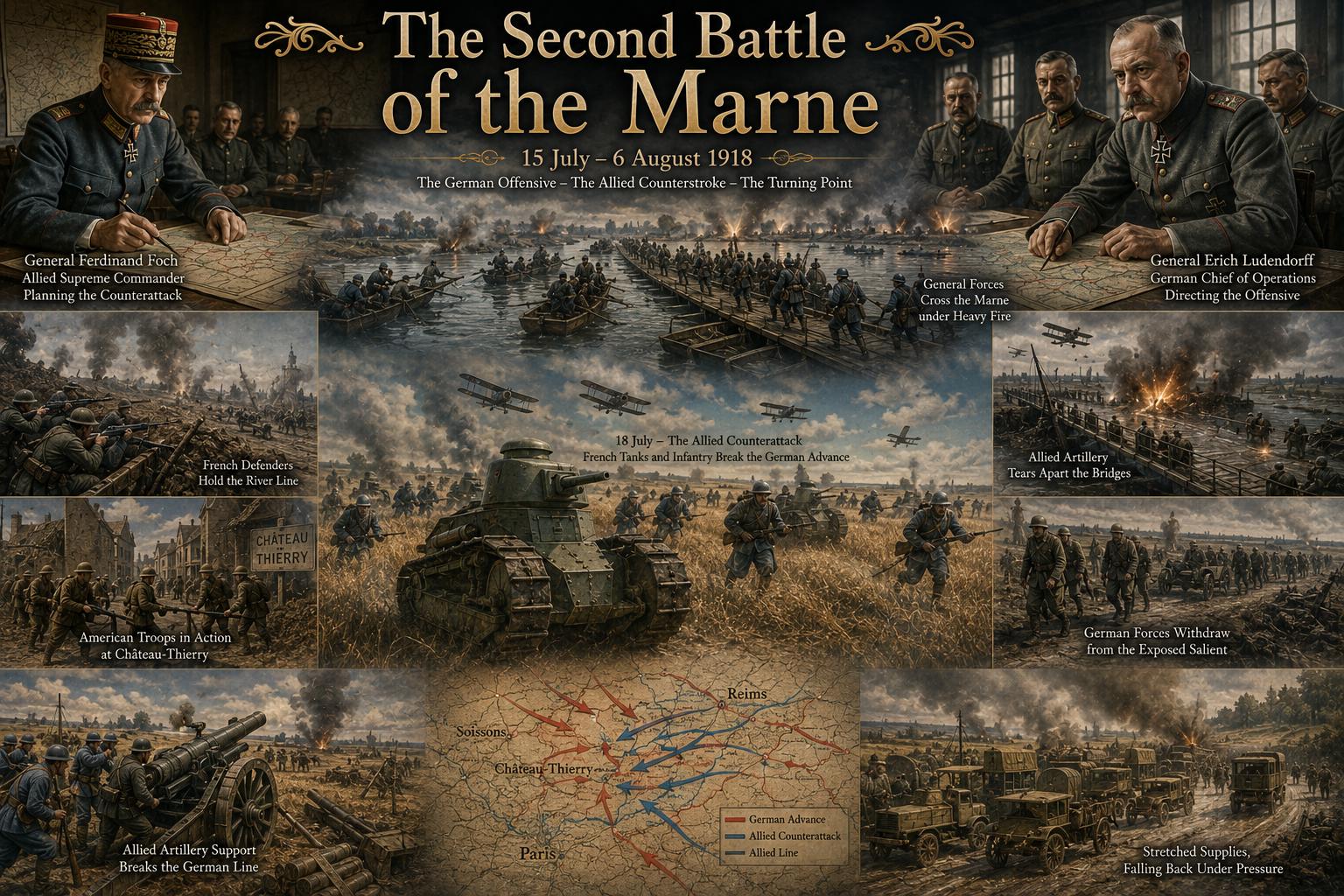 The Second Battle of the Marne: The Turning Point of World War I in 1918
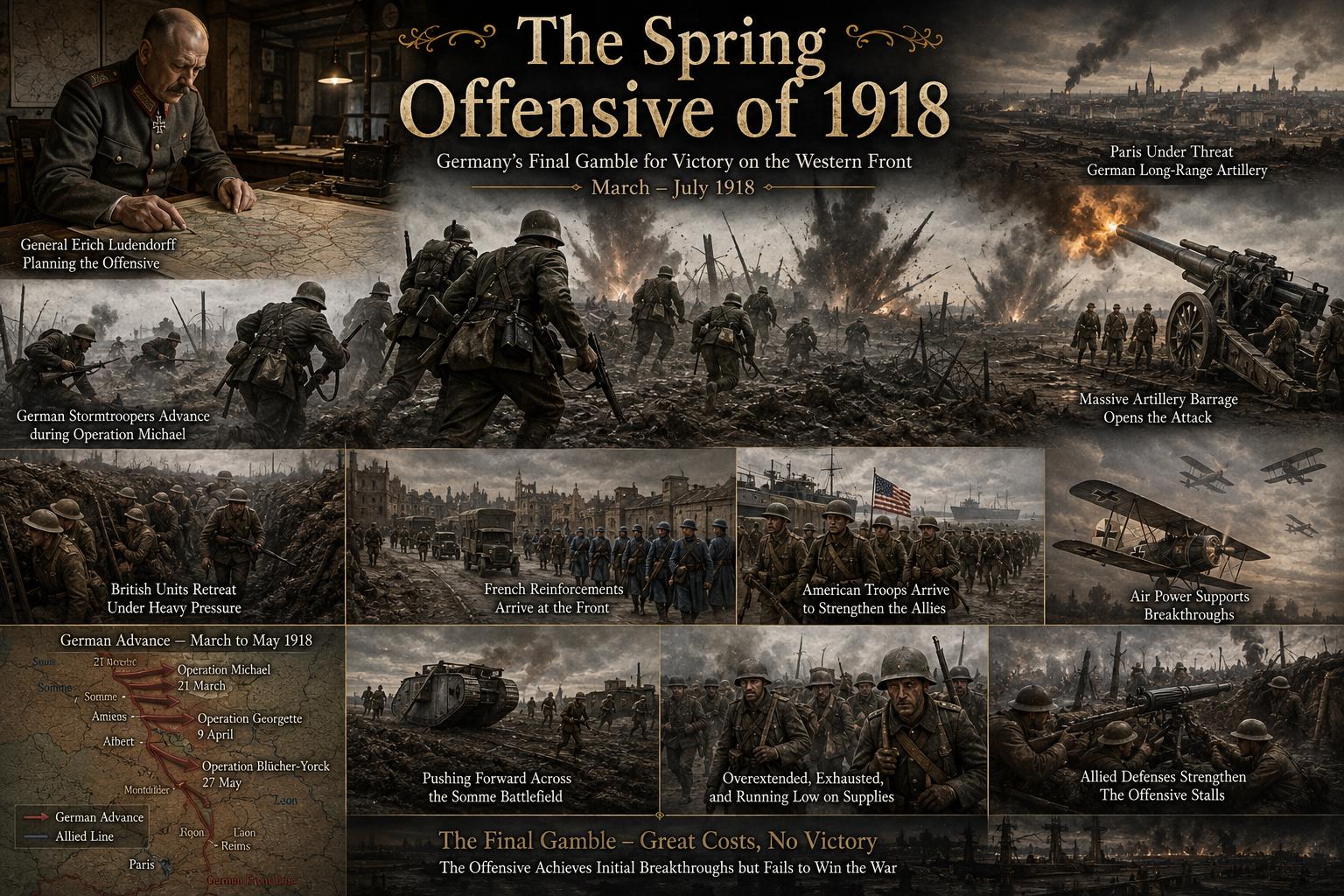 The Spring Offensive of 1918: Germany's Final Gamble to Win World War I
 The Treaty of Brest-Litovsk: How Russia Left World War I
 The Russian Revolution and World War I: How War Brought Down the Tsar
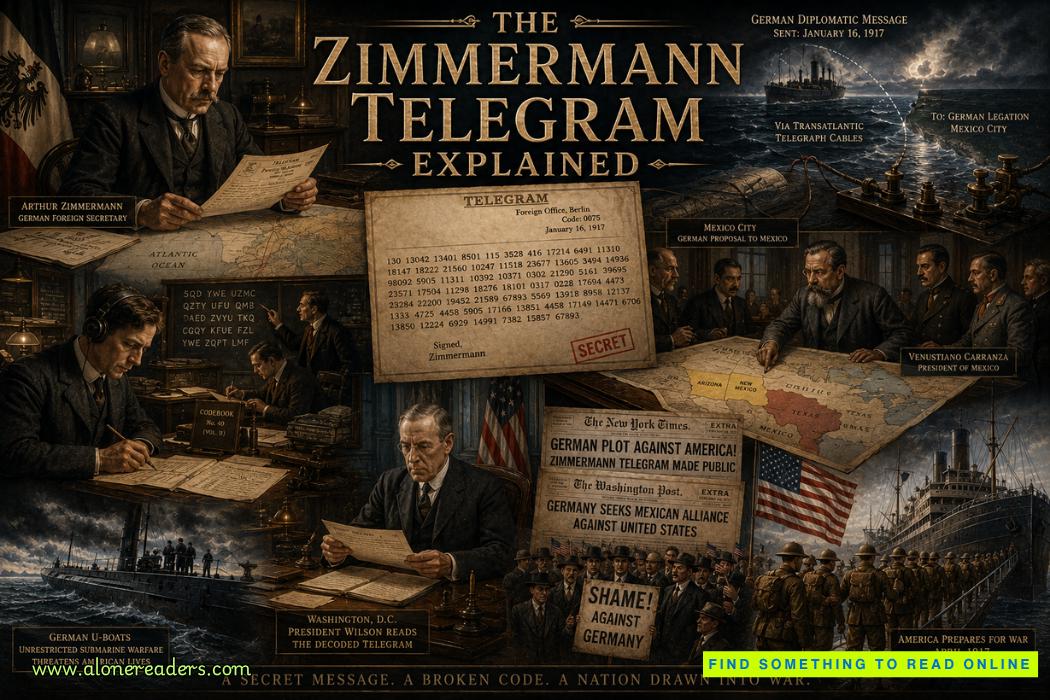 The Zimmermann Telegram Explained: Germany's Secret Offer to Mexico in World War I