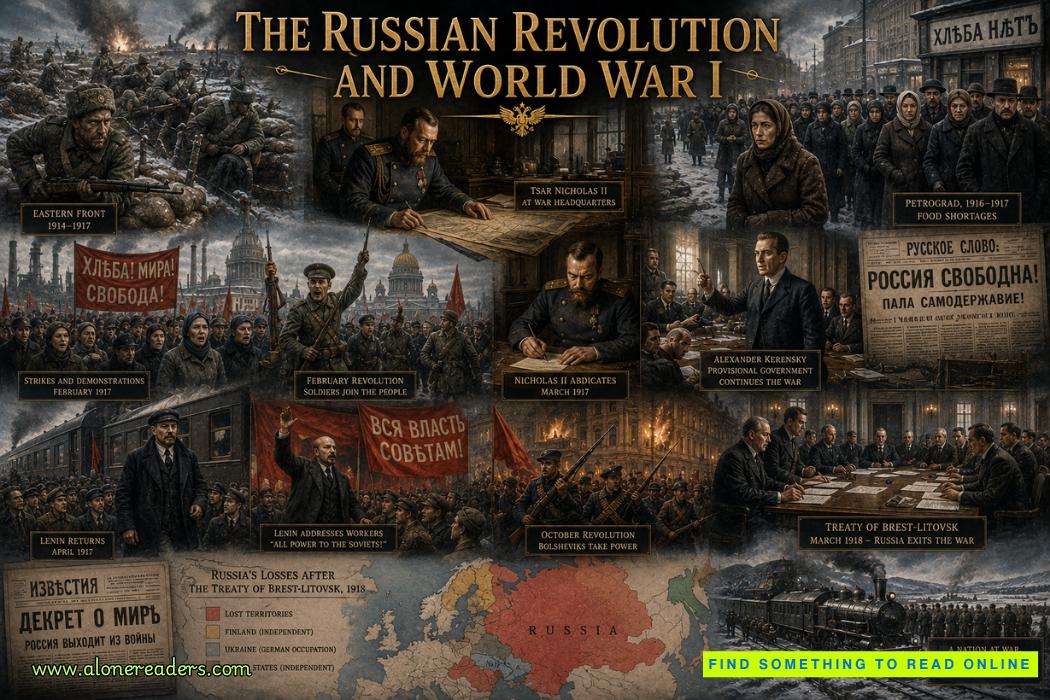
The Russian Revolution of 1917 and World War I were inseparably connected. Russia entered the conflict in August 1914 as one of Europe's great imperial powers, ruled by Tsar Nicholas II and possessing one of the largest armies in the world. Less than four years later, the Romanov monarchy had disappeared, the Bolsheviks controlled the government, Russia had withdrawn from the war, and the country was descending into civil conflict. The revolution did not result from World War I alone. Russia already suffered from deep political, economic, agricultural, and social problems before 1914. Yet the pressures created by modern industrial warfare magnified virtually every weakness of the imperial system. Military defeats, enormous casualties, food shortages, inflation, transportation failures, political incompetence, and collapsing confidence in the monarchy transformed a troubled empire into a revolutionary state.
Imperial Russia entered World War I after the crisis triggered by the assassination of Archduke Franz Ferdinand. When Austria-Hungary moved against Serbia in July 1914, Russia supported Serbia and mobilized its enormous army. Germany responded by declaring war on Russia on 1 August 1914. Within days, the European alliance system had transformed the Balkan crisis into a continental war.
Initially, the conflict generated widespread patriotic enthusiasm inside Russia. Political disagreements temporarily diminished, crowds supported the monarchy, and even the German-sounding imperial capital of St. Petersburg was renamed Petrograd. Many Russians believed the war would be short and victorious.
The optimism quickly disappeared.
Russia possessed enormous manpower but suffered serious weaknesses in industrial production, transportation, military administration, communications, and officer training. Mobilizing millions of men placed tremendous pressure on the railway network. Factories initially struggled to manufacture sufficient rifles, artillery shells, uniforms, boots, and other equipment.
The opening campaigns exposed these weaknesses. In August 1914, Russian armies invaded East Prussia but suffered a catastrophic defeat at the Battle of Tannenberg. General Alexander Samsonov's Second Army was effectively destroyed, and tens of thousands of Russian soldiers were captured.
Russia achieved greater success against Austria-Hungary in Galicia, but the overall military situation deteriorated dramatically during 1915. Germany and Austria-Hungary launched the Gorlice–Tarnów Offensive, breaking through Russian defenses and beginning the Great Retreat.
Russian forces abandoned Poland, Lithuania, and substantial territories farther east. Fortresses, railway equipment, industrial resources, and agricultural regions were lost. Millions of civilians became refugees as the army withdrew. Russian military casualties continued rising into the millions.
The defeats did more than weaken the army—they damaged the political legitimacy of the imperial government. A monarchy that justified its authority partly through strength and national leadership increasingly appeared incapable of protecting either its soldiers or its territory.
The crisis became even more dangerous in September 1915, when Nicholas II made one of the most consequential decisions of his reign. He removed Grand Duke Nicholas Nikolaevich as commander-in-chief and personally assumed supreme command of the Russian Army.
The decision connected the tsar directly with military performance. Previously, Nicholas could distance himself from battlefield failures by blaming generals. Once he became commander-in-chief, every defeat, casualty list, supply failure, and retreat increasingly became associated with him personally.
Nicholas also spent long periods at military headquarters at Mogilev, leaving political affairs in Petrograd largely under the influence of Empress Alexandra.
This arrangement further damaged the monarchy because Alexandra was deeply unpopular. Her German birth generated suspicion during a war against Germany, while her relationship with the controversial mystic Grigori Rasputin created endless rumors about corruption and manipulation at court.
Rasputin had gained influence partly because Alexandra believed he could help her son, Tsarevich Alexei, who suffered from hemophilia. His apparent influence over ministerial appointments became a symbol of imperial dysfunction. Whether his actual political power matched popular perceptions mattered less than the damage done to the monarchy's reputation.
Meanwhile, conditions behind the front were deteriorating rapidly.
Russia remained a major agricultural producer, but the war disrupted the mechanisms needed to move food from countryside to city. Millions of peasants had been mobilized into the army, reducing agricultural labor. Horses were requisitioned for military service, while railways prioritized troops, weapons, and ammunition.
The result was a paradox: Russia could produce food while its cities increasingly struggled to obtain it.
Inflation compounded the crisis. The government printed enormous quantities of money to finance the war, causing prices to rise faster than wages. Urban workers found basic necessities increasingly expensive. Long queues appeared outside bakeries and shops, especially during the harsh winter of 1916–1917.
Industrial workers also endured exhausting conditions. Factories operated intensively to supply the army, while housing remained overcrowded and wages failed to keep pace with inflation. Strikes became increasingly common.
At the front, the military situation had improved somewhat by 1916. Russian industry dramatically expanded weapons and ammunition production, while the Brusilov Offensive produced one of the Allies' greatest victories of the war. General Aleksei Brusilov's forces devastated Austria-Hungarian armies and captured large numbers of prisoners.
Yet the offensive also inflicted enormous casualties upon Russia. The army could achieve battlefield successes, but replacing experienced soldiers and officers became increasingly difficult. Millions of peasant soldiers were exhausted by years of war and increasingly questioned why they were fighting.
By early 1917, Russia was approaching political collapse.
The immediate revolutionary crisis began in Petrograd in February 1917 according to the old Russian calendar, corresponding to March under the modern Gregorian calendar. Food shortages, especially bread shortages, generated demonstrations.
On 23 February according to the Julian calendar—8 March internationally, women textile workers and other demonstrators entered the streets. The protests coincided with International Women's Day and quickly expanded. Workers from major factories joined them, demanding bread and an end to worsening economic conditions.
Within days, hundreds of thousands of people were striking.
The government attempted to restore order by deploying troops. Initially, some soldiers fired upon demonstrators. But the Petrograd garrison consisted largely of reservists who were increasingly unwilling to suppress civilians. Soldiers began refusing orders, mutinying, and joining the crowds.
Once the army in the capital stopped defending the monarchy, Nicholas II's regime had almost no effective means of survival.
Political leaders in the Duma, Russia's parliament, formed a provisional committee. At the same time, workers and soldiers established the Petrograd Soviet, creating two competing centers of authority.
Nicholas attempted to return to Petrograd, but railway disruptions prevented him from reaching the capital. Senior generals concluded that preserving the monarchy had become impossible and advised him to abdicate.
On 15 March 1917 under the Gregorian calendar, Nicholas II abdicated. His brother Grand Duke Michael declined to assume the throne without popular authorization. More than three centuries of Romanov rule had ended within days.
A Provisional Government emerged from the political crisis. Initially led by Prince Georgy Lvov and later dominated by Alexander Kerensky, it attempted to establish a more liberal and democratic political system.
Yet the new government made a critical decision: Russia would remain in World War I.
Allied governments desperately wanted Russia to continue fighting because the Eastern Front tied down large numbers of German and Austro-Hungarian troops. Russian political leaders also feared that abandoning the war would sacrifice national interests and violate commitments to Britain and France.
For millions of Russian soldiers and civilians, however, continuing the war meant continuing the suffering that had helped cause the revolution.
The Provisional Government therefore inherited the fundamental contradiction that had destroyed the monarchy. It promised political freedom and social reform while demanding that exhausted soldiers continue fighting.
The Petrograd Soviet exercised enormous influence over soldiers and workers. Its famous Order No. 1 encouraged military units in the capital to establish soldiers' committees and limited officers' authority in political matters. Discipline across the army became increasingly difficult to maintain.
Desertion accelerated. Soldiers abandoned units and returned to villages, partly because they feared missing the redistribution of land that many peasants believed was approaching.
Into this unstable environment returned Vladimir Lenin.
Lenin, leader of the Bolshevik faction of the Russian socialist movement, had spent much of the war in exile. Germany recognized that his return could destabilize Russia and therefore permitted him and other revolutionaries to travel through German territory in a sealed railway arrangement.
Lenin arrived at Petrograd's Finland Station in April 1917 and immediately rejected cooperation with the Provisional Government.
His April Theses called for an end to Russian participation in the war, transfer of power to the soviets, redistribution of land, and socialist revolution. Bolshevik slogans such as "Peace, Land, and Bread" proved increasingly powerful because they addressed the immediate concerns of soldiers, peasants, and urban workers.
The Provisional Government nevertheless attempted to restore Russia's military position.
In June 1917, Kerensky supported a major offensive against Austro-Hungarian forces, commonly called the Kerensky Offensive. Initial attacks achieved limited success, but the operation quickly collapsed as German and Austro-Hungarian counterattacks drove Russian troops backward.
The failure further destroyed army morale and damaged the government's credibility. The continuation of the war increasingly strengthened the Bolsheviks, who were among the most uncompromising advocates of immediate peace.
Political instability intensified during the summer. Armed demonstrations known as the July Days challenged the government but failed to overthrow it. Lenin temporarily fled, while several Bolshevik leaders were arrested.
Soon afterward, General Lavr Kornilov, commander-in-chief of the Russian Army, became involved in a confrontation with Kerensky. Kerensky feared that Kornilov intended to establish military dictatorship and called upon workers and socialist organizations to defend Petrograd.
The Bolsheviks gained political legitimacy from their role in resisting the perceived threat. Workers received weapons, Red Guard organizations expanded, and Bolshevik influence increased dramatically within the Petrograd and Moscow soviets.
By autumn 1917, the Provisional Government had lost much of its authority.
On the night of 6–7 November 1917 under the modern calendar, Bolshevik-led forces seized strategic locations throughout Petrograd. Red Guards and revolutionary soldiers occupied bridges, railway stations, communication centers, and government buildings.
The Winter Palace, where ministers of the Provisional Government had gathered, was captured with relatively limited resistance. Kerensky escaped, but his government collapsed.
The Bolsheviks now controlled the capital and declared that political authority had transferred to the soviets.
One of Lenin's first priorities was fulfilling the promise of peace. The new government issued the Decree on Peace and began negotiations with Germany and the other Central Powers.
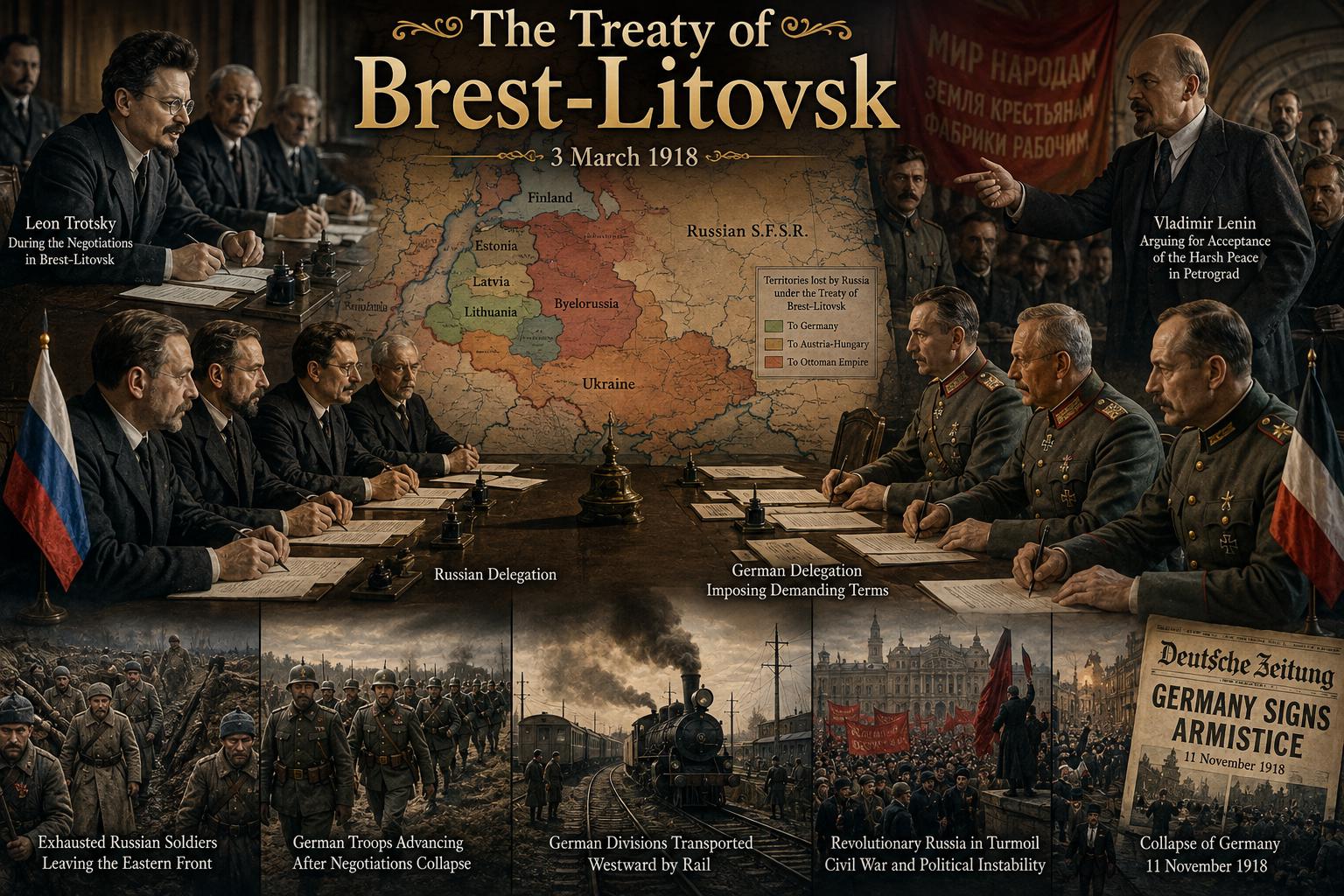
An armistice ended major fighting on the Eastern Front in December 1917. Formal peace negotiations took place at Brest-Litovsk.
Germany imposed extraordinarily severe demands. The Bolsheviks initially attempted to delay negotiations, hoping socialist revolution would spread into Germany and other European countries. When Germany resumed military operations in February 1918, Russian resistance collapsed almost immediately.
Lenin concluded that accepting harsh terms was necessary to preserve the Bolshevik government.
On 3 March 1918, Soviet Russia signed the Treaty of Brest-Litovsk.
Russia surrendered control over enormous territories, including Poland, Finland, the Baltic regions, and Ukraine under various political arrangements. These territories contained tens of millions of people and substantial portions of the former empire's agricultural and industrial resources.
Russia had escaped World War I, but at an extraordinary territorial price.
The withdrawal transformed the military balance. Germany could transfer divisions from the former Eastern Front to France, contributing to the massive Spring Offensive of 1918. German leaders hoped to defeat Britain and France before American forces arrived in overwhelming numbers.
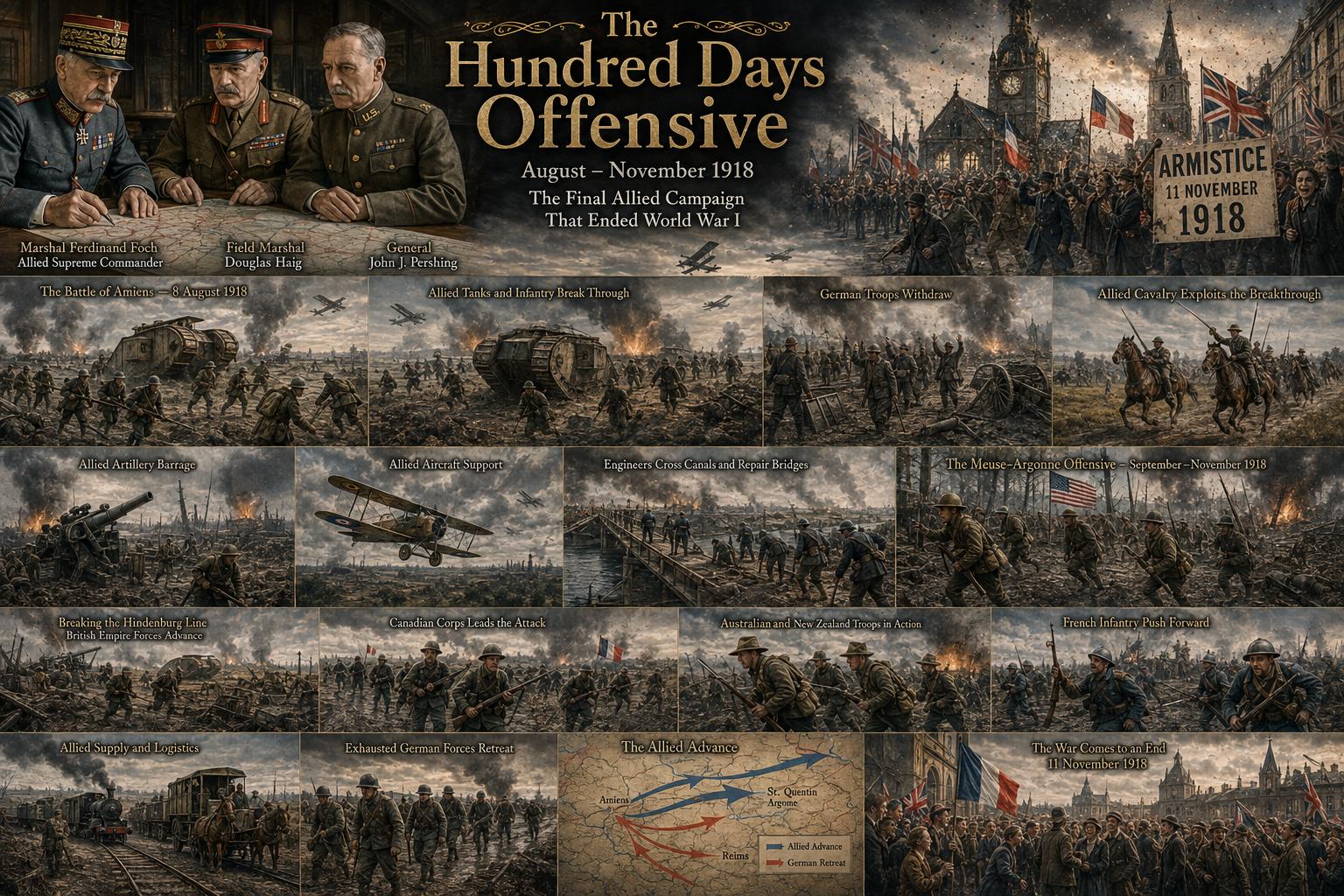
However, Germany's advantage proved temporary. Its offensives failed to achieve decisive victory, American troops entered combat in growing numbers, and Allied armies launched powerful counteroffensives. Germany ultimately accepted the Armistice in November 1918.
The Bolsheviks, meanwhile, faced an entirely different war. Russia descended into the Russian Civil War, fought among the Bolshevik Red Army, various White armies, nationalist movements, foreign intervention forces, and numerous regional groups.
Nicholas II and his family were held under Bolshevik custody. In July 1918, as anti-Bolshevik forces approached Yekaterinburg, the former tsar, Empress Alexandra, their children, and several attendants were executed.
World War I therefore did far more than remove Russia from an international conflict. It destroyed the political, economic, military, and social foundations upon which Imperial Russia depended.
The war mobilized millions of peasants, destabilized food distribution, produced inflation, overwhelmed transportation networks, exposed governmental incompetence, and weakened military discipline. Each problem reinforced the others until the monarchy could no longer command obedience.
Yet the revolution should not be interpreted simply as an automatic consequence of military defeat. Russia had experienced revolutionary unrest before the war, particularly during the Revolution of 1905. Land ownership remained deeply unequal, industrial workers faced harsh conditions, political representation remained restricted, and tensions between autocracy and demands for reform had existed for decades.
World War I acted as the accelerator rather than the sole origin of the Russian Revolution. It transformed long-standing structural problems into an immediate crisis of state survival.
The consequences extended far beyond Russia. The Bolshevik Revolution created the world's first durable communist government and eventually led to the formation of the Soviet Union in 1922. Communist ideology became a global political force, inspiring revolutionary movements while provoking intense opposition from capitalist governments.
The Russian Revolution also fundamentally altered the remainder of World War I. Germany temporarily escaped the danger of fighting simultaneously on two enormous land fronts, while Britain and France lost a major ally. Yet American intervention and Germany's growing exhaustion ultimately prevented Berlin from exploiting Russia's collapse decisively.
Ultimately, the Russian Revolution and World War I formed one of the most consequential chains of cause and effect in modern history. Russia entered the war hoping to defend its strategic interests and maintain its position as a European great power. Instead, prolonged industrial warfare exposed the weaknesses of the imperial system, destroyed confidence in Nicholas II, radicalized soldiers and workers, and created the conditions in which the Bolsheviks could seize power. The result was not merely Russia's withdrawal from World War I. The war helped destroy the Russian Empire, create the world's first communist state, and reshape global politics for the remainder of the twentieth century.

 The Hundred Days Offensive: How the Allies Defeated Germany in World War I
 The Second Battle of the Marne: The Turning Point of World War I in 1918
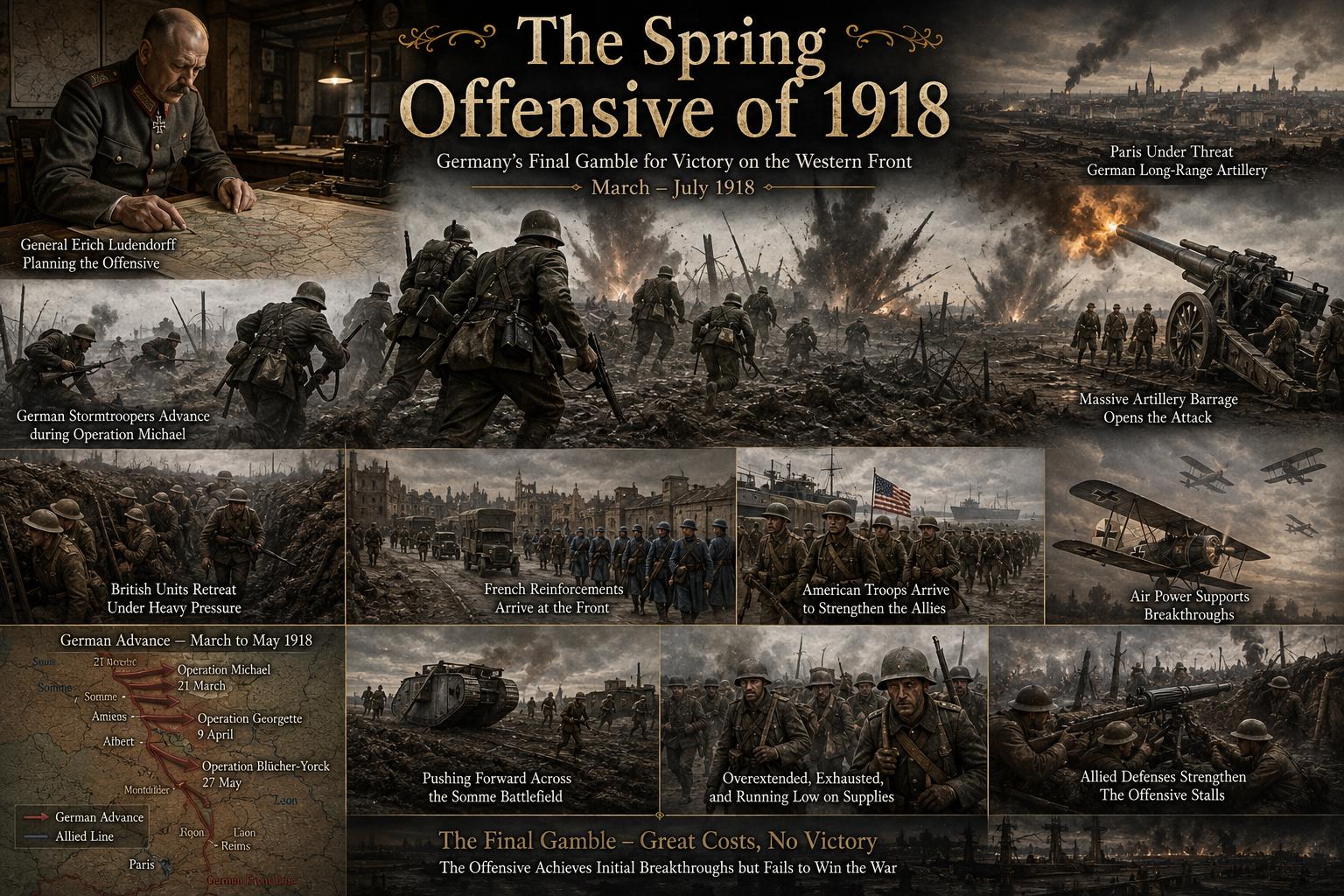 The Spring Offensive of 1918: Germany's Final Gamble to Win World War I
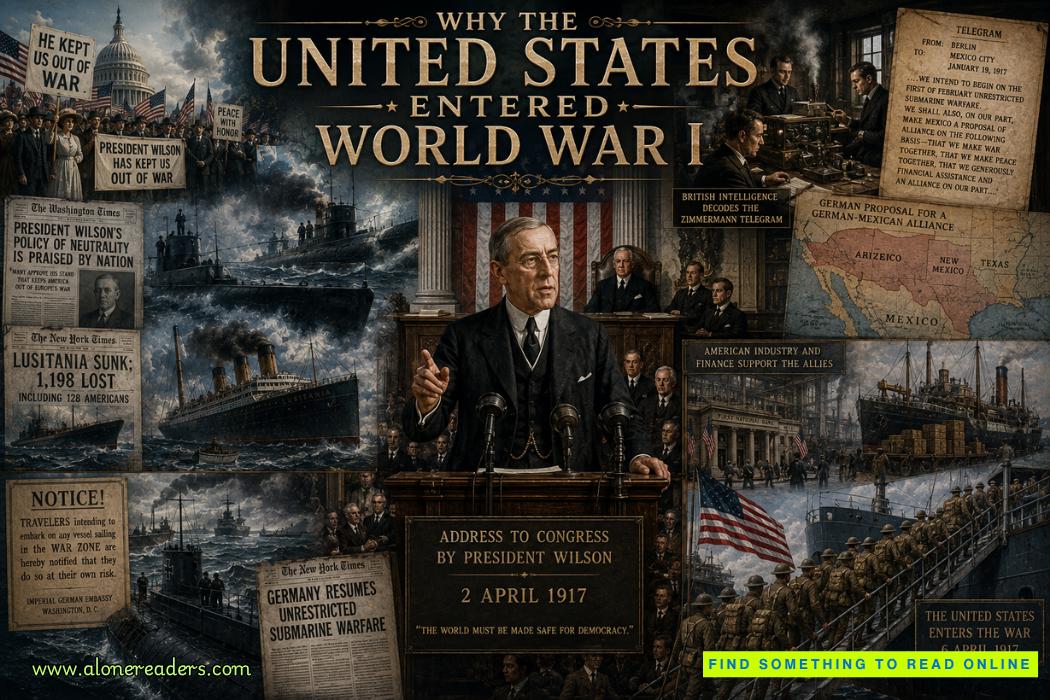 Why the United States Entered World War I: From Neutrality to War in 1917