When World War I began in Europe in August 1914, the United States had little desire to become involved. President Woodrow Wilson declared American neutrality and urged citizens to remain impartial not only in action but also in thought. The war appeared to many Americans to be a catastrophic European struggle rooted in alliances, imperial rivalry, militarism, and nationalist disputes that had little direct connection to the United States. Less than three years later, however, Wilson appeared before Congress and requested a declaration of war against Germany. On 6 April 1917, the United States officially entered World War I. The transformation was not caused by one event. America entered the war because repeated German submarine attacks, the Zimmermann Telegram, expanding economic connections with the Allies, concerns about neutral rights, and changing strategic calculations gradually made continued neutrality impossible.
American neutrality initially reflected both tradition and domestic political reality. Since the country's founding, many Americans had been suspicious of permanent involvement in European conflicts. The Atlantic Ocean appeared to provide geographical separation from the continent's rivalries, while the United States concentrated increasingly upon its own economic development and influence in the Western Hemisphere.
American society was also ethnically diverse. Millions of citizens had family or cultural connections with the countries fighting in Europe. German Americans formed one of the country's largest ethnic communities, while Irish Americans often distrusted Britain because of Ireland's political situation. Other Americans had connections with Britain, France, Russia, Italy, Austria-Hungary, and the nations of eastern Europe. Choosing one side risked creating serious divisions within the United States itself.
Wilson therefore declared neutrality on 4 August 1914. His administration attempted to preserve American commercial rights while avoiding direct military involvement. Neutrality, however, became increasingly difficult because Britain and Germany fought an economic war across the Atlantic.
Britain possessed the world's dominant navy and established a blockade intended to restrict supplies reaching Germany. The Royal Navy intercepted neutral merchant vessels and expanded the definition of goods considered contraband. American businesses protested because the blockade interfered with neutral trade. Washington repeatedly challenged British practices diplomatically, but Britain usually seized cargo rather than deliberately destroying American ships and killing their crews.
Germany faced a different problem. Unable to challenge the Royal Navy successfully through conventional surface warfare, it increasingly relied upon U-boats to attack shipping approaching Britain. Submarines could operate secretly and threaten the merchant vessels upon which Britain's economy depended. Yet their use created a fundamental conflict with traditional maritime law.
Under established prize rules, a warship normally stopped a merchant vessel, inspected it, and provided for the safety of passengers and crew before sinking it under permitted circumstances. For submarines, following these procedures could be suicidal. Once surfaced, a U-boat became vulnerable to armed merchant vessels, destroyers, or ships attempting to ram it.
Germany therefore moved increasingly toward submarine attacks without warning. In February 1915, it declared waters surrounding Britain a war zone. This decision brought German naval strategy directly into conflict with American demands for freedom of the seas and protection of neutral citizens.
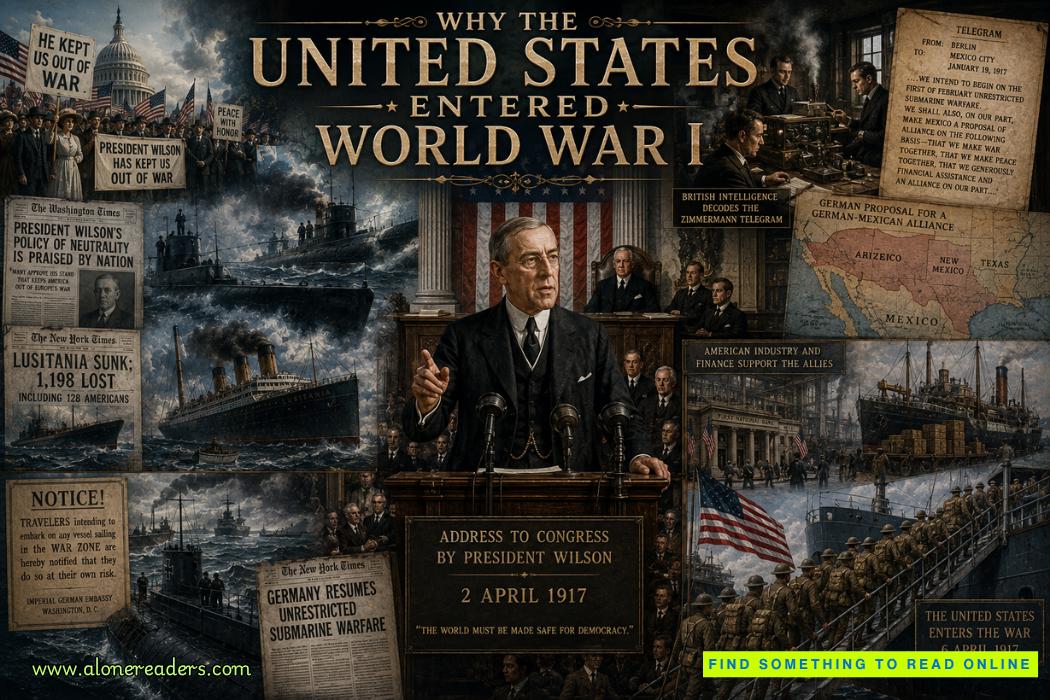
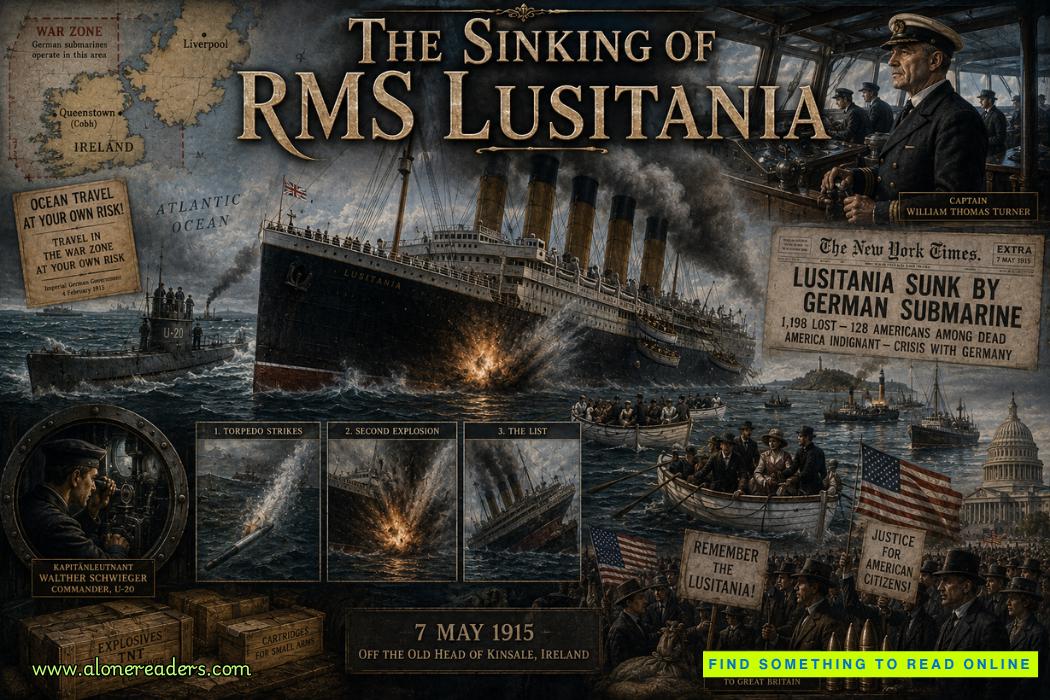
The most famous crisis occurred on 7 May 1915, when German submarine U-20 torpedoed the British passenger liner RMS Lusitania off Ireland. Nearly 1,200 people died, including 128 Americans. The ship was British and carried ammunition as part of its cargo, but the deaths of civilians without warning caused outrage throughout the United States.
The Lusitania did not immediately bring America into World War I. Wilson remained determined to avoid intervention. Instead, he sent strong diplomatic protests demanding that Germany respect American rights and civilian lives. His restraint attracted criticism from interventionists but reflected the continuing strength of anti-war opinion.
Additional submarine incidents maintained pressure on German-American relations. After the passenger ship Arabic was sunk in August 1915 and the French cross-Channel vessel Sussex was torpedoed in March 1916, Washington warned that diplomatic relations could be severed unless Germany changed its policy.
Germany responded with the Sussex Pledge in May 1916. It promised not to sink passenger vessels and to protect the lives of merchant crews under certain conditions. For several months, this compromise reduced the immediate danger of American intervention.
Wilson entered the 1916 presidential election presenting himself as the leader who had maintained peace. His supporters used the slogan "He Kept Us Out of War." Wilson narrowly defeated Republican candidate Charles Evans Hughes, demonstrating that avoiding European involvement remained politically powerful.
Yet America's economic relationship with the conflict had already changed significantly. Britain and France purchased enormous quantities of American weapons, machinery, food, chemicals, and other goods. Allied governments also borrowed heavily from American financial institutions to finance these purchases.
Trade with Germany, meanwhile, declined sharply because the British blockade prevented German merchant shipping from operating freely across the Atlantic. Consequently, American economic connections became heavily tilted toward the Allies even though the United States remained formally neutral.
This economic relationship has led some interpretations to argue that the United States entered the war primarily to protect American loans and business interests. Financial considerations certainly mattered. An Allied defeat could have threatened repayment of enormous debts and disrupted American commerce. However, economics alone cannot adequately explain the timing of American intervention. The decisive political crisis emerged from Germany's submarine strategy in early 1917.
By the end of 1916, Germany faced a strategic dilemma. The war on land had become an enormous struggle of attrition. Verdun and the Somme had produced staggering casualties without decisive victory. Meanwhile, the British naval blockade was increasingly affecting German food supplies, industry, and civilian life.
German military leaders concluded that unrestricted submarine warfare offered their best opportunity to defeat Britain. Naval planners predicted that if U-boats sank merchant shipping at an enormous rate, Britain could be forced into peace within several months.
German leaders understood that unrestricted submarine warfare would probably bring the United States into the conflict. Nevertheless, they calculated that Britain would collapse before America could recruit, train, equip, and transport a major army to Europe.
Germany announced that unrestricted submarine warfare would resume on 1 February 1917. U-boats were authorized to attack ships—including neutral vessels—within designated war zones without warning.
For Wilson, this represented a fundamental challenge. Germany was effectively declaring that American citizens and vessels could not exercise what the United States regarded as legitimate neutral rights. On 3 February, Wilson broke diplomatic relations with Germany.
The situation became even more explosive because of the Zimmermann Telegram.
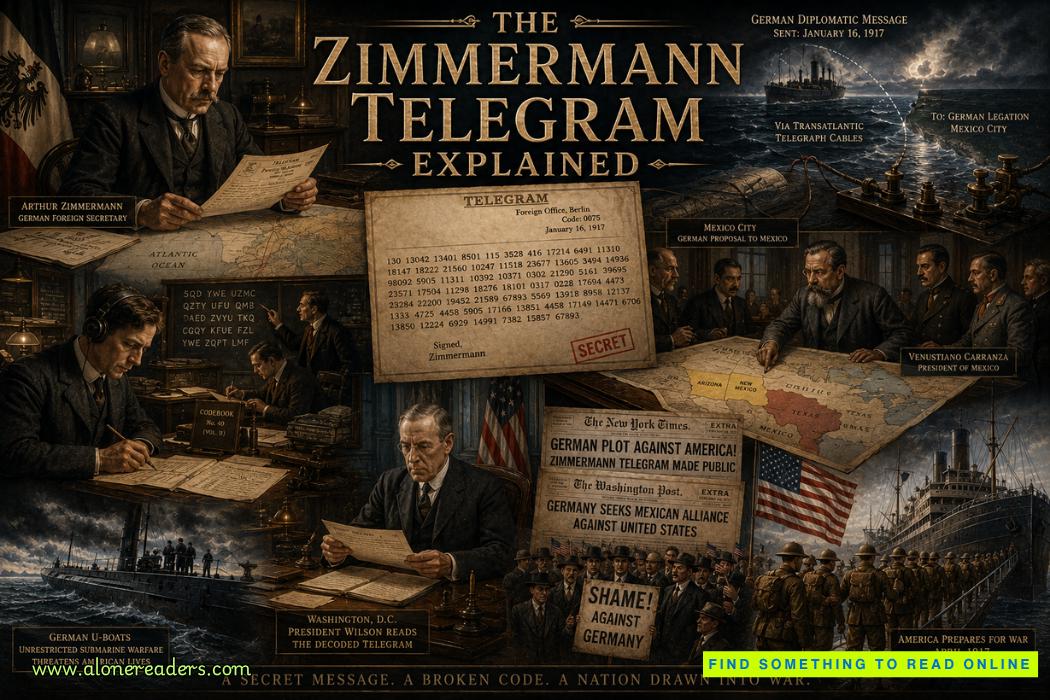
In January 1917, German Foreign Secretary Arthur Zimmermann sent a coded message to the German ambassador in Mexico. The telegram proposed that if the United States entered the war against Germany, Mexico should join Germany as an ally. Germany promised financial support and suggested that Mexico could recover territories lost to the United States during the nineteenth century—specifically Texas, New Mexico, and Arizona.
British intelligence intercepted and decoded the message. Britain faced a delicate problem: revealing it might expose its ability to read German diplomatic communications. British intelligence therefore developed a method of presenting the telegram to Washington without fully revealing its intelligence capabilities.
Wilson received the telegram in February, and its contents became public on 1 March 1917. Many Americans initially suspected that the message might be British propaganda. Zimmermann unexpectedly confirmed its authenticity, eliminating those doubts.
The telegram produced enormous outrage because it transformed the European war into an apparent threat involving American territory. Germany was not simply fighting Britain and France; it had actively proposed supporting a war against the United States on America's own southern border if American intervention occurred.
Meanwhile, German submarines began sinking American merchant ships. During March 1917, several U.S. vessels were attacked, strengthening arguments that neutrality could no longer protect American lives or commerce.
Domestic opinion began shifting. Interventionists argued that Germany had repeatedly violated American rights and demonstrated contempt for international law. Former President Theodore Roosevelt had long advocated stronger action, while newspapers increasingly demanded a response.
Wilson's thinking also contained an ideological dimension. He had initially attempted to mediate a negotiated peace and promoted the concept of "peace without victory." By spring 1917, however, he increasingly concluded that Germany's military leadership represented an obstacle to creating a stable international order.
Events inside Russia reinforced this argument. The Russian Revolution of March 1917 overthrew Tsar Nicholas II and established a provisional government. Until then, Wilson faced the uncomfortable reality that joining Britain and France would also mean allying with autocratic Imperial Russia. The fall of the tsar allowed the Allied coalition to be portrayed more plausibly as a partnership of governments fighting against militaristic autocracy.
On 2 April 1917, Wilson appeared before a joint session of Congress and requested a declaration of war against Germany. His speech framed the conflict in broad moral terms. The United States, he argued, was not entering the war for territorial conquest or material gain but to defend international rights and help establish a safer political order.
His most famous formulation declared that "the world must be made safe for democracy." The phrase became the ideological foundation of America's participation in the war.
Congress debated the request intensely. Opposition remained significant, particularly among pacifists, progressives, socialists, and politicians who believed the United States had no legitimate reason to participate in Europe's conflict. Nevertheless, the Senate approved the war resolution on 4 April, followed by the House of Representatives on 6 April.
President Wilson signed the resolution on 6 April 1917, formally placing the United States at war with Germany.
America was poorly prepared for a massive European land war. The regular U.S. Army was small compared with the enormous armies fighting in France, Germany, Austria-Hungary, and Russia. The government therefore introduced conscription through the Selective Service Act of 1917.
Millions of men registered for military service. Training camps expanded across the country, industries converted to wartime production, and federal agencies coordinated transportation, food, fuel, manufacturing, and finance on an unprecedented scale.
The American Expeditionary Forces, commanded by General John J. Pershing, began arriving in France during 1917. Pershing resisted Allied pressure to distribute American soldiers individually among British and French units. He wanted the United States to maintain a distinct national army capable of conducting independent operations.
American troops initially arrived slowly, and their immediate military impact was limited. Germany therefore still hoped to win before American manpower became decisive. After revolutionary Russia withdrew from the war, Germany transferred large numbers of divisions westward and launched the Spring Offensive of 1918.
The German attacks initially achieved major territorial gains but failed to destroy the Allied armies. By the summer of 1918, hundreds of thousands of fresh American soldiers were arriving in Europe every month. U.S. forces participated in battles including Cantigny, Château-Thierry, Belleau Wood, Saint-Mihiel, and the Meuse-Argonne Offensive.
American manpower fundamentally altered the strategic calculation. Germany had already suffered years of casualties and economic deprivation, while its opponents now possessed access to an enormous new reservoir of soldiers, industrial production, credit, food, and raw materials. The United States did not win World War I alone, but its entry made a prolonged German victory increasingly unrealistic.
American financial participation was equally important. Washington extended billions of dollars in loans to Allied governments, while American factories supplied weapons, vehicles, food, clothing, fuel, and other materials. The U.S. Navy also assisted with Atlantic convoy operations that reduced losses from German submarines.
Germany's unrestricted submarine campaign therefore failed in its fundamental objective. Britain survived the shipping crisis, Allied anti-submarine tactics improved, and the convoy system sharply reduced losses. Instead of forcing Britain from the war, the campaign helped bring the world's largest emerging industrial power into the conflict against Germany.
The reasons for American entry cannot be reduced to one event. The Lusitania shaped public opinion but occurred almost two years before the declaration of war. The Zimmermann Telegram generated outrage but was conditional upon an American-German conflict already developing. Economic interests strengthened connections with the Allies but did not automatically produce intervention.
The decisive factor was the cumulative destruction of the possibility of neutrality. Unrestricted submarine warfare directly threatened American ships and citizens, the Zimmermann Telegram suggested German willingness to encourage an attack on American territory, and broader economic and ideological interests increasingly connected the United States with an Allied victory.
Ultimately, the United States entered World War I because Germany's strategy convinced President Wilson and a majority in Congress that remaining neutral had become more dangerous than intervention. America had spent nearly three years attempting to stay outside Europe's war, but submarine attacks, diplomatic confrontation, economic realities, and fears about the future international order gradually eliminated that position. The declaration of war on 6 April 1917 transformed World War I from a predominantly European conflict into an even more global struggle. It also marked a major turning point in American history: the United States emerged from relative political isolation to become a decisive participant in European affairs and an increasingly powerful force in the international order.

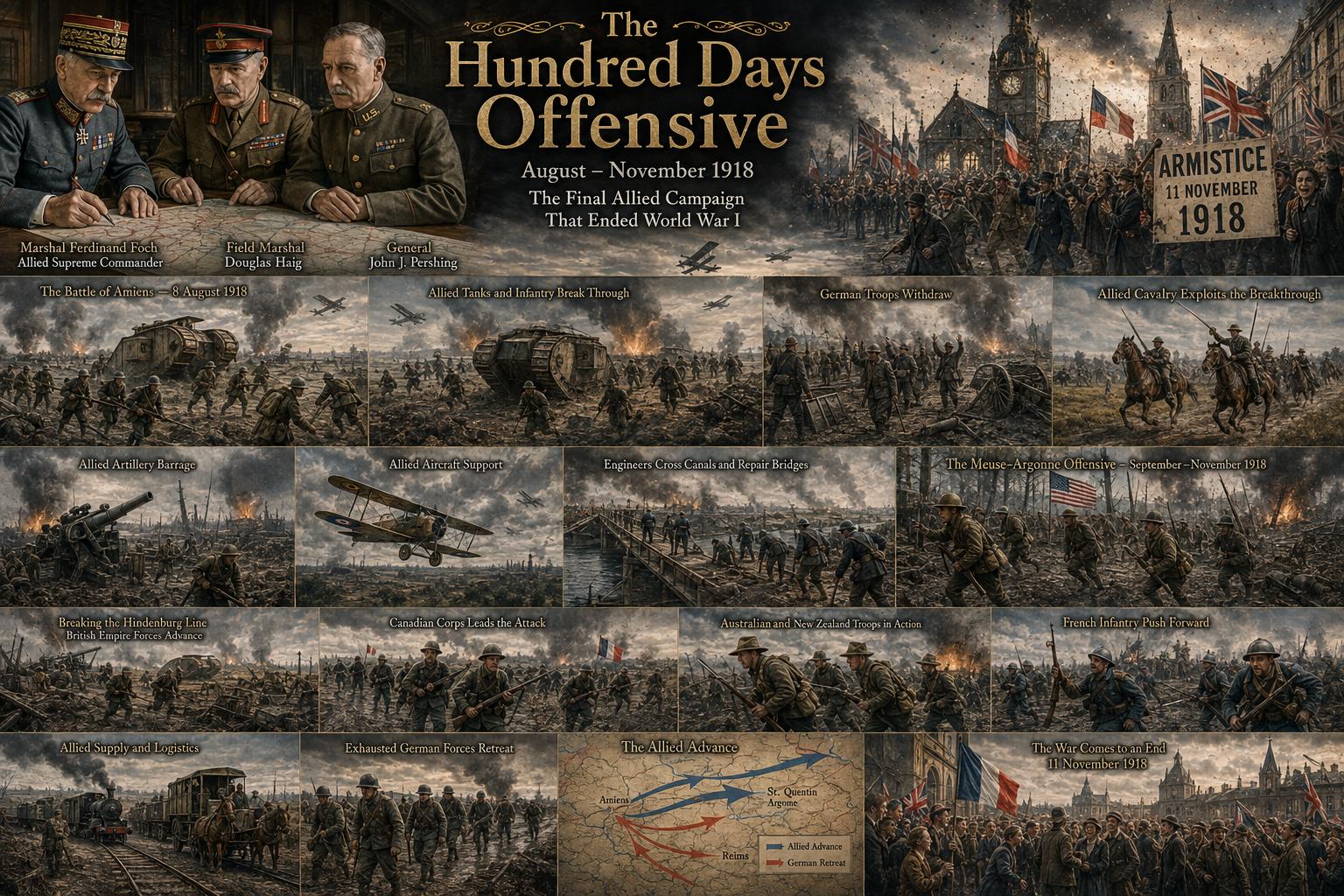 The Hundred Days Offensive: How the Allies Defeated Germany in World War I
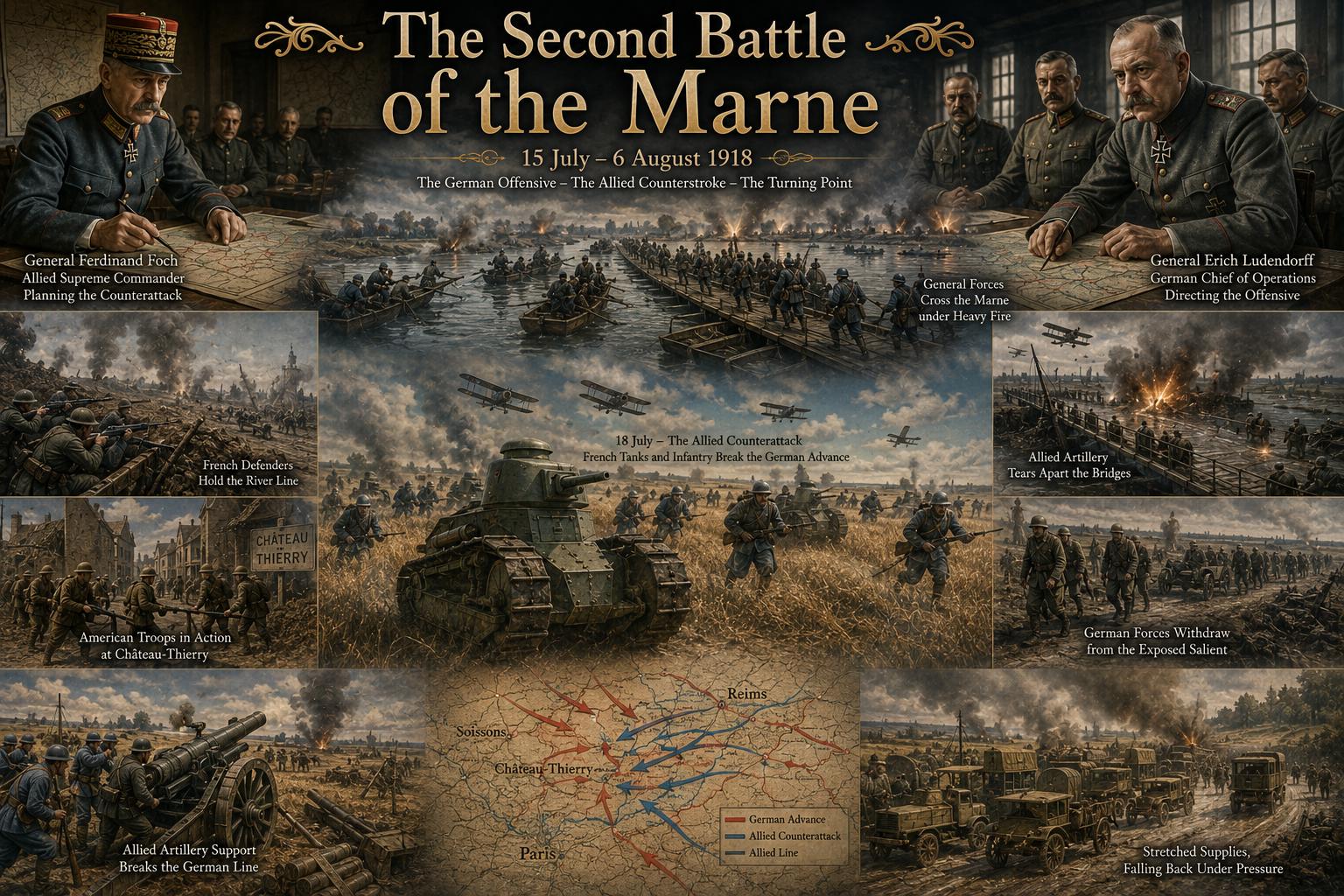 The Second Battle of the Marne: The Turning Point of World War I in 1918
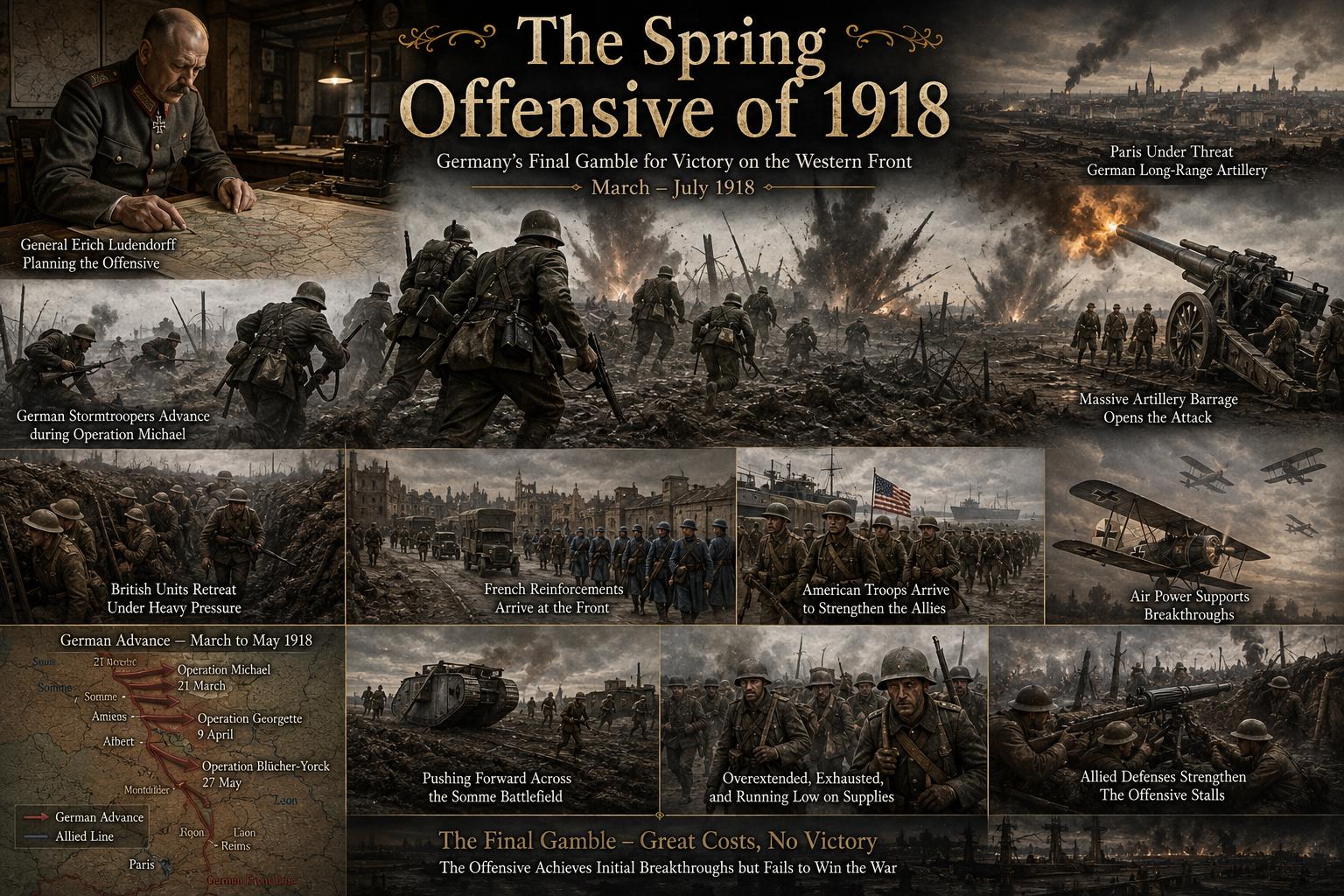 The Spring Offensive of 1918: Germany's Final Gamble to Win World War I
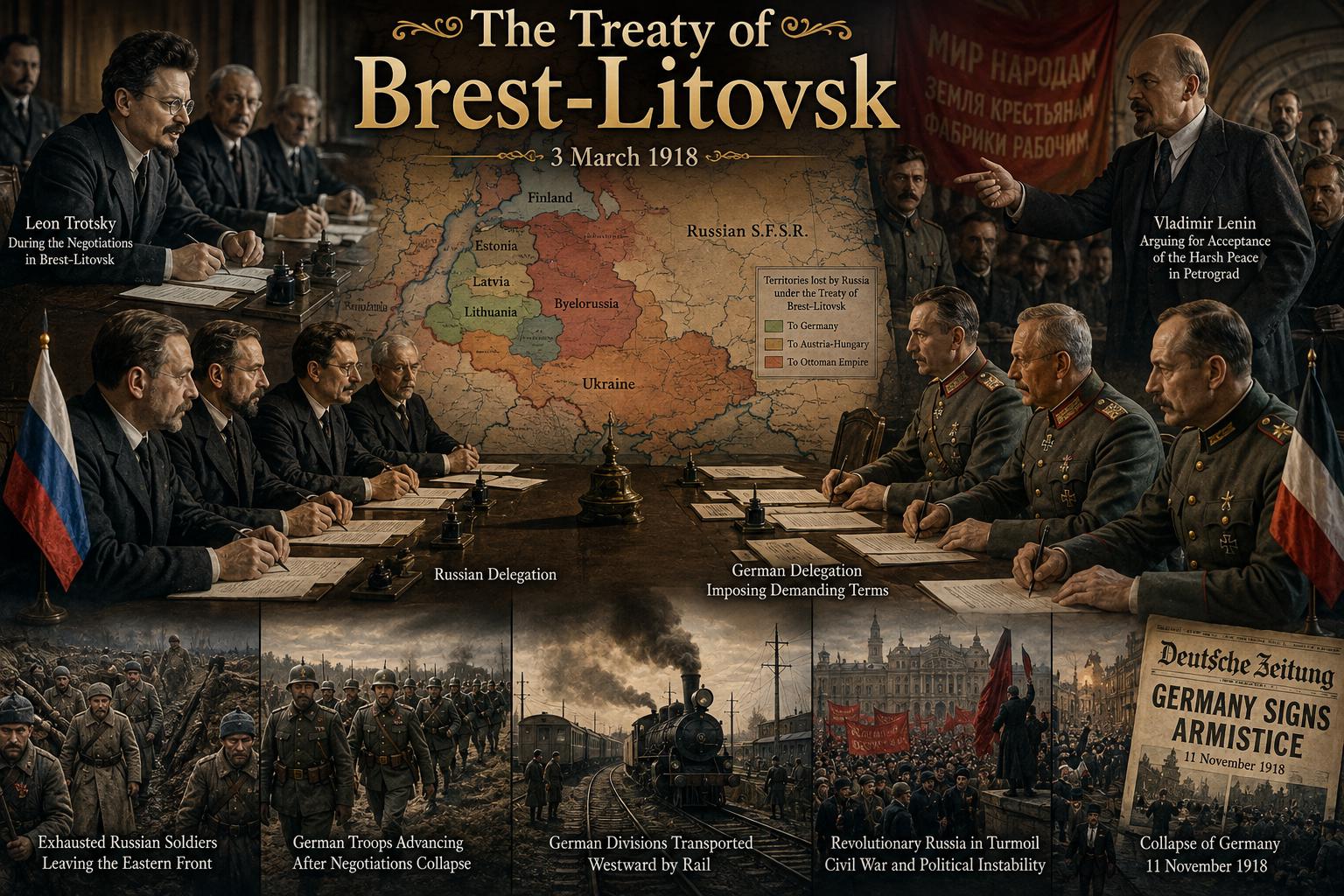 The Treaty of Brest-Litovsk: How Russia Left World War I
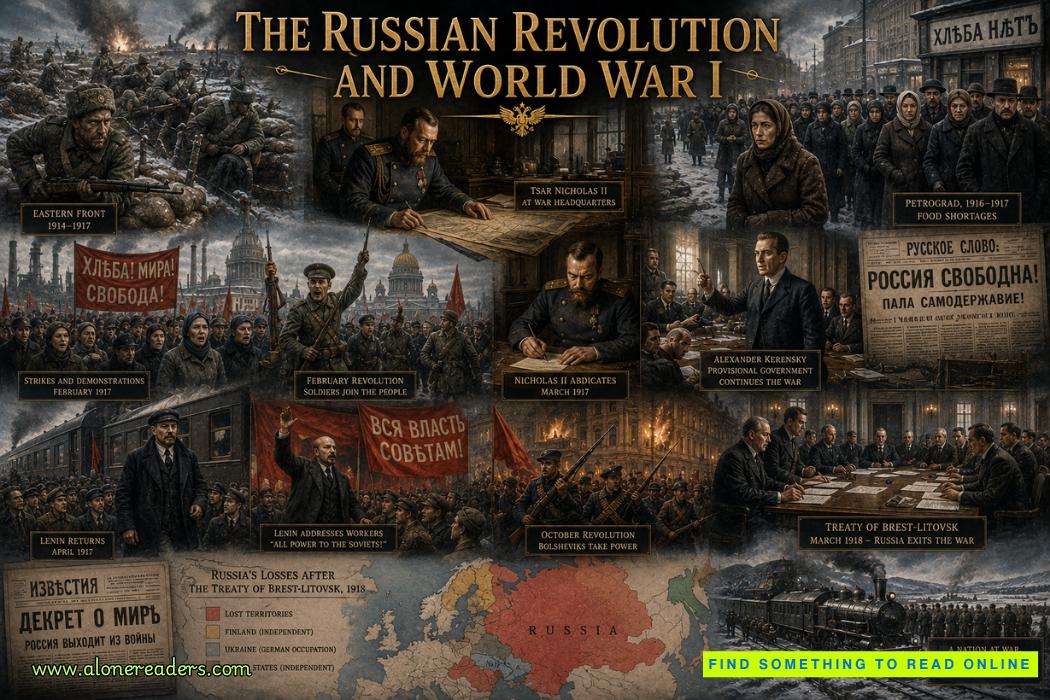 The Russian Revolution and World War I: How War Brought Down the Tsar