On the hills, river crossings, roads, and town approaches of England after 1066, a new kind of structure began to appear with remarkable speed. Timber towers rose above artificial mounds. Ditches cut through familiar landscapes. Palisades enclosed armed men, horses, stores, and administrative officers. To the inhabitants of Anglo-Saxon England, these fortifications were more than military buildings. They were visible statements that political authority had changed hands. The Norman castles erected after the Battle of Hastings helped William the Conqueror hold a kingdom won in battle, but their significance went far beyond defense. Together with the redistribution of land, the restructuring of lordship, changes within the Church, new forms of administration, and the replacement of much of the English aristocracy, they became instruments in one of the most profound social transformations in medieval English history.
Understanding this transformation requires looking beyond Hastings itself. The battle fought on 14 October 1066 did not automatically deliver England to William, Duke of Normandy. It destroyed the army of Harold Godwinson and killed the reigning English king, but William still had to convert military victory into durable political control. Castles and the system of dependent lordship commonly described as feudalism became central to that process. Historians continue to debate how revolutionary the Norman settlement actually was. Some emphasize a sharp rupture after 1066; others stress continuities in taxation, local government, agriculture, and royal administration. Both perspectives contain important truths. The Norman Conquest transformed who exercised power and how that power was physically expressed, while simultaneously preserving and adapting some of the sophisticated institutions inherited from the Anglo-Saxon kingdom.
Before the conquest, England was already one of western Europe’s most centralized monarchies. Under kings such as Cnut and later Edward the Confessor, royal government operated through shires, hundreds, royal officials, taxation, assemblies, and a network of powerful earls. Scandinavian conquest and settlement had left deep marks on northern and eastern England, while the House of Godwin had become the dominant aristocratic family during Edward’s reign. England was therefore neither politically primitive nor socially unstructured before the Normans arrived. It possessed great landed estates, dependent peasants, military obligations, royal law, and complex hierarchies of lordship.
Normandy developed under somewhat different conditions. The duchy had itself emerged from Scandinavian settlement, yet by the eleventh century its ruling elite was thoroughly integrated into the political and religious culture of Latin Christendom. Norman aristocrats were experienced castle builders, mounted warriors, estate managers, and aggressive competitors for land. Their society depended heavily on personal bonds between lords and followers, military service, and hereditary landed wealth. Norman knights fought primarily with spear and sword, protected by mail hauberks, conical helmets, and kite-shaped shields. Their battlefield strength rested partly on disciplined Norman cavalry, though infantry and archers were equally important components of William’s invasion force.
The relationship between Normandy and England had intensified during the reign of Edward the Confessor, who had spent much of his youth in Norman territory during Danish domination of England. Norman churchmen and courtiers gained influence at Edward’s court, although historians differ over whether Edward ever formally promised the English crown to William. English succession was not governed by simple primogeniture. Royal blood mattered, but so did political strength, legitimacy, and the acceptance of the leading men of the kingdom. When Edward died on 5 January 1066, the resulting Succession Crisis brought competing claims from Harold Godwinson, William of Normandy, Harald Hardrada of Norway, and, in dynastic terms, the young Edgar Ætheling.
Harold was crowned on 6 January 1066, but his kingship immediately faced military challenges. In September, Harald Hardrada and Harold’s exiled brother Tostig invaded northern England. Harold Godwinson marched rapidly north and defeated them at the Battle of Stamford Bridge on 25 September 1066. His exhausted army then had to reverse direction when William landed at Pevensey on 28 September. William established fortified bases and began devastating surrounding areas, a calculated measure that supplied his army while placing political and economic pressure on Harold.
At Hastings, Harold’s forces fought predominantly on foot. His elite huscarls, equipped with mail and formidable two-handed axes, stood alongside the broader fyrd, whose quality and equipment varied. The English occupied a defensible ridge, forming the famous shield wall. William deployed archers, infantry, and cavalry in coordinated divisions. After hours of fighting, including episodes traditionally interpreted as feigned retreats, Norman forces eventually broke the English position. Harold died, although the precise circumstances of his death remain uncertain. The Bayeux Tapestry has contributed greatly to the familiar image of an arrow striking Harold’s eye, yet interpreting that scene is complicated by alterations and ambiguities in the embroidery.
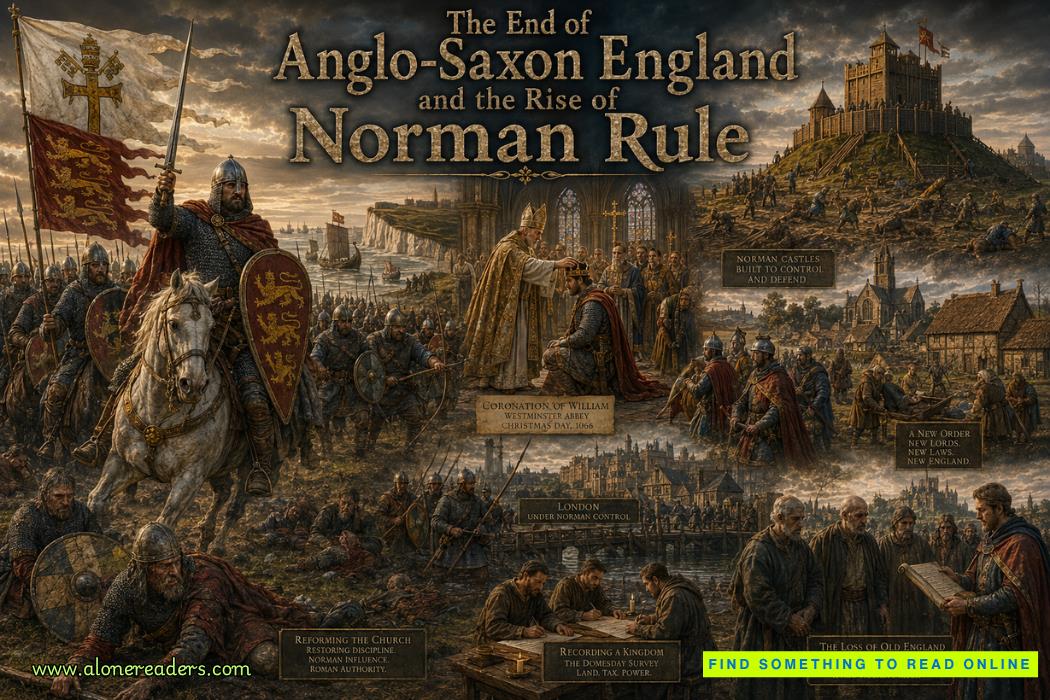
William’s victory removed his principal rival but did not eliminate resistance. London did not immediately surrender. Edgar Ætheling was briefly proclaimed king by leading English figures, while William moved methodically through southeastern England. His route combined coercion with negotiation. By controlling strategic points and demonstrating his ability to punish opposition, William persuaded key nobles and churchmen that continued resistance was unlikely to succeed. He was crowned king at Westminster Abbey on 25 December 1066.
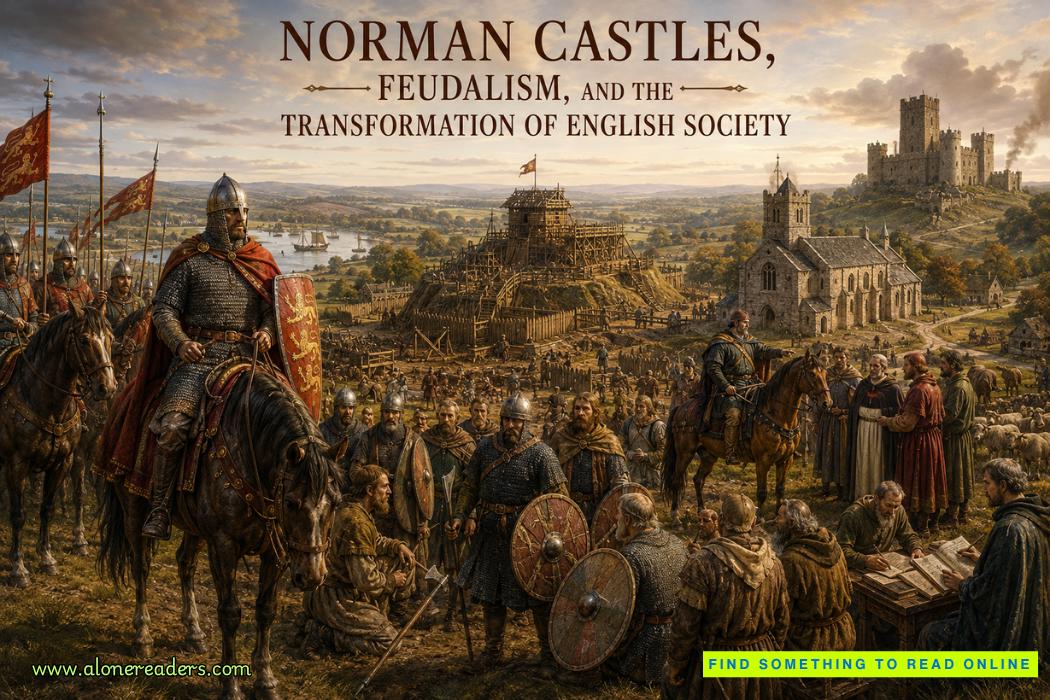
Castles now became critical. England had known fortifications before the conquest, including Roman walls, fortified towns known as burhs, and a small number of castle-like structures associated with Norman influence under Edward. What changed after 1066 was their number, distribution, ownership, and political function. William and his followers rapidly constructed fortifications at places such as Pevensey, Hastings, Dover, London, York, Lincoln, Warwick, Nottingham, and Cambridge. Many early castles were of the motte-and-bailey type: a timber tower or fortified enclosure stood on a raised mound, while an adjacent bailey contained accommodation, workshops, animals, and supplies.
Their military utility was considerable. A relatively small garrison could dominate a road, river crossing, town, or surrounding district. Yet Norman castles were equally important psychologically and administratively. They placed armed foreign lords physically above conquered communities. In towns, construction sometimes required the clearance of existing houses. In the countryside, a castle could become the center of a new lordship from which rents were collected, justice administered, troops organized, and resistance watched.
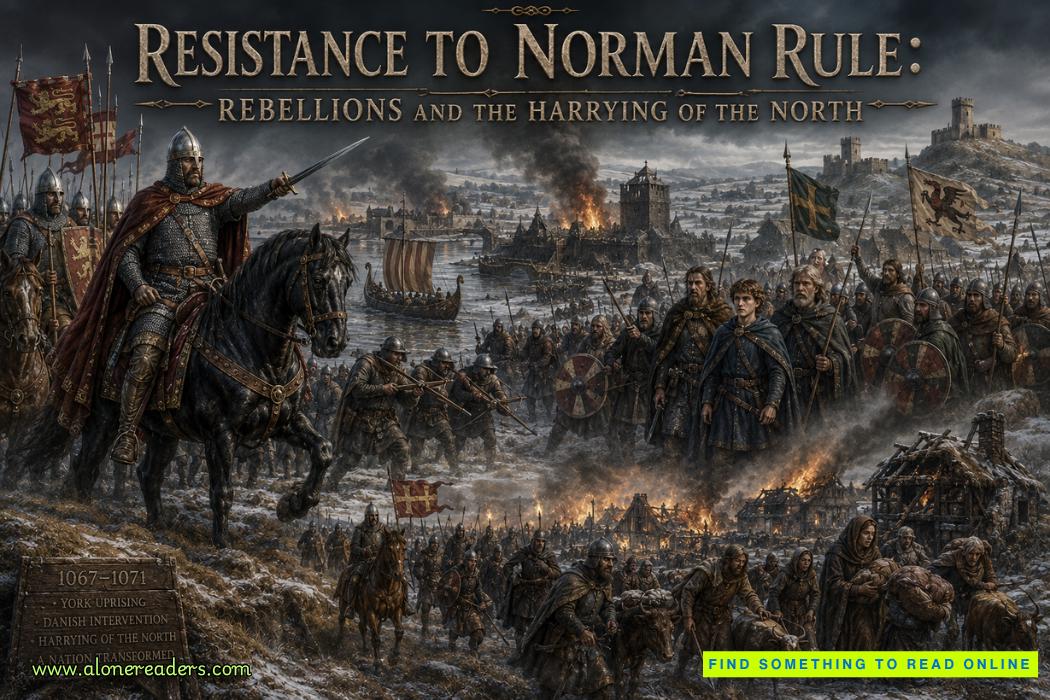
This importance became especially apparent during the rebellions of the first years of Norman rule. Resistance occurred in 1067, 1068, and 1069, particularly in the west and north. Edgar Ætheling, Anglo-Saxon nobles, local rebels, and Danish forces all threatened William’s position at different times. York became a focal point of opposition. Norman castles there were attacked, and William repeatedly returned north to restore control. His response culminated in the notorious Harrying of the North, particularly during the winter of 1069–1070. Settlements, food supplies, livestock, and agricultural resources were systematically damaged across parts of northern England.
The extent and mortality of this devastation remain subjects of historical debate. Medieval chroniclers portrayed the campaign in exceptionally severe terms, while archaeological and administrative evidence suggests that disruption varied considerably by locality. What is not seriously disputed is that William deliberately used economic destruction as a method of counterinsurgency. In a society where armies depended on local food supplies and communities were vulnerable to the loss of harvests and livestock, destroying a region’s productive capacity could make sustained resistance extraordinarily difficult.
Military control was reinforced by an even more fundamental transformation: the redistribution of landed wealth. Before 1066, the great English earls and thegns possessed enormous estates. Within a generation, most of this upper aristocracy had disappeared as a dominant landholding class. Death in battle, rebellion, confiscation, exile, and royal grants transferred vast properties into Norman hands. William retained substantial royal estates while rewarding followers who had provided ships, soldiers, money, or political support for the conquest.
The structure that emerged is commonly called feudalism, although historians use the term cautiously. Medieval England never operated according to a single neat “feudal system” described in later textbooks. Nevertheless, Norman rule intensified relationships in which landholding, political loyalty, jurisdiction, and military obligation were closely connected. William was regarded as the ultimate source of major landed tenure. Tenants-in-chief held estates from the king, and many granted portions to lesser tenants who owed various services in return.
Military service was one important component. Major lords were expected to provide knights according to obligations associated with their estates, while castles allowed those military resources to be concentrated and deployed. Yet lordship was also economic. Estates generated rents, agricultural produce, labor obligations, tolls, and other forms of income. For Norman nobles who had crossed the Channel in search of opportunity, English land represented both wealth and the foundation of political authority.
The changes did not mean that the entire English population suddenly entered an entirely new social order. Many peasants continued cultivating the same fields and living within established villages. Some Anglo-Saxon administrative institutions survived because they were useful to the conquerors. The shire and hundred remained important. The office of sheriff continued, although increasingly occupied by men loyal to the new dynasty. The pre-Conquest capacity of English kings to levy taxation was not destroyed; Norman rulers exploited it.
This combination of continuity and aristocratic revolution is one reason the conquest proved so consequential. William did not simply replace the Anglo-Saxon state with a Norman import. He captured an unusually effective kingdom and redirected its machinery toward a new ruling elite. The result was a monarchy that could combine English traditions of centralized government with Norman forms of military lordship.
Religion also legitimized and facilitated the transformation. William had obtained papal support for his invasion, symbolized in tradition by the Papal Banner carried during the campaign. After the conquest, English ecclesiastical leadership underwent major changes. Stigand, Archbishop of Canterbury, was removed in 1070, and Lanfranc, a respected Norman churchman, succeeded him. Norman bishops and abbots increasingly occupied senior positions. Cathedral and monastic architecture was transformed as enormous Romanesque churches replaced or overshadowed earlier buildings.
These reforms cannot be reduced merely to foreign occupation. They were connected to wider eleventh-century movements seeking stronger clerical discipline, institutional reform, and closer alignment with continental ecclesiastical practices. Yet the political consequences were unmistakable. Control of bishoprics and abbeys gave William access to influential institutions, land, wealth, literacy, and networks of authority. Church and monarchy reinforced one another even when disputes over jurisdiction and appointments later revealed tensions within that partnership.
The personalities of the conquest also shaped its development. William the Conqueror combined extraordinary determination with a willingness to employ calculated brutality. His leadership at Hastings demonstrated tactical adaptability, but his more enduring achievement was political. He rewarded followers without allowing any single magnate to reproduce the near-independent power once possessed by figures such as Harold Godwinson. Large estates were often geographically dispersed, making it harder for a baron to dominate one continuous principality.
Harold Godwinson, meanwhile, should not be treated simply as the defeated obstacle to Norman progress. He was an experienced military and political leader operating under exceptional pressure. His march to Stamford Bridge, rapid victory in Yorkshire, and immediate return south were remarkable logistical achievements. Historians continue to debate whether he should have delayed confronting William, strengthened London, or forced the invaders to exhaust their supplies. Yet delay also carried risks. William was ravaging Harold’s own power base in Sussex, and allowing a foreign army to consolidate its position could undermine a newly crowned king’s credibility.
By the later years of William’s reign, the new order had become deeply entrenched. The clearest administrative monument to that consolidation was the Domesday Book, commissioned after William’s Christmas court at Gloucester in 1085 and largely completed in 1086. Royal investigators gathered information about landholders, estates, agricultural resources, values, tenants, livestock, and taxable capacity across most of England. Domesday was not a modern census, nor was its sole purpose taxation, but it revealed the extraordinary reach of Norman royal government.
Its pages also expose the social consequences of conquest. They preserve evidence of the dramatic shift from English to Norman landholding and of regional devastation, particularly in areas affected by rebellion and war. At the same time, Domesday demonstrates that the economy remained fundamentally agrarian. For ordinary villagers, the transformation of lordship might be experienced less through abstract constitutional change than through new landlords, altered obligations, castle construction, forest restrictions, rents, court demands, and the movement of wealth upward through increasingly powerful estates.
Language and culture changed more gradually. Norman French became dominant among the royal court and aristocracy, while Latin remained the principal written language of government and the Church. English continued to be spoken by the overwhelming majority of the population. Over centuries, sustained interaction produced profound linguistic consequences, adding large quantities of French vocabulary to English, particularly in government, law, warfare, aristocratic culture, and cuisine. The conquest therefore reshaped English not by replacing it, but through prolonged social coexistence and unequal cultural contact.
The Norman castle became the most enduring visual symbol of this settlement. Timber fortifications were progressively rebuilt in stone, producing monumental structures such as the White Tower in London. Castles controlled territory, protected rulers, housed officials, stored weapons and supplies, and embodied aristocratic prestige. Their architecture changed alongside military requirements, but their earliest significance lay in the urgent problem created by Hastings: how could a comparatively small conquering elite dominate a wealthy and populous kingdom?
Later generations remembered the Norman Conquest through chronicles, royal genealogies, monastic traditions, castles, battlefield landscapes, and above all the Bayeux Tapestry, whose embroidered scenes preserve an extraordinary Norman-era narrative of the succession crisis and invasion. Archaeology has complicated older assumptions by revealing regional variation in castle building, settlement disruption, and social continuity. Modern museums and reconstructions often present castles as dramatic medieval landmarks, while scholarship increasingly emphasizes their simultaneous military, administrative, economic, and symbolic functions.
The conquest has also occupied an uneasy place in English national memory. Depending on the period and author, 1066 has been portrayed as catastrophe, modernization, foreign oppression, dynastic revolution, or the beginning of a more integrated Anglo-French political world. None of these labels alone adequately captures its complexity. The Normans destroyed much of the old aristocratic order, yet preserved important English institutions. They imposed castles and foreign lords, yet governed through administrative structures already deeply rooted in the kingdom. They intensified continental connections while creating political conditions from which a distinctively post-Conquest England eventually emerged.
The Battle of Hastings was therefore not simply the moment when one king defeated another. Its deepest significance lay in what came afterward. Through castles, confiscation, lordship, ecclesiastical reform, military organization, taxation, and administrative surveillance, William and his successors converted battlefield victory into a durable social order. Across the landscape, the silhouette of the Norman castle proclaimed that conquest had become government. By the time Domesday’s commissioners recorded the kingdom in 1086, England was still recognizably built upon Anglo-Saxon foundations, but the people standing at the summit of its society, the institutions through which they exercised power, and the architectural language of authority had been transformed. Hastings decided who would wear the crown; the decades of Norman rule that followed decided what kind of kingdom that crown would govern.


 The Hundred Days Offensive: How the Allies Defeated Germany in World War I
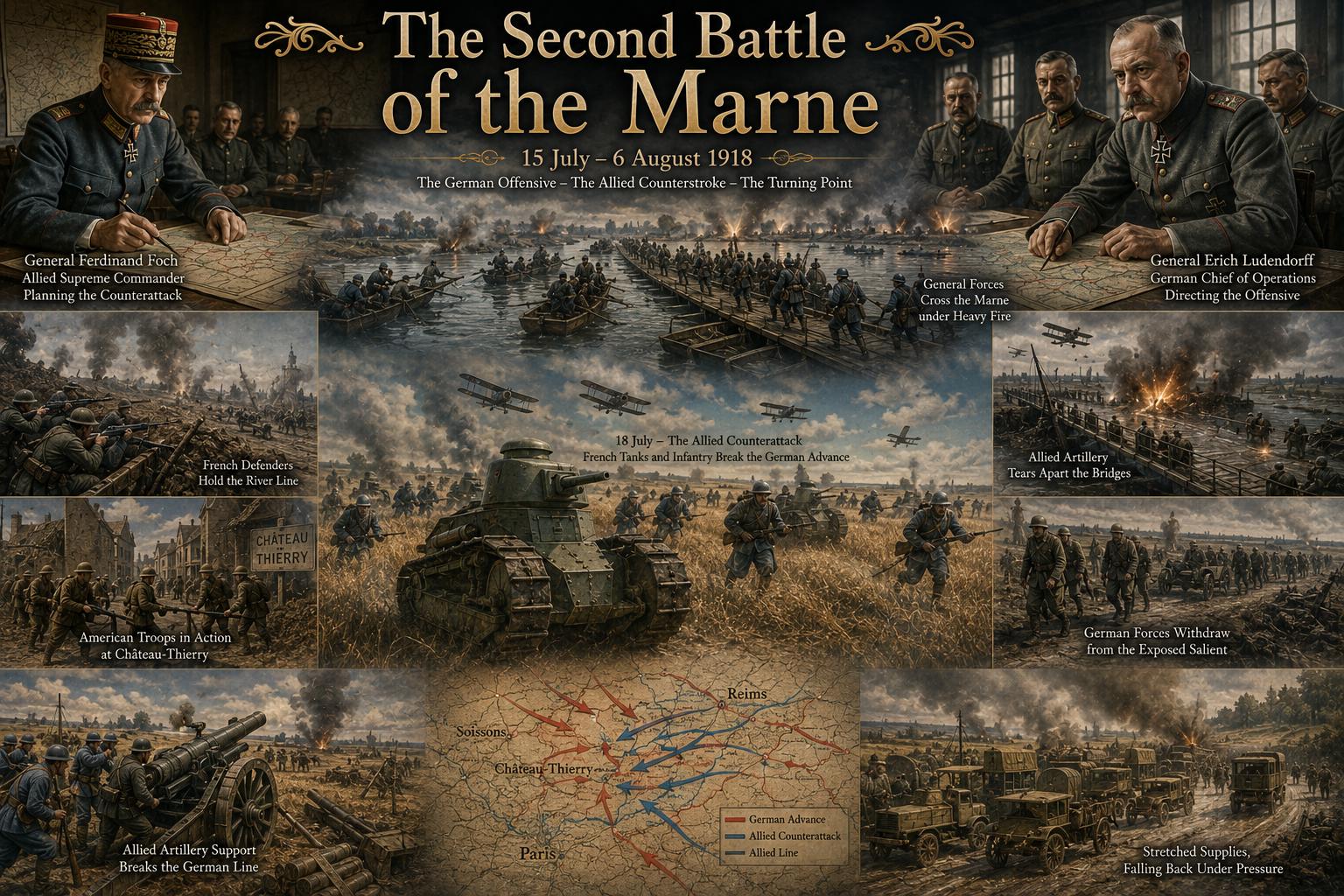 The Second Battle of the Marne: The Turning Point of World War I in 1918
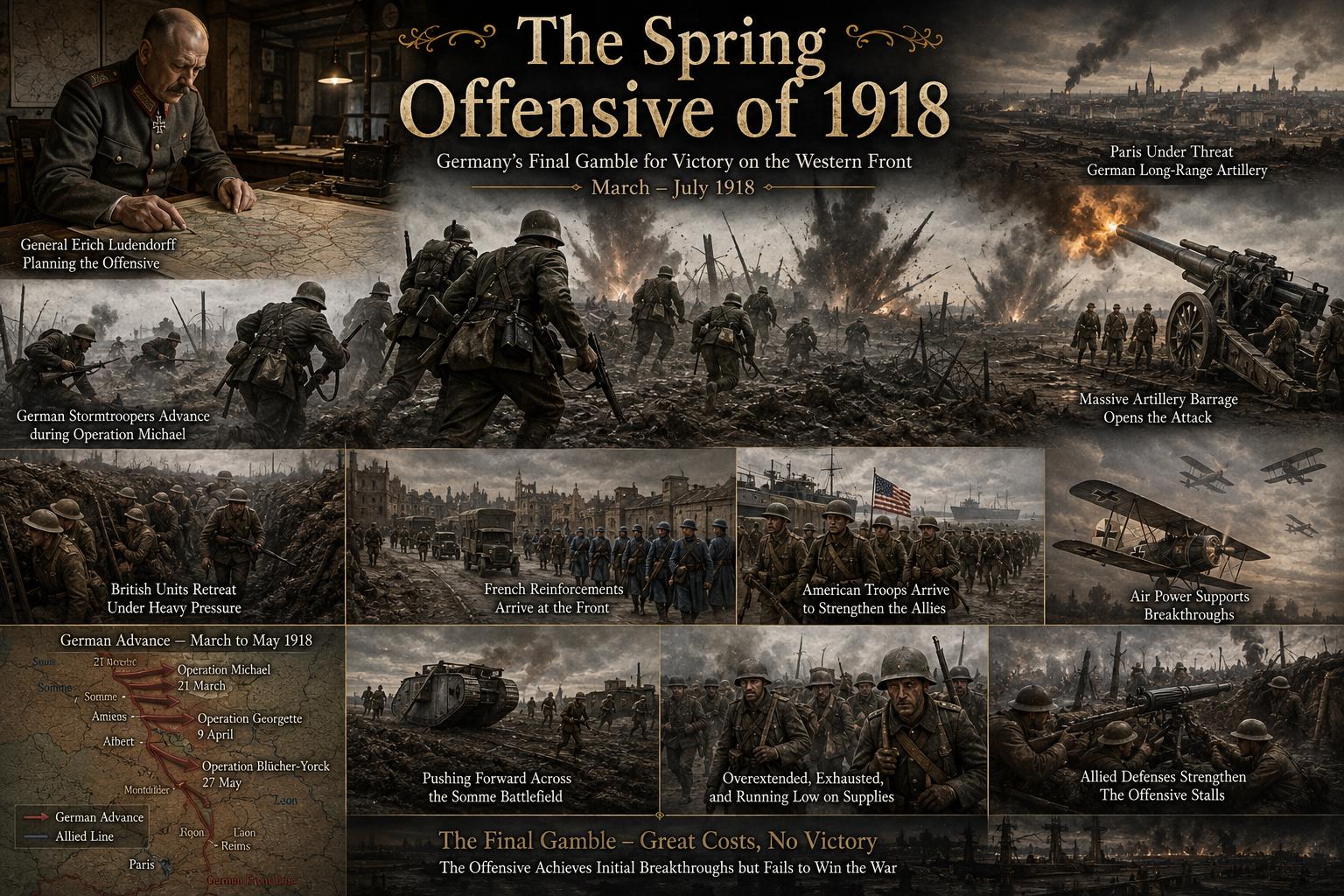 The Spring Offensive of 1918: Germany's Final Gamble to Win World War I
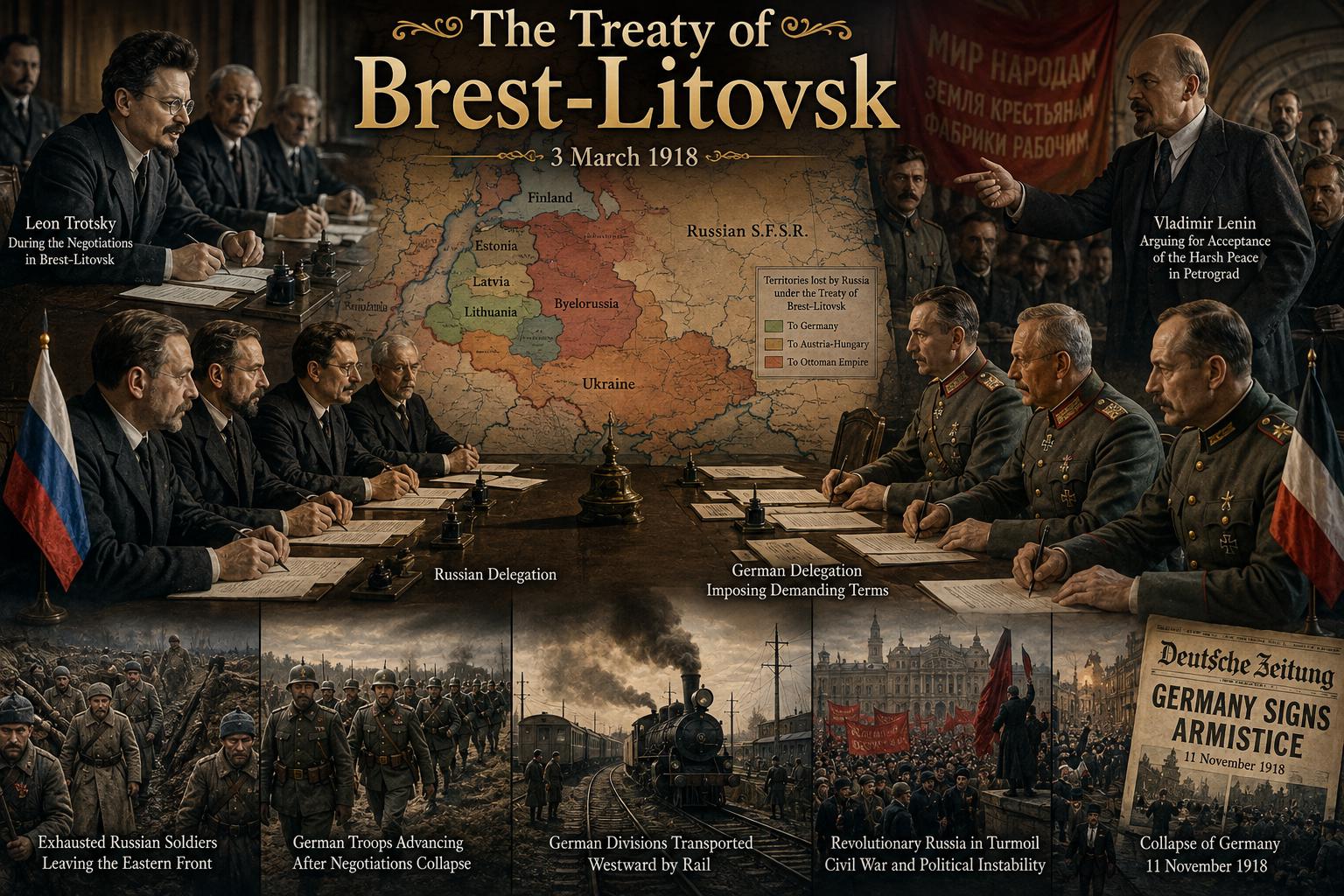 The Treaty of Brest-Litovsk: How Russia Left World War I
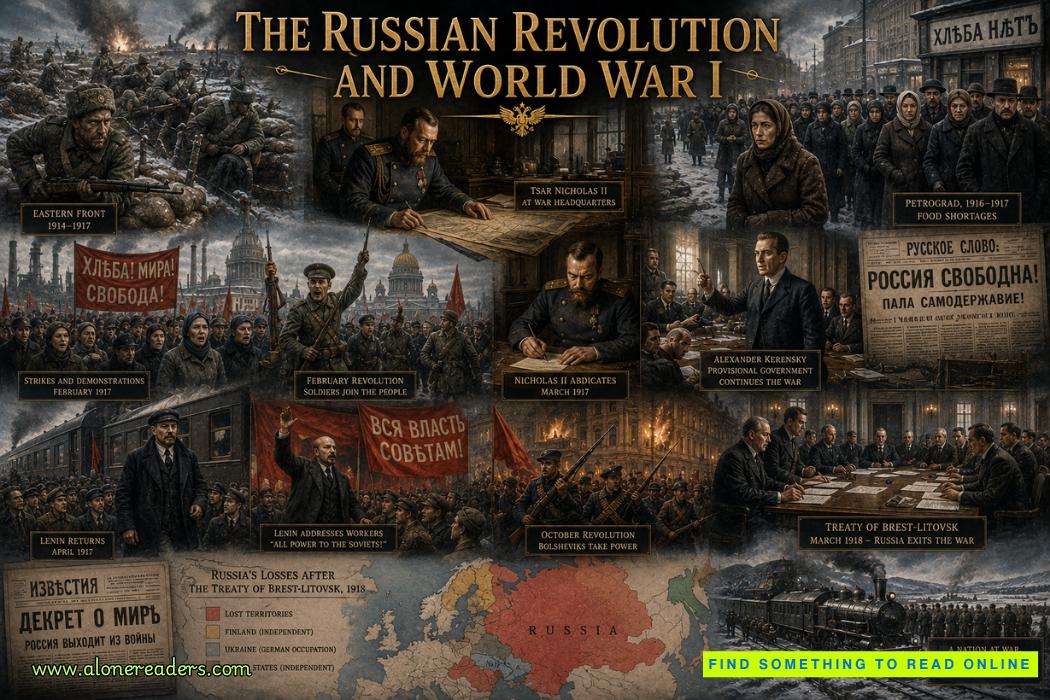 The Russian Revolution and World War I: How War Brought Down the Tsar
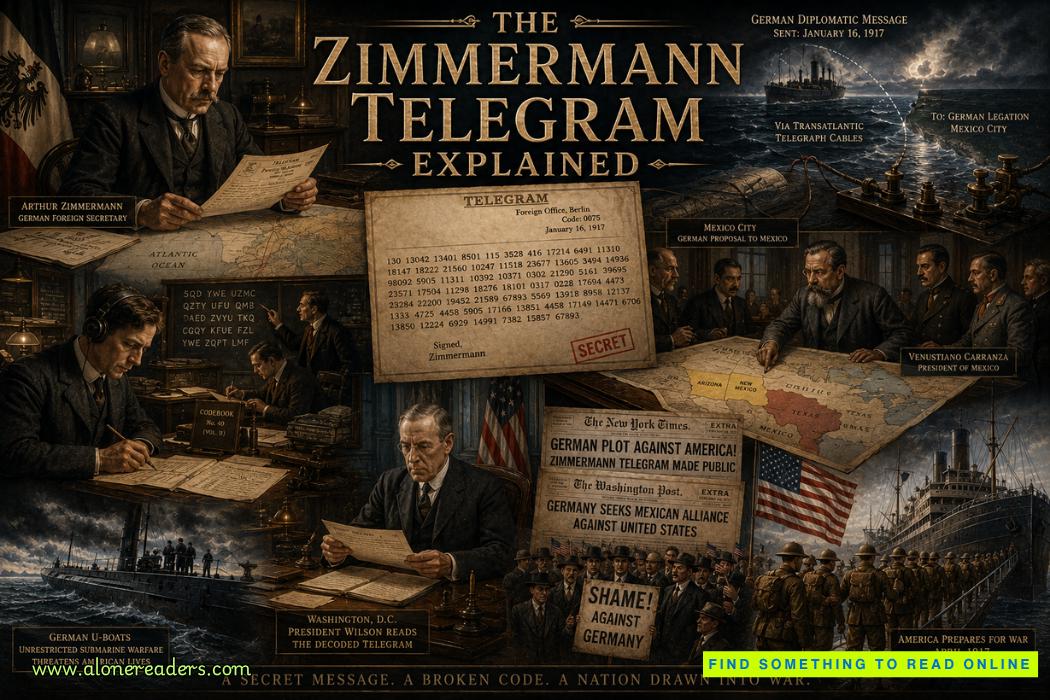 The Zimmermann Telegram Explained: Germany's Secret Offer to Mexico in World War I