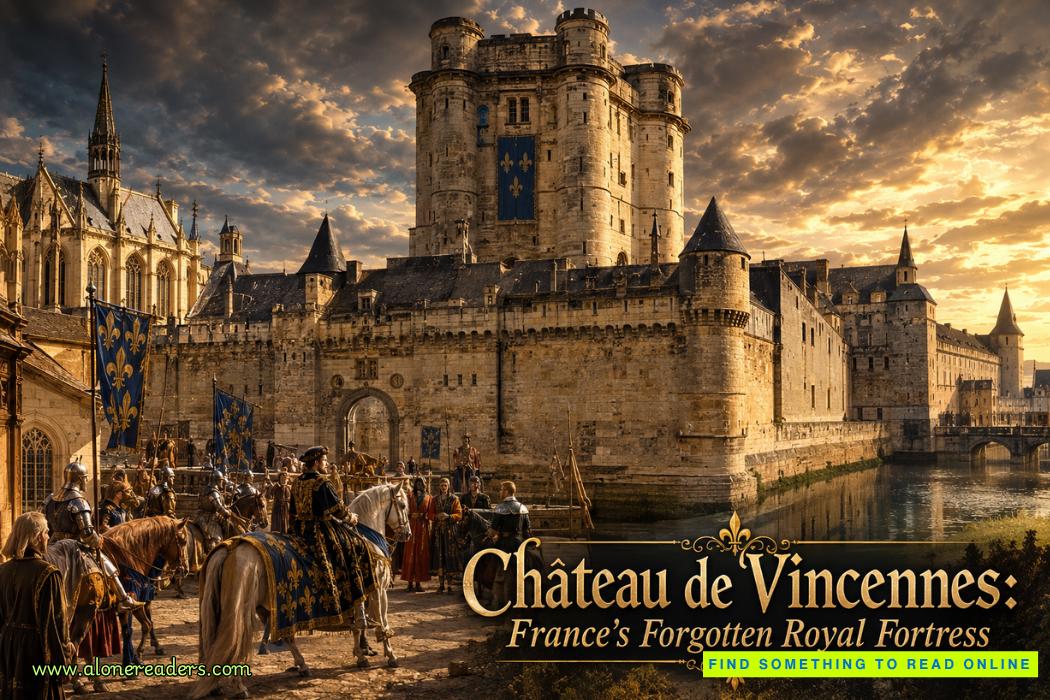
Château de Vincennes stands only a short distance east of central Paris, yet it feels like a surviving fragment of another France. Behind its immense walls rises one of the most extraordinary medieval structures in Europe: a stone keep that once embodied the authority, wealth, and vulnerability of the French monarchy. While Versailles became the internationally recognized symbol of French kingship and castles such as Chambord became icons of Renaissance elegance, Vincennes preserved something altogether different. It was a royal residence built with the defensive strength of a military citadel, a place where kings lived, governments operated, prisoners disappeared behind thick walls, and the changing fortunes of France left visible marks in stone.
The origins of Vincennes were considerably humbler than the fortress seen today. During the twelfth century, the area was associated with a royal hunting lodge established in the forest of Vincennes, traditionally connected with Louis VII. Its proximity to Paris made the woodland attractive to French monarchs seeking hunting grounds without traveling far from their political center. Under later Capetian kings, particularly Philip Augustus and Louis IX, the residence became increasingly important. Saint Louis, or Louis IX, was closely associated with Vincennes, and medieval tradition remembered him dispensing justice beneath an oak in the surrounding forest. Whether every detail of that famous image is literal or idealized, it reflects the castle's growing association with royal government and kingship.
By the fourteenth century, France required more than a pleasant hunting residence. The monarchy faced dynastic uncertainty, aristocratic rivalry, warfare with England, and the political dangers surrounding Paris itself. Vincennes consequently evolved into a heavily fortified royal complex. Construction of its most famous feature, the enormous donjon, began during the reign of Philip VI and continued under his successors. It was Charles V who transformed Vincennes into a true architectural statement of monarchy, developing the fortress on an ambitious scale during the second half of the fourteenth century.
The donjon remains astonishing even by medieval standards. Rising to roughly 50 meters in height, it is among the tallest surviving medieval fortified keeps in Europe. Its rectangular central tower is reinforced by cylindrical corner turrets and enclosed within its own defensive wall and moat, effectively creating a fortress inside a fortress. This arrangement meant that even if attackers penetrated the larger castle enclosure, the king could retreat into an exceptionally secure inner stronghold. Thick masonry, restricted entrances, defensive galleries, elevated chambers, and carefully controlled circulation demonstrate how seriously medieval rulers regarded personal security.
Yet the donjon was never merely a gigantic bunker. Its interior reveals the complicated character of medieval monarchy. Royal apartments, ceremonial rooms, chapels, administrative spaces, storage areas, and defensive features existed within the same structure. Vincennes combined palace, treasury, government center, refuge, and fortress. The king could conduct affairs of state in rooms protected by walls capable of resisting military attack. Architecture itself communicated a political message: the French crown was not simply wealthy; it was permanent, organized, protected, and powerful.
Charles V's larger vision transformed the surrounding site. An enormous fortified enclosure was constructed around the royal complex, protected by walls stretching for more than a kilometer and reinforced by towers. The scale distinguished Vincennes from the conventional image of a solitary medieval castle. It was closer to a fortified royal city, containing residential buildings, religious structures, service areas, military installations, and spaces required by a substantial royal household. Its position near Paris was particularly significant. The monarchy remained connected to the capital while retaining a defensible residence beyond its densely populated center.
Religion formed another essential element of royal authority, and Vincennes eventually received a chapel worthy of its status. Construction of the Sainte-Chapelle de Vincennes began under Charles V, inspired in part by the celebrated Sainte-Chapelle on the Île de la Cité. The Vincennes chapel developed over a long period and was completed much later, but its soaring Gothic architecture created a deliberate contrast with the massive military character of the donjon. Tall windows, elegant tracery, sculptural decoration, and vertical proportions expressed sacred kingship rather than defensive power. Within the same fortified enclosure, visitors could therefore encounter two complementary faces of monarchy: the formidable stone tower of temporal authority and the luminous Gothic chapel of Christian legitimacy.
Vincennes also witnessed important moments in royal life and death. Several French monarchs were born, resided, governed, or died there. Charles V was born at Vincennes in 1338 and later made it central to his conception of kingship. Earlier, Louis X and Charles IV both died at Vincennes during the fourteenth century. Such events made the castle far more than a peripheral military installation. For generations, Vincennes belonged to the intimate geography of the French royal dynasty.
The fortress continued changing as royal tastes evolved. Medieval kings had valued the protection of towering keeps and fortified walls, but early modern monarchs increasingly demanded spacious apartments, formal gardens, ceremonial approaches, and residences designed around courtly display. During the seventeenth century, new classical buildings known as the Pavillon du Roi and Pavillon de la Reine were constructed within the enclosure. Their architecture represented a striking shift away from the vertical severity of the medieval donjon toward the symmetry and refinement associated with the developing French classical style.
For a time, Vincennes seemed capable of becoming an important modern royal palace. Louis XIV stayed there, and significant improvements were undertaken during the seventeenth century. But the gravitational center of royal life was moving elsewhere. Versailles offered something Vincennes could never fully provide: an enormous purpose-built environment in which architecture, gardens, ceremony, aristocratic surveillance, and royal spectacle could be orchestrated around the person of the king. When Louis XIV established his court permanently at Versailles in 1682, Vincennes lost much of its importance as a principal royal residence.
Its formidable walls, however, ensured that the castle remained useful. Vincennes acquired a darker reputation as a state prison. Important or politically sensitive prisoners could be confined within the donjon under royal authority, sometimes through lettres de cachet, orders permitting imprisonment without ordinary judicial proceedings. Among the fortress's celebrated prisoners were the philosopher Denis Diderot, imprisoned at Vincennes in 1749, and the Marquis de Sade, who was confined there during the eighteenth century before later imprisonment in the Bastille. The donjon that had once protected kings thus became a place where royal power could be exercised against those considered troublesome or dangerous.
One of the castle's most dramatic episodes occurred much later, during the Napoleonic era. In 1804, Louis Antoine, Duke of Enghien, a member of the Bourbon royal family, was abducted from Baden, brought to Vincennes, subjected to a military trial, and executed in the fortress's moat. His death caused outrage across European courts and became one of the most controversial acts associated with Napoleon Bonaparte's consolidation of power. Vincennes had again become a stage upon which the struggle for control of France was violently expressed.
The nineteenth and twentieth centuries further strengthened the castle's military identity. Its strategic location near Paris made it useful for barracks, arsenals, military administration, and defensive purposes. During the Second World War, Vincennes experienced another grim chapter when German forces occupying France used the site and carried out executions there shortly before the liberation of Paris in 1944. Few French monuments encapsulate so many different forms of state power: medieval monarchy, royal imprisonment, revolutionary transformation, Napoleonic authority, modern military administration, and wartime occupation.
Architecturally, this accumulation of history is what makes Vincennes exceptional. Many famous European castles have been romanticized, reconstructed, or transformed so extensively that their defensive origins are difficult to perceive. Vincennes remains unusually legible. Its immense donjon immediately explains the security concerns of a fourteenth-century king. Its fortified perimeter demonstrates the resources available to the French crown. Sainte-Chapelle reveals the religious dimension of monarchy, while the seventeenth-century pavilions document the movement toward classical palace architecture. The visitor is effectively walking through several centuries of French political architecture within a single enclosure.
Its location makes its relative obscurity even more remarkable. Vincennes is effectively part of metropolitan Paris and can be reached far more easily than many celebrated French castles. Yet millions of visitors concentrate on the Louvre, Versailles, Notre-Dame, the Eiffel Tower, and the grand châteaux of the Loire Valley. Vincennes rarely possesses the same place in the popular imagination. Perhaps its severity explains part of this neglect. It lacks Versailles's glittering Hall of Mirrors and Chambord's fantastical Renaissance roofline. What Vincennes offers instead is something more austere and historically revealing: the architecture of monarchy when kings still expected their homes to survive sieges.
Today, Château de Vincennes survives as one of France's greatest medieval royal complexes and an extraordinary monument to the evolution of French power. Its stones preserve the transition from feudal kingship to centralized monarchy, from fortified residence to ceremonial palace, from royal sanctuary to prison, and from dynastic stronghold to military installation. The towering donjon remains its defining symbol, but understanding Vincennes requires looking beyond the tower to the enormous political landscape surrounding it.
That is ultimately why Château de Vincennes deserves far greater recognition. It does not represent a single glorious reign or architectural fashion. Instead, it tells the long story of how French kings protected themselves, displayed their authority, imprisoned their enemies, abandoned medieval fortifications for magnificent palaces, and left their former strongholds to serve new regimes. Standing almost in the shadow of Paris, Vincennes remains France's forgotten royal fortress—not because its history is insignificant, but because so many layers of French history are compressed behind its walls that no single legend has ever been large enough to contain them.


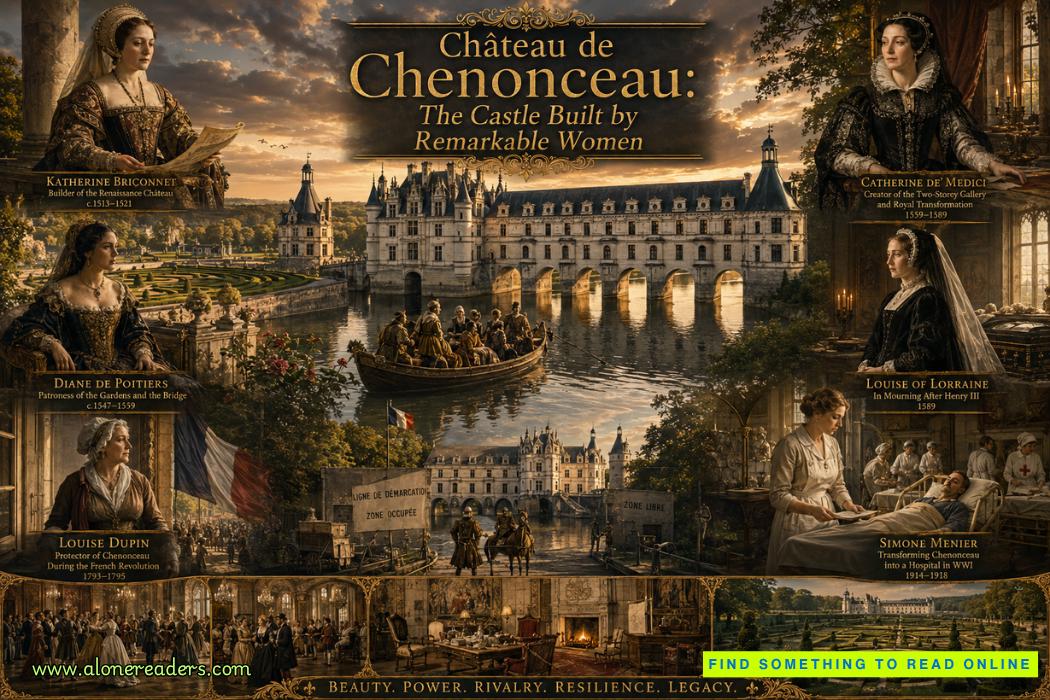 Château de Chenonceau: The Castle Built by Remarkable Women
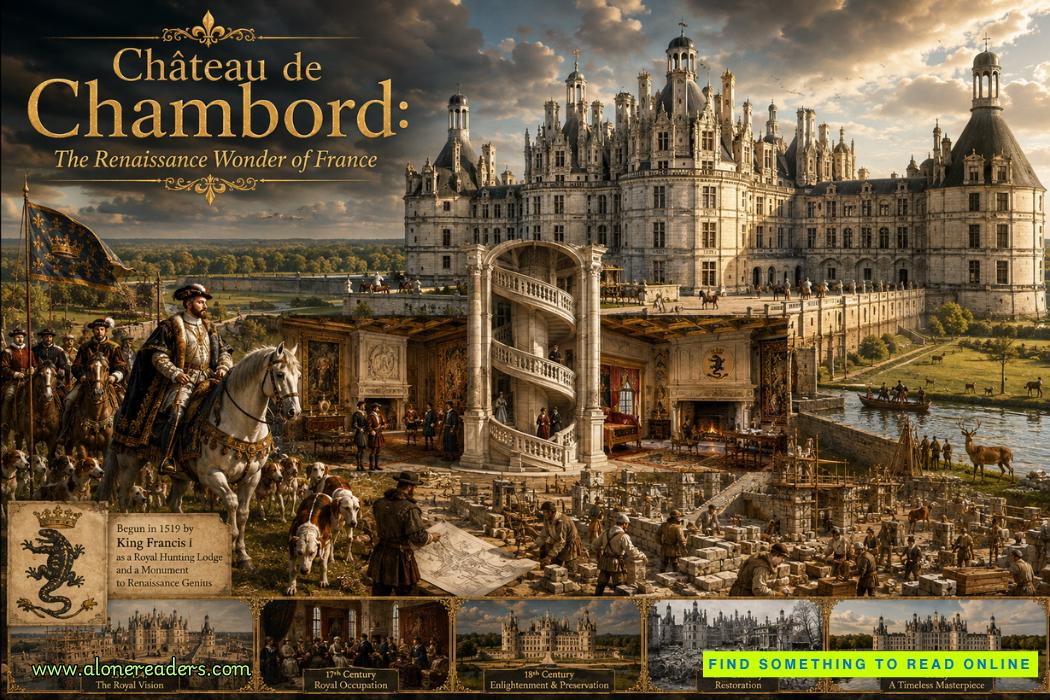 Château de Chambord: France’s Magnificent Renaissance Castle and Architectural Wonder
 Tehri Dam: India's Tallest Dam and the Debate Behind It
 Bhakra Nangal Dam: India's Temple of Modern Development
 Mangla Dam: Pakistan's Second Great Water Project