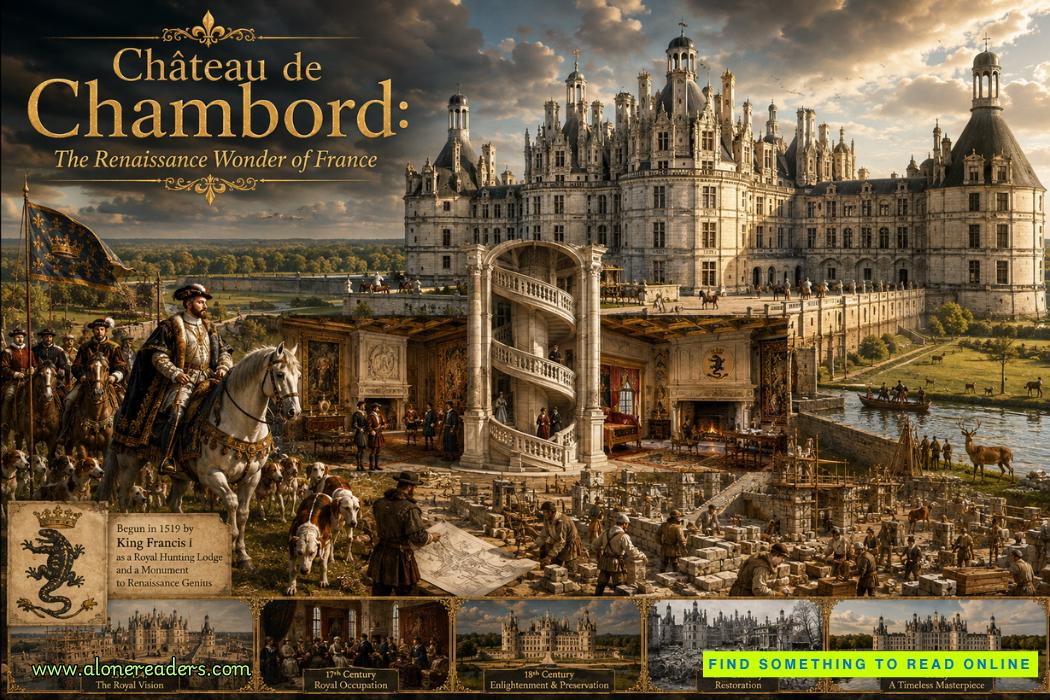
Rising above the forests and wetlands of France’s Loire Valley, Château de Chambord appears almost too elaborate to have been created merely as a royal retreat. Its immense pale-stone façade, cylindrical towers, forest of chimneys, lanterns, dormers, pinnacles, and sculpted rooftops combine the mass of a medieval fortress with the refinement of the Italian Renaissance. Yet Chambord was neither a conventional defensive castle nor the principal residence of a French king. It was an architectural declaration of royal power, cultural ambition, and Renaissance experimentation, commissioned by Francis I at a time when France was absorbing new artistic and intellectual influences from Italy.
Construction began in 1519, only a few years after Francis I had become king. The monarch was young, ambitious, fascinated by architecture, and deeply influenced by the Italian Renaissance. His military campaigns in Italy had exposed the French court to architectural ideas dramatically different from the fortified castles that had dominated medieval France. Francis wanted to project himself not simply as a warrior king but as a sophisticated Renaissance prince and patron of the arts. Chambord became one of the grandest physical expressions of that ambition.
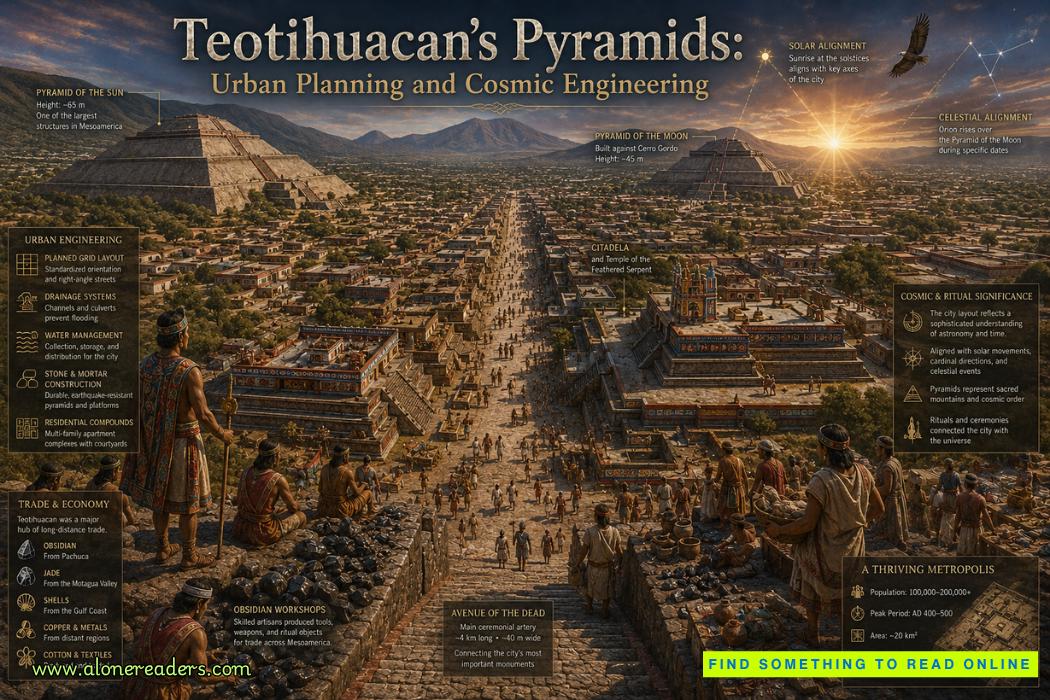
The location itself reveals something important about the château. Chambord was built in the Sologne region, an area of forests, marshes, and abundant wildlife. Francis I was an enthusiastic hunter, and the estate provided exceptional hunting territory. The château therefore developed partly as an extravagant hunting lodge where the king could entertain nobles and demonstrate royal magnificence. Calling Chambord a “lodge,” however, hardly conveys its scale. The building contains hundreds of rooms, numerous staircases and fireplaces, enormous towers, long galleries, and a spectacularly complex roofscape.
Architecturally, Chambord represents a remarkable meeting between two worlds. Its overall mass still recalls the medieval French castle. The central structure, or keep, has four enormous corner towers, while the plan evokes the geometry of earlier fortified residences. But defensive practicality was no longer the primary concern. Large windows, elaborate ornamentation, symmetrical planning, classical details, rooftop terraces, and richly sculpted surfaces belonged to the evolving language of Renaissance architecture.
This mixture is one reason Chambord looks unlike almost any other palace. From a distance, its lower sections appear relatively ordered and monumental. Looking upward produces an entirely different impression. The roof erupts into an astonishing collection of chimneys, turrets, lanterns, dormers, stair towers, sculpted gables, and pinnacles. Rather than concealing the roof behind a restrained classical façade, Chambord turns it into an architectural spectacle.
At the heart of the château stands its most celebrated feature: the double-helix staircase. Two separate spiral flights wind around a hollow central core. People can climb one flight while others descend the second, observing each other through openings yet potentially reaching different levels without crossing paths. It is both functional architecture and an ingenious spatial experience.
The staircase has helped create Chambord’s strongest connection with Leonardo da Vinci. Francis I invited Leonardo to France in the final years of the artist’s life, and Leonardo lived at Clos Lucé near the royal residence of Amboise until his death in 1519. Leonardo had studied spiral staircases, centralized buildings, geometry, hydraulics, and other engineering problems. Similarities between his ideas and elements found at Chambord have encouraged speculation that he influenced the château’s design.
There is, however, no surviving definitive evidence proving that Leonardo personally designed Chambord or its double staircase. The most responsible interpretation is that his architectural thinking may have influenced the intellectual environment surrounding the project. Chambord emerged from a period when French architectural traditions were interacting intensely with Italian Renaissance concepts, and Leonardo was an exceptionally important presence at Francis I’s court.
The château’s plan itself demonstrates an obsession with geometry and symmetry. Rooms and apartments are arranged around the central staircase, while large halls intersect around the core. The design creates repeated spatial patterns that were unusually sophisticated for early-sixteenth-century France. The rooftop terraces provide another remarkable experience. Visitors emerging onto them find themselves walking through what resembles a miniature stone city, surrounded by towers and sculpted chimneys.
Among Chambord’s decorative motifs, one appears repeatedly: the salamander, the personal emblem of Francis I. Traditionally associated with the ability to survive fire, the salamander became closely linked with the king’s identity and appears throughout the château alongside royal symbols and the letter “F.” These details transformed the building into a monumental statement about its patron. Chambord was not simply constructed for Francis; its architecture continually reminded visitors whose authority and ambition had created it.
Yet the king who commissioned this colossal residence spent surprisingly little time there. Chambord was difficult and expensive to inhabit. Its vast rooms could be cold, especially outside warmer seasons, while supplying a temporary royal court required enormous logistical effort. Renaissance courts traveled with servants, furniture, textiles, food, equipment, and administrative personnel. Chambord functioned more effectively as a stage for royal spectacle than as a comfortable permanent home.
The scale of the building campaign was itself extraordinary. Stone had to be quarried, transported, carved, and assembled by large numbers of skilled and unskilled workers. Master masons, sculptors, carpenters, laborers, and craftsmen contributed to a project that continued for decades. Francis I died in 1547 before the château had fully achieved the form envisioned during his reign.
Chambord nevertheless continued to attract royal attention. Later rulers altered, completed, furnished, or temporarily occupied portions of the château. Louis XIV was particularly important in its later royal history. During the seventeenth century, work was undertaken to make parts of the enormous complex more suitable for courtly occupation. Chambord also became associated with theatrical performances, including works connected with the celebrated playwright Molière during royal visits.
Despite these episodes of magnificence, Chambord never became the political heart of the French monarchy. Versailles eventually represented a different and far more permanent model of royal power. Chambord remained geographically isolated and closely connected with hunting, ceremonial visits, and the surrounding estate.
That surrounding estate is almost as extraordinary as the building. Chambord stands within an immense enclosed domain of forests, grasslands, and waterways. A wall extending for more than thirty kilometres surrounds the historic estate, creating one of Europe’s most remarkable enclosed landscapes. Deer and wild boar have long inhabited the forests, preserving the association between Chambord and royal hunting that stretches back to Francis I.
The château also endured periods of uncertainty. Political transformations, changing ownership arrangements, neglect, war, and restoration all affected its history. During the French Revolution, royal furnishings were dispersed or sold, leaving the enormous interiors stripped of much of their former movable decoration. The building itself survived, allowing later generations to restore and reinterpret it as a national architectural treasure.
Chambord even played an unusual protective role during the twentieth century. During the Second World War, works of art from major French collections were evacuated away from areas considered particularly vulnerable. Chambord became one of the important repositories used in the enormous operation to safeguard cultural treasures. Its isolated location and vast spaces made the Renaissance château part of a very different struggle to preserve France’s heritage.
Today, Château de Chambord is one of the most recognizable monuments of the Loire Valley and forms part of the wider cultural landscape recognized internationally for its exceptional heritage. Millions of visitors have encountered its extraordinary architecture, but photographs rarely communicate its true scale. The closer one approaches, the more complicated the structure becomes. What initially seems symmetrical and orderly develops into layers of stone carving, stairways, terraces, towers, vaults, fireplaces, and architectural surprises.
Its enduring fascination comes partly from unresolved questions. Who precisely determined the château’s earliest architectural concept? How directly did Leonardo influence it? How much did the design change during construction? Historians and architectural specialists continue examining documentary and physical evidence, making Chambord not merely a preserved monument but an ongoing subject of research.
Perhaps the greatest achievement of Chambord is that its contradictions remain visible. It resembles a fortress but was not primarily designed for serious defense. It possesses the dimensions of a major palace but was rarely a king’s permanent residence. It is unmistakably French yet incorporates ideas associated with the Italian Renaissance. Its plan displays rigorous geometry while its roofline seems almost fantastically exuberant.
Château de Chambord therefore represents far more than royal extravagance. It captures a moment when France was transforming intellectually, artistically, and architecturally. Francis I used stone, geometry, symbolism, and sheer scale to express a new conception of monarchy shaped by Renaissance culture. More than five centuries after construction began, the double staircase still puzzles and delights visitors, the salamanders of Francis I remain carved into its fabric, and its extraordinary towers continue to rise above the forests of the Loire Valley. Chambord survives as one of the clearest demonstrations of what can happen when political ambition, architectural experimentation, artistic imagination, and virtually limitless royal aspiration are brought together in a single building.



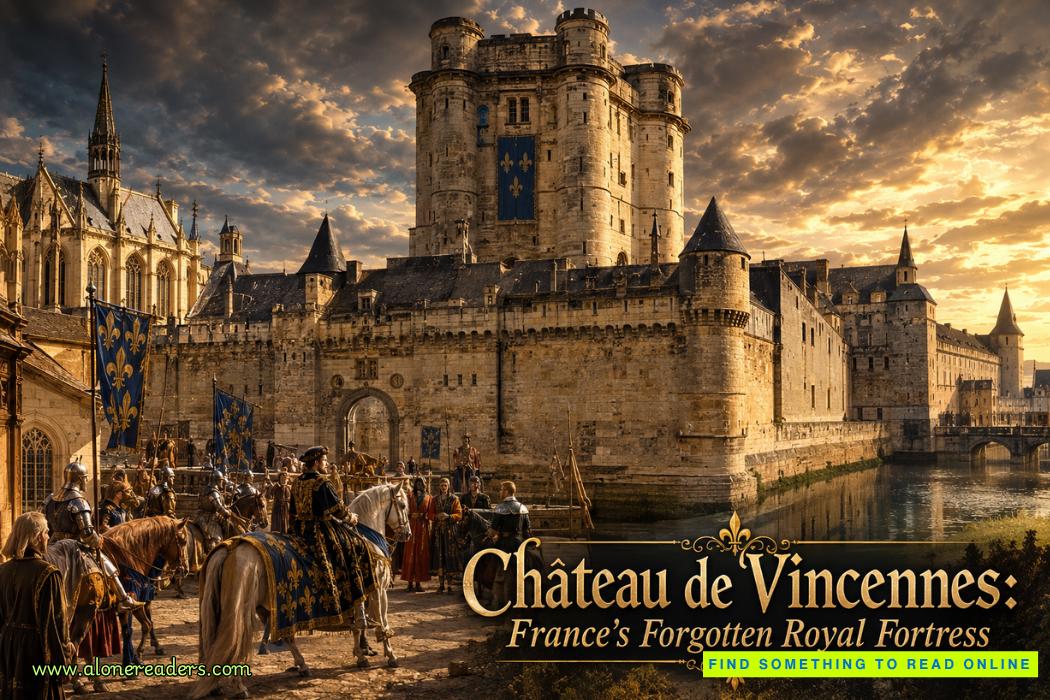 Château de Vincennes: France’s Forgotten Royal Fortress and Medieval Stronghold
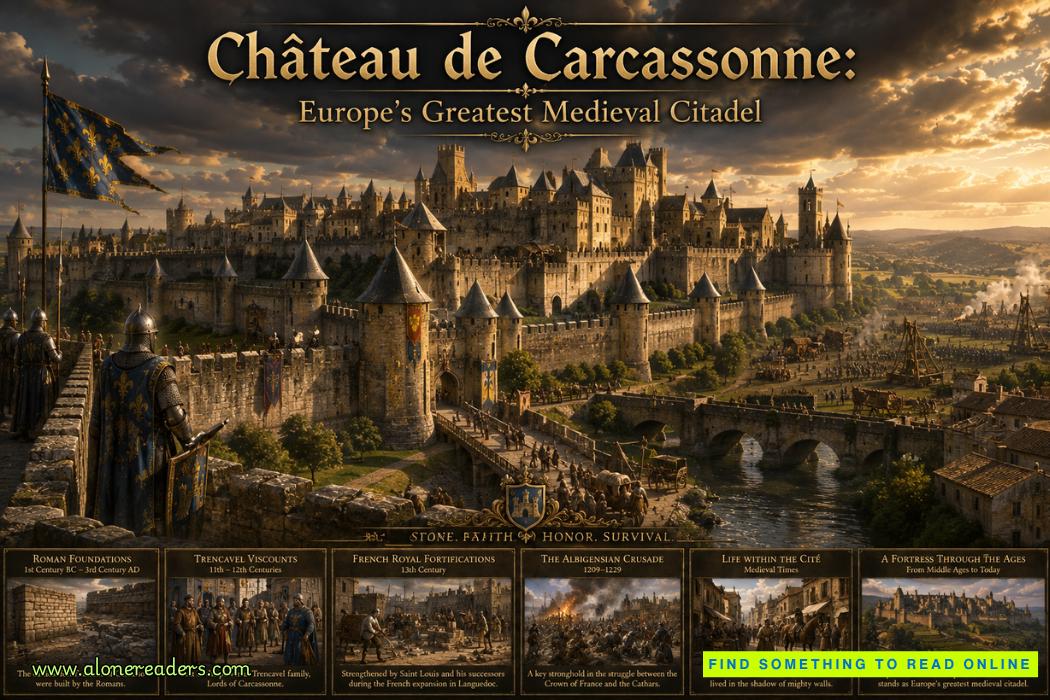 Château de Carcassonne: Europe’s Greatest Medieval Citadel and Fortress
 Tehri Dam: India's Tallest Dam and the Debate Behind It
 Bhakra Nangal Dam: India's Temple of Modern Development
 Mangla Dam: Pakistan's Second Great Water Project