More About This Card
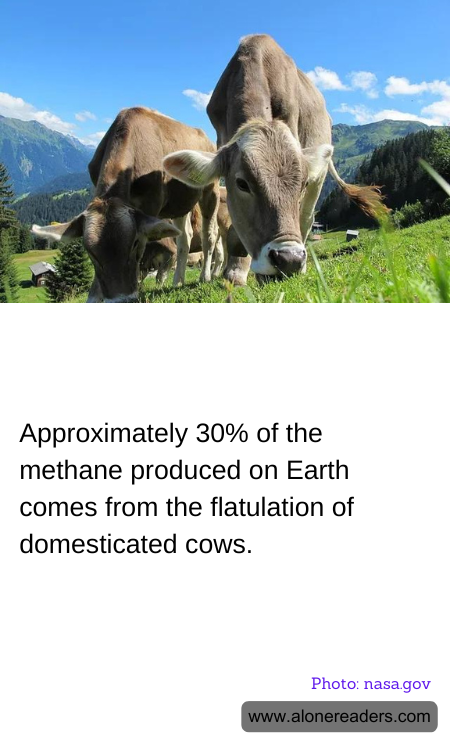
Methane emissions are a significant concern in the context of global climate change, and one of the surprising contributors to this issue is the flatulation of domesticated cows. It is estimated that approximately 30% of the methane produced on Earth comes from this source. This statistic highlights the substantial impact that livestock farming has on our planet's atmosphere and underscores the importance of addressing agricultural emissions in our efforts to combat climate change.
Cows, like other ruminants, have a unique digestive system that allows them to break down tough plant materials. This process, known as enteric fermentation, occurs in the stomachs of these animals and produces methane as a byproduct. Methane is a potent greenhouse gas, with a global warming potential many times greater than that of carbon dioxide over a 20-year period. As the global demand for beef and dairy products continues to rise, so too does the number of cows, thereby increasing the volume of methane released into the atmosphere.
The environmental impact of methane emissions from cows is significant. Methane contributes to the greenhouse effect, trapping heat in the Earth's atmosphere and leading to global warming. This warming effect can result in a range of environmental issues, including rising sea levels, more frequent and severe weather events, and disruptions to ecosystems. Therefore, reducing methane emissions from livestock is a critical component of global strategies to mitigate climate change.
Efforts to address this issue are underway, with researchers and farmers exploring various strategies to reduce methane emissions from cows. These include dietary changes, such as incorporating feed additives that can suppress methane production during digestion. Additionally, breeding programs are being developed to select for cattle that naturally produce less methane. Technological innovations, such as methane capture systems, are also being explored to reduce the amount of methane released into the atmosphere.
Public awareness and consumer choices play a vital role in addressing this issue. By supporting sustainable farming practices and reducing meat and dairy consumption, individuals can contribute to the reduction of methane emissions. Furthermore, policies and incentives that encourage farmers to adopt methane-reducing practices can help drive change on a larger scale.
In conclusion, while the flatulation of domesticated cows may seem like a minor issue, it is a significant contributor to global methane emissions and, by extension, climate change. Addressing this challenge requires a multifaceted approach that includes scientific research, technological innovation, and changes in consumer behavior. By working together, we can reduce the environmental impact of livestock farming and move towards a more sustainable future.