More About This Card
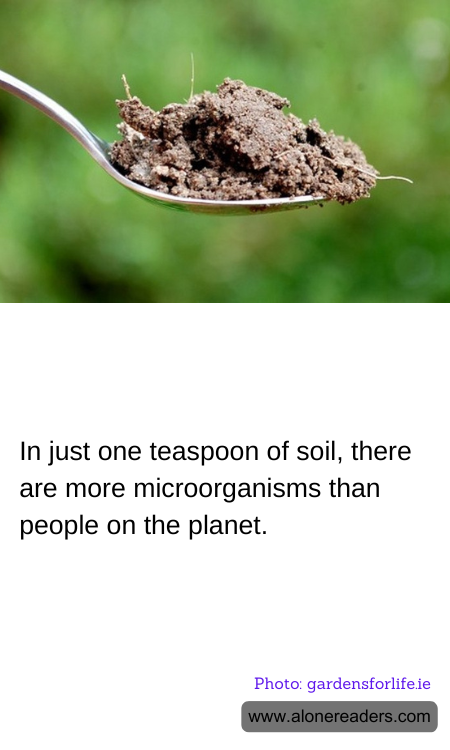
In the vast tapestry of life on Earth, one of the most astonishing revelations is the sheer abundance of microorganisms that exist in the soil beneath our feet. It is a remarkable fact that in just one teaspoon of soil, there are more microorganisms than there are people on the planet. This mind-boggling statistic underscores the complexity and richness of the microscopic world, which plays a crucial role in sustaining life as we know it.
Soil is often perceived as a mere substrate for plant growth, but it is, in fact, a bustling ecosystem teeming with life. The microorganisms residing in soil include bacteria, fungi, protozoa, and viruses, among others. These tiny organisms are the unsung heroes of the natural world, performing essential functions that support plant health, nutrient cycling, and even climate regulation. Bacteria, for instance, are instrumental in decomposing organic matter, breaking it down into simpler compounds that plants can absorb as nutrients. Fungi form symbiotic relationships with plant roots, enhancing their ability to take up water and nutrients.
The diversity of microorganisms in soil is staggering. Scientists estimate that a single gram of soil can contain thousands of different species of bacteria alone. This diversity is not just a testament to the adaptability of life but also a critical factor in the resilience of ecosystems. Each microorganism plays a specific role, and together, they create a balanced environment that supports plant growth and maintains soil health. This intricate web of life is a testament to the complexity of nature and the interdependence of all living things.
The presence of such a vast number of microorganisms in soil also highlights the importance of preserving soil health. Human activities, such as deforestation, pollution, and unsustainable agricultural practices, can disrupt this delicate balance, leading to soil degradation and loss of biodiversity. Protecting soil health is not only vital for food production but also for maintaining the ecological balance that supports all life forms. Sustainable practices, such as crop rotation, organic farming, and reduced chemical use, can help preserve this invaluable resource.
Understanding the significance of microorganisms in soil can inspire a greater appreciation for the natural world and the unseen forces that sustain it. These tiny organisms, invisible to the naked eye, are fundamental to the health of our planet. They remind us that even the smallest forms of life have a profound impact on the world around us. As we continue to explore and learn about the microscopic universe beneath our feet, we gain valuable insights into the intricate workings of nature and our place within it.