More About This Card
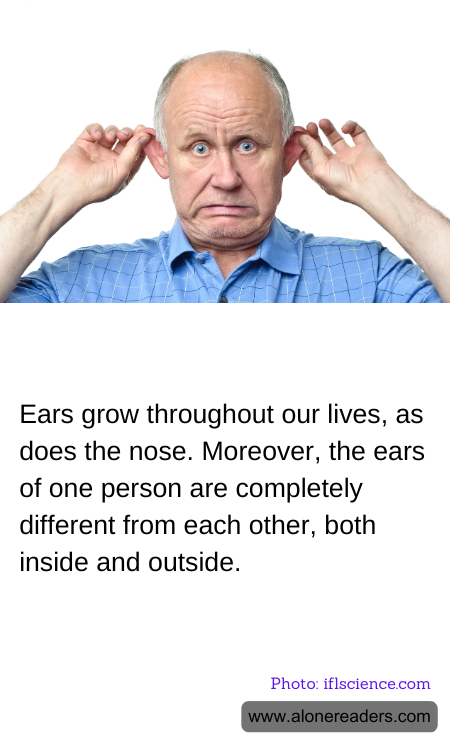
As we journey through life, our bodies undergo numerous changes, some of which are more noticeable than others. Among these subtle transformations is the continuous growth of our ears and nose. Unlike most parts of our body that stop growing after a certain age, the ears and nose defy this norm, expanding gradually as we age. This phenomenon is primarily due to the composition of these features, which are made up of cartilage. Unlike bone, cartilage continues to grow and change over time, contributing to the gradual enlargement of our ears and nose.
The growth of ears and noses is not just a matter of size but also of individuality. Each person's ears are unique, not only in comparison to others but also when compared to each other. This asymmetry is a fascinating aspect of human anatomy. The outer part of the ear, known as the pinna or auricle, can vary greatly in shape, size, and angle, even between the left and right ear of the same person. This uniqueness extends to the internal structure as well, where the intricate network of bones, cartilage, and soft tissues can differ significantly. These differences are not merely cosmetic; they can influence how we perceive sound, contributing to the distinct auditory experiences of each individual.
The continuous growth of ears and noses is often more pronounced in older adults, leading to the common observation that these features appear larger in elderly individuals. This is partly due to the effects of gravity and the loss of skin elasticity, which can make the ears and nose appear more prominent. Additionally, the ears' lobes may elongate over time, further contributing to their noticeable size increase. While this growth is a natural part of aging, it is also a testament to the dynamic nature of our bodies, constantly adapting and changing throughout our lives.
Understanding the growth and uniqueness of our ears and nose can also have practical implications. For instance, the distinct shape and size of our ears can affect how we wear accessories like glasses or headphones, influencing comfort and fit. Moreover, the individuality of our ears is often used in forensic science and biometric identification, as the ear's unique shape can serve as a reliable identifier, much like fingerprints.
In conclusion, the continuous growth of our ears and nose is a remarkable aspect of human biology that underscores the uniqueness of each individual. While these changes may be subtle, they are a constant reminder of the intricate and ever-evolving nature of our bodies. Embracing these differences not only enhances our understanding of human anatomy but also celebrates the diversity that makes each of us unique.