More About This Card
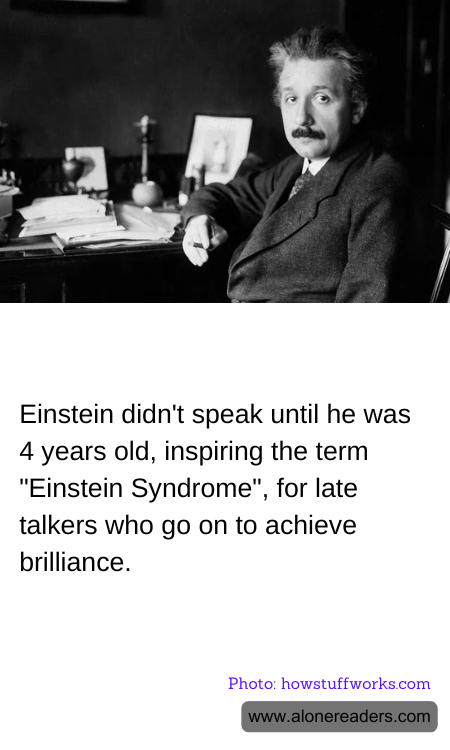
Albert Einstein, one of the most renowned physicists in history, is often remembered for his groundbreaking contributions to science. However, a lesser-known aspect of his early life is that he did not speak until he was four years old. This intriguing detail has inspired the term "Einstein Syndrome," coined by economist Thomas Sowell, to describe children who experience delayed speech but later demonstrate exceptional abilities.
Einstein Syndrome challenges the conventional understanding of child development, suggesting that late speech does not necessarily indicate a lack of intelligence or potential. In fact, many children who exhibit this pattern often possess remarkable analytical skills and advanced cognitive abilities. These children may focus intensely on specific interests, demonstrating a unique way of processing the world around them. This phenomenon has provided comfort and hope to parents of late talkers, reassuring them that their children may simply be following a different developmental trajectory.
The story of Einstein's delayed speech highlights the importance of recognizing and nurturing diverse forms of intelligence. While traditional educational systems often emphasize early verbal skills as a marker of intelligence, Einstein Syndrome suggests that brilliance can manifest in various ways. Children who are late talkers may excel in areas such as mathematics, music, or art, where verbal communication is not the primary mode of expression. This understanding encourages a more inclusive approach to education, where different talents and abilities are valued and cultivated.
Parents and educators can support late talkers by providing an environment that fosters their unique strengths. Encouraging exploration, offering opportunities for creative expression, and being patient with their communication development can help these children thrive. It is also essential to avoid labeling or stigmatizing late talkers, as this can hinder their confidence and growth. Instead, recognizing their potential and celebrating their achievements can empower them to reach their full potential.
Einstein's story serves as a powerful reminder that intelligence is multifaceted and cannot be measured solely by early verbal milestones. His life and achievements underscore the importance of looking beyond conventional markers of success and appreciating the diverse ways in which individuals can contribute to society. As we continue to learn more about the complexities of human development, Einstein Syndrome remains a testament to the idea that brilliance can emerge from unexpected beginnings, inspiring us to embrace and nurture the unique talents of every child.