More About This Card
The word "chair" is a commonplace term in the English language, yet its origins are steeped in history and carry a sense of grandeur that might surprise many. Tracing back to the Latin word "cathedra," which translates to "seat" or "throne," the evolution of this term reflects a journey from the sacred to the everyday. The Latin "cathedra" was not just any seat; it was a symbol of authority and power, often associated with the seats of high-ranking officials and leaders. This historical context adds a layer of depth to our understanding of what might otherwise be considered a simple piece of furniture.
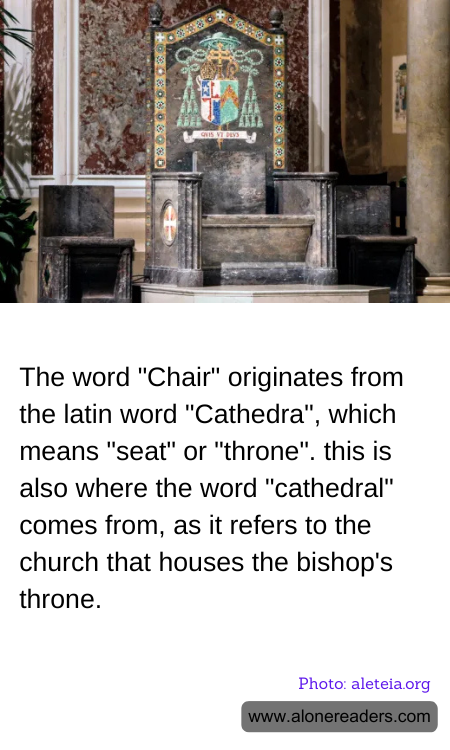
Interestingly, the word "cathedra" also gives us the term "cathedral," which refers to the principal church within a diocese, housing the bishop's throne. The bishop's cathedra is a powerful symbol of ecclesiastical authority, and the cathedral itself is often a grand architectural masterpiece, designed to inspire awe and reverence. This connection between "cathedra" and "cathedral" underscores the significance of the chair as more than just a functional object; it is a representation of leadership and governance, both secular and religious.
Over time, the concept of the chair evolved from its lofty origins to become an integral part of everyday life. Chairs are now ubiquitous, found in homes, offices, and public spaces worldwide. Despite this democratization, the chair retains its symbolic power in certain contexts. In academia, for instance, the term "chair" is used to denote a position of authority, such as the "chair of a department," reflecting the historical connotations of leadership and oversight.
The journey of the word "chair" from "cathedra" to its current usage is a fascinating example of linguistic evolution. It highlights how language can transform over centuries, adapting to cultural and societal changes while retaining echoes of its past. This transformation also serves as a reminder of the enduring influence of Latin on the English language, particularly in terms of words associated with authority and structure.
In conclusion, the word "chair" carries with it a rich tapestry of history and meaning. From the grand thrones of ancient leaders to the everyday seats we use today, the evolution of this term is a testament to the dynamic nature of language and its ability to reflect the complexities of human society. Whether in a cathedral or a classroom, the chair remains a symbol of authority and a fundamental part of our daily lives.