More About This Card
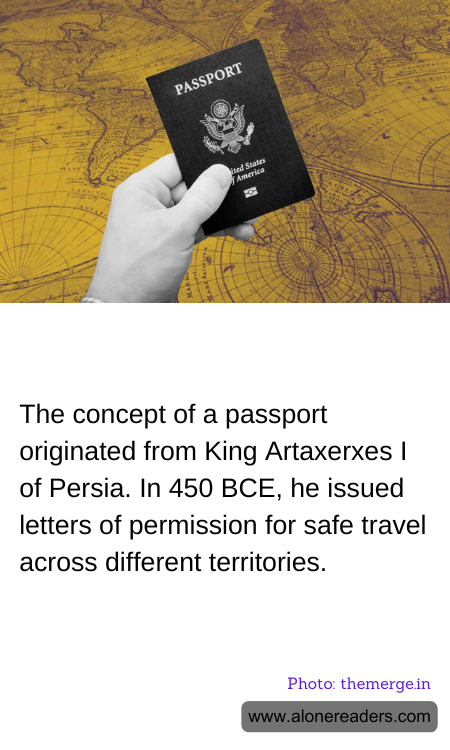
The concept of a passport, a document that is now an essential part of international travel, has its roots in ancient history, tracing back to the reign of King Artaxerxes I of Persia. In 450 BCE, King Artaxerxes I introduced a novel idea that would lay the foundation for what we recognize today as the passport. This innovation was a response to the need for safe and regulated travel across the vast and diverse territories of the Persian Empire.
During the reign of Artaxerxes I, the Persian Empire was a sprawling realm, encompassing a multitude of cultures, languages, and regions. The empire's expanse necessitated a system that could facilitate the movement of people while ensuring their safety and the security of the state. To address this, King Artaxerxes I issued letters of permission, which served as early forms of passports. These letters were granted to trusted individuals, allowing them to travel safely across different territories within the empire.
The letters of permission were not merely travel documents; they were symbols of trust and authority. They provided the bearer with a form of identification and a guarantee of protection, ensuring that the traveler could move freely without fear of harm or obstruction. This system was particularly important in an era where communication and transportation were limited, and the risk of encountering hostile forces or territories was significant.
The issuance of these letters by King Artaxerxes I was a strategic move that underscored the importance of controlled and secure travel. It allowed for the efficient administration of the empire, facilitating trade, diplomacy, and governance. By granting safe passage to travelers, the Persian Empire could maintain its influence and cohesion across its vast lands.
Over the centuries, the concept of the passport evolved, influenced by changing political landscapes and technological advancements. However, the fundamental idea introduced by King Artaxerxes I—providing a document that ensures safe and regulated travel—remains at the core of modern passports. Today, passports are universally recognized as essential travel documents, embodying the principles of identity verification and international cooperation.
The legacy of King Artaxerxes I's innovation is a testament to the enduring need for systems that promote safe and organized travel. As we navigate the complexities of global movement in the modern world, the ancient practice of issuing letters of permission reminds us of the timeless importance of facilitating human connection and exchange across borders.