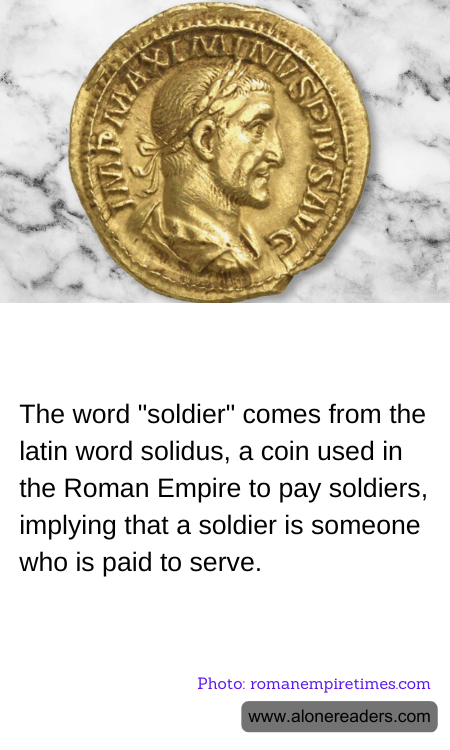
More About This Card
The term "soldier" is deeply rooted in history, tracing its origins back to the Latin word "solidus," which was a coin used in the Roman Empire. This etymology highlights a fundamental aspect of the soldier's role throughout history: the concept of being paid to serve. The solidus was a gold coin introduced by Emperor Constantine in the 4th century AD, and it became a standard for currency in the Roman Empire. The connection between the solidus and the soldier underscores the transactional nature of military service, where individuals were compensated for their commitment and bravery in defending the empire.
The Roman Empire, known for its vast and disciplined military, relied heavily on the loyalty and effectiveness of its soldiers. The payment in solidus was not merely a financial transaction but also a symbol of the soldier's value and importance to the empire. This practice of paying soldiers was crucial in maintaining a professional and motivated military force, which was essential for the empire's expansion and defense. The concept of a soldier being a paid professional has persisted through the ages, evolving with the times but retaining its core principle.
Throughout history, the role of the soldier has been romanticized and revered, often depicted as a noble calling. However, the etymological roots of the word remind us of the practical and economic aspects of military service. Soldiers have always been integral to the security and stability of societies, and their compensation reflects the recognition of their sacrifices and contributions. The notion of being paid to serve also highlights the dual nature of military service, where duty and honor coexist with the practicalities of livelihood and sustenance.
In modern times, the concept of a soldier has expanded beyond the traditional battlefield. Soldiers today are involved in peacekeeping missions, humanitarian efforts, and various roles that require a diverse set of skills. Despite these changes, the fundamental idea of being compensated for service remains. The legacy of the solidus continues to influence how societies view and value their military personnel, acknowledging the critical role they play in maintaining peace and security.
The word "soldier" serves as a reminder of the historical and ongoing relationship between military service and compensation. It encapsulates the enduring significance of soldiers as both protectors and professionals, whose contributions are vital to the fabric of society. As we reflect on the origins of the term, we gain a deeper appreciation for the complexities and responsibilities that come with the role of a soldier, recognizing their unwavering commitment to serving their nation and its people.