More About This Card
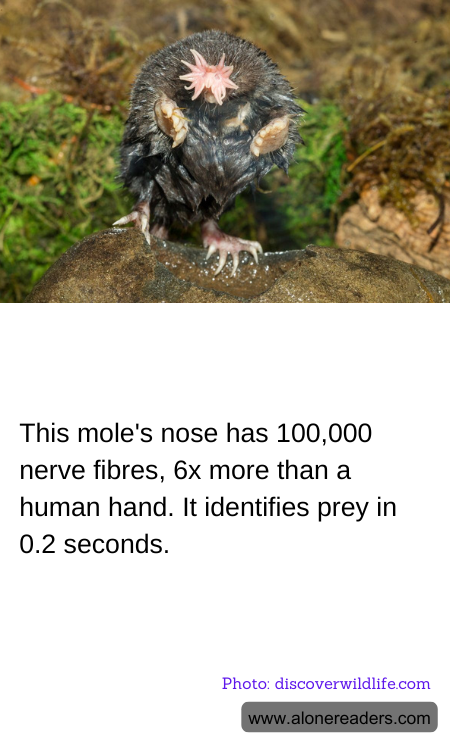
In the hidden world beneath our feet, a remarkable creature thrives, equipped with one of nature's most extraordinary sensory tools. The star-nosed mole, a small mammal native to the wetlands of North America, possesses a nose that is not only unique in appearance but also unparalleled in its sensory capabilities. This mole's nose is adorned with 22 fleshy appendages, forming a star-like shape that is as functional as it is distinctive. What sets this nose apart is its incredible concentration of nerve fibers—approximately 100,000 of them, which is six times more than those found in a human hand.
This dense network of nerve fibers allows the star-nosed mole to perform feats of sensory perception that are almost unimaginable. Living in the dark, damp tunnels of its subterranean habitat, the mole relies on its nose to navigate and hunt with astonishing efficiency. The star-shaped appendages are covered with tiny sensory receptors known as Eimer's organs, which are highly sensitive to touch. These receptors enable the mole to detect the slightest vibrations and textures in its environment, allowing it to identify and capture prey with remarkable speed and precision.
One of the most fascinating aspects of the star-nosed mole's hunting prowess is its ability to identify and consume prey in a mere 0.2 seconds. This rapid response time is crucial for survival in the competitive and resource-scarce underground world. The mole's diet primarily consists of small invertebrates, such as insects and worms, which it locates and devours with lightning speed. The efficiency of its hunting technique is a testament to the evolutionary marvel of its sensory system.
The star-nosed mole's nose is not only a tool for survival but also a subject of scientific intrigue. Researchers have studied this remarkable organ to gain insights into sensory processing and neural function. The mole's ability to process sensory information so rapidly and accurately offers valuable lessons for understanding how the brain interprets complex stimuli. Moreover, the study of this mole's nose could inspire technological advancements in fields such as robotics and prosthetics, where the development of sensitive touch sensors is of great interest.
In the grand tapestry of nature, the star-nosed mole stands out as a testament to the wonders of evolution. Its extraordinary nose, with its unparalleled sensory capabilities, highlights the incredible diversity of life on Earth and the myriad ways in which organisms adapt to their environments. For those who venture into the wetlands where this mole resides, the opportunity to glimpse such a unique creature is a reminder of the hidden marvels that lie just beneath the surface, waiting to be discovered and appreciated.