More About This Card
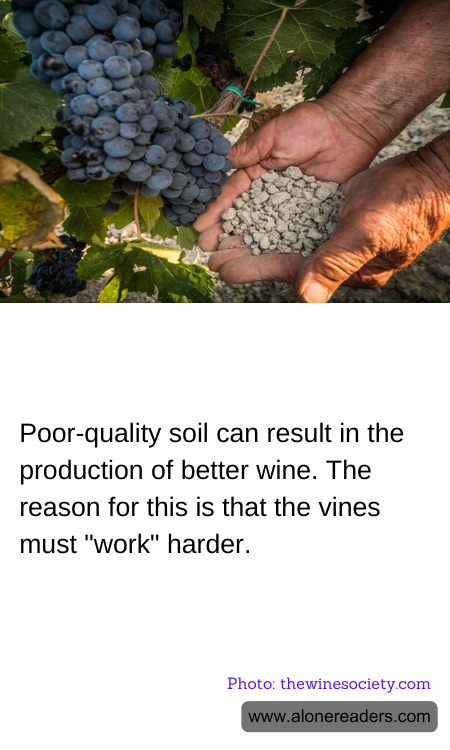
The notion that poor-quality soil can lead to the production of better wine might seem counterintuitive at first glance. However, this concept is deeply rooted in the art and science of viticulture, where the quality of wine is often linked to the challenges faced by the grapevines. The idea is that when vines are planted in less fertile soil, they are compelled to "work" harder to access the nutrients and water they need. This struggle can result in grapes that are more concentrated in flavor, ultimately leading to wines with greater complexity and character.
In fertile soils, vines have easy access to nutrients and water, which can lead to vigorous growth. While this might sound beneficial, it often results in an abundance of leaves and shoots, diverting energy away from the fruit. The grapes produced in such conditions can be diluted in flavor and lack the intensity desired for high-quality wine production. In contrast, when vines are planted in poor-quality soil, they must extend their roots deeper and wider in search of sustenance. This effort limits the vine's vegetative growth, allowing more energy to be directed towards the development of the fruit.
The stress experienced by vines in poor soil conditions can also lead to the production of smaller berries with thicker skins. These smaller grapes tend to have a higher skin-to-juice ratio, which is crucial for the extraction of tannins, color, and flavor compounds during the winemaking process. The result is a wine that is richer and more robust, with a depth of flavor that is often sought after by wine enthusiasts.
Moreover, poor-quality soils often have excellent drainage properties, which is beneficial for grapevines. Excess water can lead to overly vigorous growth and dilute the flavors of the grapes. Well-drained soils ensure that the vines receive just enough water to survive, further concentrating the flavors in the grapes. This is why some of the world's most renowned wine regions, such as Bordeaux and Burgundy, are characterized by their challenging soil conditions.
The relationship between soil quality and wine production is a testament to the resilience and adaptability of grapevines. It highlights the importance of terroir, the unique combination of soil, climate, and topography, in shaping the character of a wine. While modern agricultural practices can enhance soil fertility, many winemakers choose to embrace the natural challenges presented by poor-quality soils, recognizing that these conditions can lead to wines of exceptional quality.
In conclusion, the struggle of grapevines in poor-quality soil is a crucial factor in the production of superior wines. By working harder to survive, the vines produce grapes that are rich in flavor and complexity, resulting in wines that are celebrated for their depth and character. This paradoxical relationship underscores the intricate balance of nature and the art of winemaking, where adversity often leads to excellence.