More About This Card
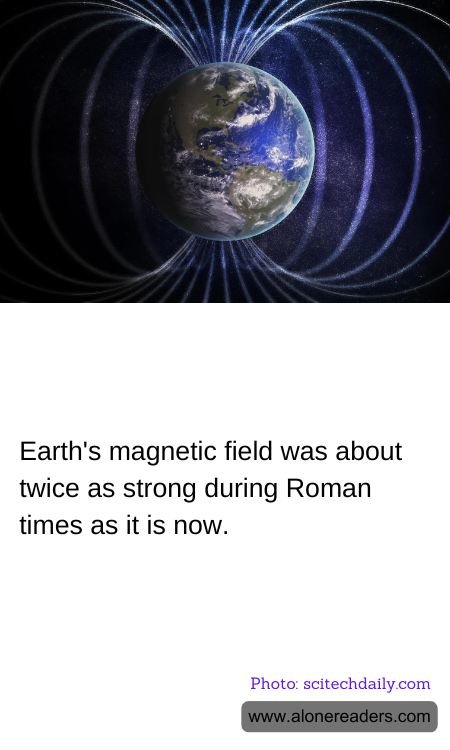
The Earth's magnetic field is a fascinating and complex force that has intrigued scientists and historians alike. Recent studies have revealed that during Roman times, the magnetic field was approximately twice as strong as it is today. This discovery has sparked interest in understanding how the magnetic field has changed over time and what implications these changes might have for our planet.
The Earth's magnetic field is generated by the movement of molten iron in its outer core, creating a magnetic dynamo effect. This field extends from the Earth's interior out into space, where it interacts with solar winds and cosmic radiation. It acts as a protective shield, deflecting harmful solar and cosmic rays that could otherwise strip away the atmosphere and harm living organisms. The strength and orientation of the magnetic field are not constant; they have fluctuated significantly throughout Earth's history.
During the Roman era, roughly 2,000 years ago, the magnetic field was notably stronger. This period coincides with what is known as the "Roman Warm Period," a time of relatively warm climate conditions in Europe and the North Atlantic. The stronger magnetic field during this time may have contributed to the stability of the climate, although the exact relationship between the magnetic field and climate is still a subject of ongoing research.
The reasons behind the fluctuations in the Earth's magnetic field strength are complex and not fully understood. However, scientists have been able to gather data from ancient artifacts, such as pottery and volcanic rocks, which contain magnetic minerals that recorded the Earth's magnetic field at the time they were formed. By studying these materials, researchers can reconstruct the history of the magnetic field and gain insights into its past behavior.
Understanding the changes in the Earth's magnetic field is crucial for several reasons. A stronger magnetic field in the past suggests that the field is currently weakening, which could have implications for our planet's future. A weaker magnetic field could lead to increased exposure to solar and cosmic radiation, potentially affecting satellite operations, power grids, and even the health of living organisms. Additionally, studying the magnetic field's history can help scientists predict future changes and prepare for any potential impacts.
The discovery that the Earth's magnetic field was stronger during Roman times provides a valuable piece of the puzzle in understanding our planet's magnetic history. It highlights the dynamic nature of the Earth's core processes and the importance of continued research in this field. As scientists delve deeper into the mysteries of the Earth's magnetic field, they hope to uncover more about how it has shaped our planet's past and how it will influence our future.