More About This Card
In the vast, frozen expanses of the Arctic and Siberian tundra, the relentless grip of permafrost has held onto secrets from a bygone era. Among these secrets are the remarkably preserved remains of Ice Age animals, offering a unique glimpse into a world that existed tens of thousands of years ago. These discoveries have captivated scientists and the public alike, as they reveal not just bones, but entire creatures with their soft tissues, wool, and even organs intact.
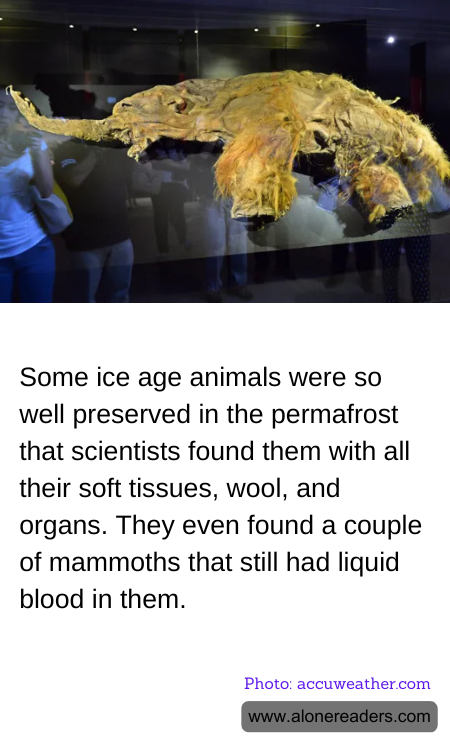
The preservation of these ancient animals is a testament to the power of permafrost, a layer of soil that remains frozen year-round. This natural freezer has kept some specimens in such pristine condition that researchers have been able to study them in unprecedented detail. Among the most astonishing finds are woolly mammoths, the iconic giants of the Ice Age. In some cases, these mammoths have been discovered with their wool still attached, providing invaluable insights into their biology and the environment they lived in.
One of the most remarkable aspects of these discoveries is the presence of liquid blood in some specimens. In 2013, scientists made headlines when they found a female mammoth on a remote Siberian island with blood that was still in a liquid state. This extraordinary find has sparked discussions about the possibilities of de-extinction, as researchers explore the potential of using such well-preserved genetic material to bring extinct species back to life. While the ethical and practical implications of such endeavors are still being debated, the discovery itself underscores the incredible preservation capabilities of permafrost.
These finds are not just limited to mammoths. Other Ice Age creatures, such as woolly rhinoceroses, bison, and even prehistoric wolves, have been unearthed, each offering a unique window into the past. The preservation of soft tissues and organs allows scientists to conduct detailed analyses, from studying the animals' diets to understanding their health and the diseases they may have carried. This information helps paint a more comprehensive picture of the Ice Age ecosystem and the challenges these animals faced.
The study of these ancient remains also provides valuable insights into climate change. By examining the conditions that led to the preservation of these animals, scientists can better understand the historical climate patterns and how they compare to today's rapidly changing environment. This knowledge is crucial as we seek to predict and mitigate the impacts of current and future climate shifts.
In conclusion, the discovery of well-preserved Ice Age animals in the permafrost is a remarkable scientific achievement that continues to fascinate and inform. These ancient creatures, frozen in time, offer a rare opportunity to explore the distant past and draw connections to the present. As research continues, these finds will undoubtedly yield more surprises and deepen our understanding of the natural world and its history.