More About This Card
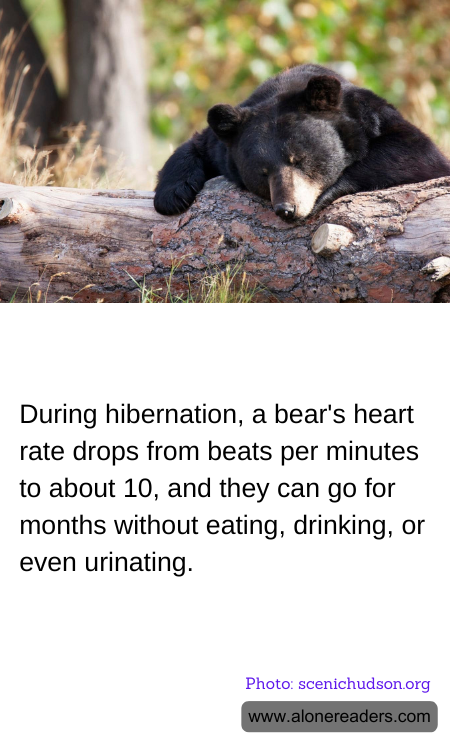
As the chill of winter descends upon the forests and mountains, bears retreat into their secluded dens to begin one of nature's most remarkable survival strategies: hibernation. This period of dormancy allows bears to endure the harsh, food-scarce months by significantly reducing their metabolic rate. One of the most fascinating aspects of bear hibernation is the dramatic decrease in their heart rate. Typically, a bear's heart beats at a rate of 40 to 50 times per minute. However, during hibernation, this rate plummets to about 10 beats per minute, conserving energy and allowing the bear to survive without sustenance for months.
The physiological changes that occur in a bear's body during hibernation are nothing short of extraordinary. As the heart rate slows, the bear's body temperature drops slightly, although not as drastically as in smaller hibernating animals. This mild reduction in temperature helps conserve energy while still allowing the bear to remain somewhat alert to potential dangers. The bear's breathing also becomes shallow and infrequent, further reducing energy expenditure.
Perhaps even more astonishing is the bear's ability to go without eating, drinking, or even urinating for the entire duration of hibernation, which can last up to seven months. Before entering hibernation, bears consume large amounts of food to build up fat reserves that will sustain them through the winter. During hibernation, their bodies enter a state of ketosis, where fat is broken down to provide energy. This process also produces water as a byproduct, which helps keep the bear hydrated.
The bear's kidneys play a crucial role in managing waste during this period. Instead of excreting waste products, the bear's body recycles them. Urea, a waste product typically excreted in urine, is broken down and converted into proteins that are then used by the bear's body. This remarkable adaptation not only prevents the build-up of toxic substances but also helps maintain muscle mass and overall health.
Hibernation is a testament to the incredible adaptability of bears and their ability to thrive in diverse environments. It is a complex and finely tuned process that ensures their survival during the most challenging time of the year. As spring approaches and temperatures rise, bears gradually awaken from their slumber, emerging from their dens to once again roam the forests and mountains in search of food. This natural cycle of hibernation and awakening is a powerful reminder of the resilience and ingenuity of wildlife, inspiring awe and respect for the wonders of the natural world.