More About This Card
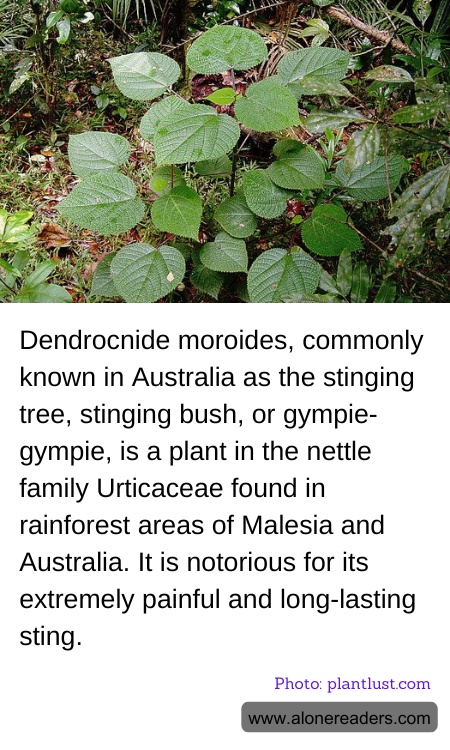
Dendrocnide moroides, more commonly known as the stinging tree, stinging bush, or gympie-gympie, is a plant that commands both awe and caution. Found in the lush rainforest areas of Malesia and Australia, this member of the nettle family Urticaceae is notorious for its ability to inflict a sting that is both intensely painful and remarkably long-lasting. Despite its innocuous appearance, the gympie-gympie is a plant that demands respect and careful avoidance.
The stinging tree is a perennial plant that can grow up to 10 feet tall, with large, heart-shaped leaves that are covered in fine, silica-tipped hairs. These hairs are the source of the plant's infamous sting. When touched, they inject a potent neurotoxin into the skin, causing immediate and excruciating pain. The sensation has been described as a combination of acid burn and electric shock, and it can persist for days, weeks, or even months. In some cases, the pain can be so severe that it has driven people to despair.
The mechanism behind the sting is both fascinating and fearsome. The tiny hairs act like hypodermic needles, delivering the toxin directly into the skin. This toxin contains a complex mix of compounds, including moroidin, which is responsible for the prolonged pain. The hairs can remain embedded in the skin, continuing to release toxins over time, which explains the long-lasting nature of the sting. Even dried leaves or fallen debris can pose a threat, as the hairs remain active for years.
Despite its fearsome reputation, the gympie-gympie plays an important role in its ecosystem. It provides habitat and food for a variety of rainforest species. Some animals, like the native red-legged pademelon, have developed a tolerance to the plant's sting and can consume its leaves without harm. This relationship highlights the complex interactions within rainforest ecosystems and the delicate balance that sustains them.
For humans, however, the best approach is to admire the stinging tree from a safe distance. Those who venture into areas where the plant is common are advised to wear protective clothing and be vigilant. If contact does occur, immediate treatment involves removing the hairs with adhesive tape and applying a topical pain reliever. In severe cases, medical attention may be necessary.
In conclusion, Dendrocnide moroides is a remarkable example of nature's power and complexity. While its sting is a formidable defense mechanism, it also serves as a reminder of the intricate and sometimes perilous beauty of the natural world. For those who respect its boundaries, the gympie-gympie offers a glimpse into the rich biodiversity of Australia's rainforests, a testament to the resilience and adaptability of life in all its forms.