More About This Card
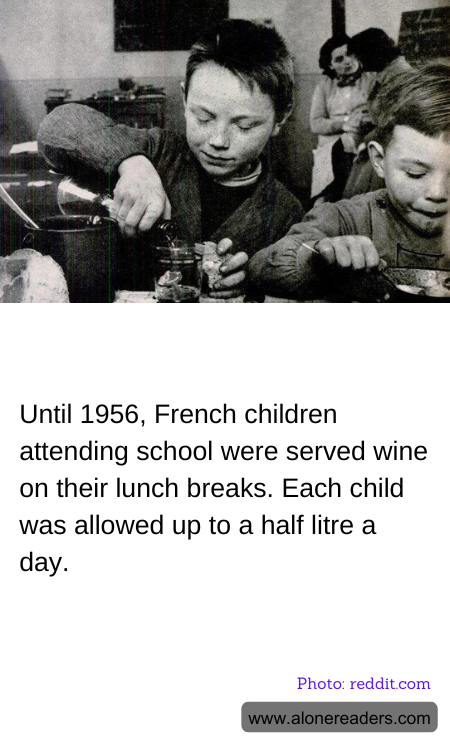
In a world where school lunches are often the subject of debate, it might come as a surprise to learn that until 1956, French children were served wine during their midday meals. This practice, which seems astonishing by today’s standards, was a reflection of cultural norms and the historical context of the time. Each child was allowed up to a half litre of wine a day, a tradition that was deeply rooted in French society.
The inclusion of wine in school lunches was not merely a whimsical choice but rather a reflection of the integral role wine played in French culture. Wine was considered a staple, much like bread or cheese, and was consumed by people of all ages. It was believed to have health benefits, and in a time when clean drinking water was not always readily available, wine was often seen as a safer alternative. The practice of serving wine to children was also influenced by the belief that it would help them develop a taste for it, thus continuing the tradition of wine appreciation into adulthood.
However, as the world moved into the mid-20th century, attitudes towards alcohol consumption began to change. The post-war era brought about a greater awareness of health and nutrition, and the potential negative effects of alcohol consumption became more widely recognized. This shift in perspective was part of a broader movement towards improving public health and child welfare. By 1956, the French government decided to ban the serving of wine in schools, aligning with a growing understanding of the importance of promoting healthy habits from a young age.
The decision to remove wine from school lunches marked a significant cultural shift. It was a move towards modernizing the education system and aligning it with contemporary health standards. This change was part of a larger trend across Europe and the world, where the focus was increasingly on providing children with nutritious meals that supported their growth and development.
Today, the idea of serving wine to schoolchildren seems almost unimaginable, yet it serves as a fascinating glimpse into the past. It highlights how cultural practices evolve and adapt over time, influenced by changing societal values and scientific understanding. While the tradition of serving wine in schools has long since ended, it remains a curious chapter in the history of French education, reminding us of the ever-evolving relationship between culture, health, and education.