More About This Card
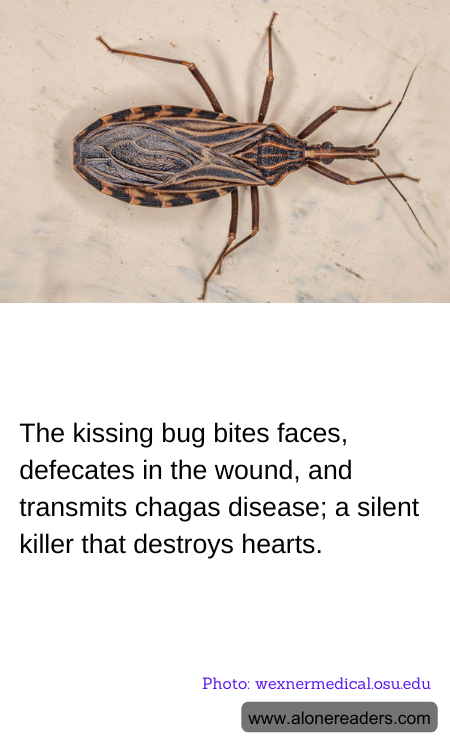
The kissing bug, a seemingly innocuous name for an insect with such a sinister role, is a vector for Chagas disease, a silent killer that primarily affects the heart. This nocturnal insect, scientifically known as Triatominae, is found predominantly in the Americas, from the southern United States to Argentina. It earns its nickname from its tendency to bite humans around the mouth and eyes while they sleep. However, the real danger lies not in the bite itself but in what follows.
After feeding on blood, the kissing bug defecates near the wound. The feces contain the parasite Trypanosoma cruzi, which is the causative agent of Chagas disease. When a person inadvertently rubs or scratches the bite, the parasite can enter the body through the wound or mucous membranes. This insidious mode of transmission allows the parasite to silently infiltrate the human body, often going unnoticed for years.
Chagas disease is a master of disguise, with symptoms that can remain dormant for decades. In its acute phase, which occurs shortly after infection, symptoms may be mild or nonspecific, such as fever, fatigue, body aches, and swelling at the site of the bite. As a result, many people do not seek medical attention, allowing the disease to progress to its chronic phase. It is during this stage that the true devastation occurs, as the parasite targets the heart and digestive system.
The chronic phase of Chagas disease can lead to serious cardiac complications, including heart failure, arrhythmias, and sudden cardiac arrest. The heart becomes enlarged and weakened, struggling to pump blood effectively. In some cases, the disease can also affect the esophagus and colon, leading to difficulties in swallowing and severe constipation. Unfortunately, by the time these symptoms manifest, significant and often irreversible damage has already been done.
Despite its severity, Chagas disease remains largely underdiagnosed and untreated, particularly in impoverished areas where healthcare access is limited. Raising awareness about the disease and its transmission is crucial in preventing new infections. Simple measures, such as improving housing conditions to reduce contact with the kissing bug and screening blood donations, can significantly reduce the risk of transmission.
For those already infected, early detection and treatment with antiparasitic medications can help manage the disease and prevent its progression. However, once the chronic phase is reached, treatment options are limited, and the focus shifts to managing symptoms and preventing further complications.
Chagas disease is a stark reminder of the hidden dangers that can lurk in our environment. By understanding the role of the kissing bug and the silent threat it poses, we can take steps to protect ourselves and work towards eradicating this silent killer. Through education, improved healthcare access, and continued research, we can hope to reduce the impact of Chagas disease and save countless lives from its devastating effects.