More About This Card
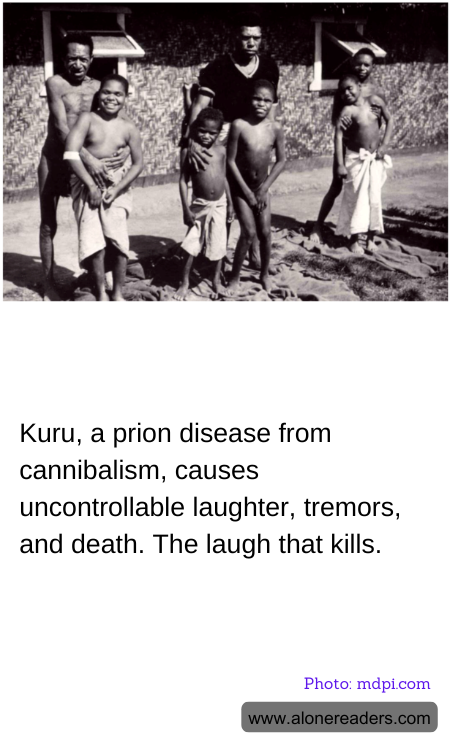
In the remote highlands of Papua New Guinea, a mysterious and deadly disease once plagued the Fore people, a tribe known for their unique cultural practices. This disease, known as Kuru, is a rare and fatal neurodegenerative disorder caused by prions, which are misfolded proteins that can induce abnormal folding of specific normal cellular proteins. Kuru is particularly infamous for its unusual symptom of uncontrollable laughter, earning it the chilling moniker "the laugh that kills."
Kuru was first documented in the 1950s when researchers noticed an alarming number of deaths among the Fore, predominantly affecting women and children. The disease's symptoms were both peculiar and devastating: initial signs included tremors, unsteady gait, and difficulty in coordinating movements. As the disease progressed, victims experienced muscle weakness, emotional instability, and bursts of uncontrollable laughter. Eventually, the afflicted would become unable to stand or eat, leading to death within months to a few years after the onset of symptoms.
The root cause of Kuru was traced back to the Fore's practice of ritualistic cannibalism. As part of their funerary rites, the Fore consumed the bodies of deceased relatives, believing it was a way to honor them and help their spirits live on. Unfortunately, this practice inadvertently facilitated the transmission of prions from infected individuals to those who partook in the ritual. Women and children were more frequently involved in these rites, which explained their higher incidence of the disease.
The discovery of Kuru and its link to cannibalism provided significant insights into prion diseases, a group of rare and fatal conditions that include Creutzfeldt-Jakob disease and bovine spongiform encephalopathy, commonly known as mad cow disease. Unlike bacteria or viruses, prions are not living organisms and cannot be destroyed by conventional sterilization methods. They are highly resistant to heat and chemicals, making them particularly challenging to manage.
Efforts to curb the spread of Kuru were successful once the practice of cannibalism was abandoned in the late 1950s. As a result, the incidence of the disease has dramatically declined, and new cases are now extremely rare. However, the legacy of Kuru remains a poignant reminder of the complex interplay between cultural practices and disease transmission.
Today, Kuru serves as a crucial case study in understanding prion diseases and the importance of cultural sensitivity in public health interventions. It highlights the need for a respectful approach when addressing health practices in diverse communities, ensuring that interventions are both effective and culturally appropriate. While the laughter associated with Kuru was once a harbinger of death, the lessons learned from this tragic chapter in medical history continue to inform and guide modern science and public health efforts.