More About This Card
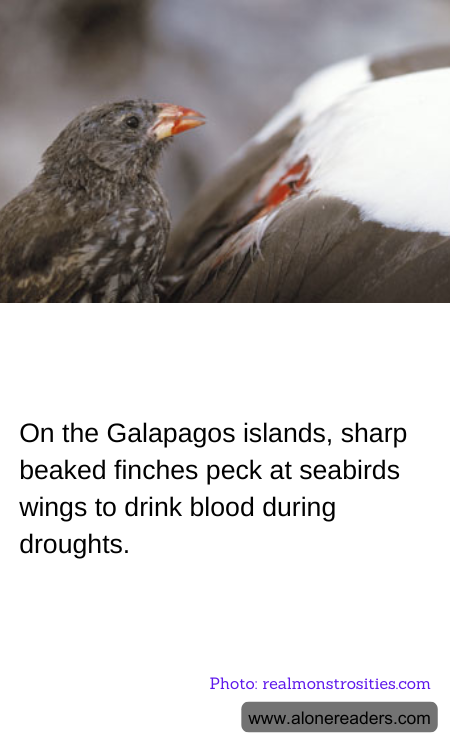
The Galapagos Islands, a remote archipelago in the Pacific Ocean, are renowned for their unique wildlife and the pivotal role they played in Charles Darwin's theory of evolution. Among the islands' fascinating inhabitants are the sharp-beaked ground finches, a species that has developed a rather unusual survival strategy. During times of drought, when food and water become scarce, these finches have been observed pecking at the wings of larger seabirds to drink their blood.
This behavior, while seemingly macabre, is a remarkable example of adaptation in response to environmental pressures. The sharp-beaked ground finches, also known as Geospiza difficilis, typically feed on seeds, insects, and nectar. However, during prolonged dry spells, these resources become limited, forcing the finches to seek alternative sources of sustenance. The blood of seabirds, such as boobies, provides a vital source of hydration and nutrients when other options are unavailable.
The finches' blood-drinking behavior is not as aggressive as it might initially appear. The finches approach their larger avian counterparts with caution, often waiting until the seabirds are resting or preening. They then use their sharp beaks to make small incisions in the wings of the seabirds, from which they can lap up the blood. Interestingly, the seabirds often tolerate this behavior, possibly because the finches' pecking helps to remove parasites from their feathers.
This unusual interaction highlights the complex and often surprising relationships that can develop between species in isolated ecosystems like the Galapagos. It also underscores the importance of adaptability in the face of environmental challenges. The sharp-beaked ground finches' ability to switch from a diet of seeds and insects to one that includes blood is a testament to the resilience and resourcefulness of life in the wild.
The phenomenon of blood-drinking finches also serves as a reminder of the delicate balance that exists within ecosystems. Changes in climate and weather patterns can have profound effects on the availability of resources, prompting species to adapt in unexpected ways. As the world continues to grapple with the impacts of climate change, understanding these adaptive behaviors becomes increasingly important.
In conclusion, the sharp-beaked ground finches of the Galapagos Islands offer a fascinating glimpse into the complexities of nature and the incredible ways in which species can adapt to survive. Their blood-drinking behavior, while unusual, is a testament to the ingenuity of life and the intricate web of interactions that sustain ecosystems. As we continue to study and learn from these remarkable birds, we gain valuable insights into the resilience of nature and the ongoing story of evolution.