More About This Card
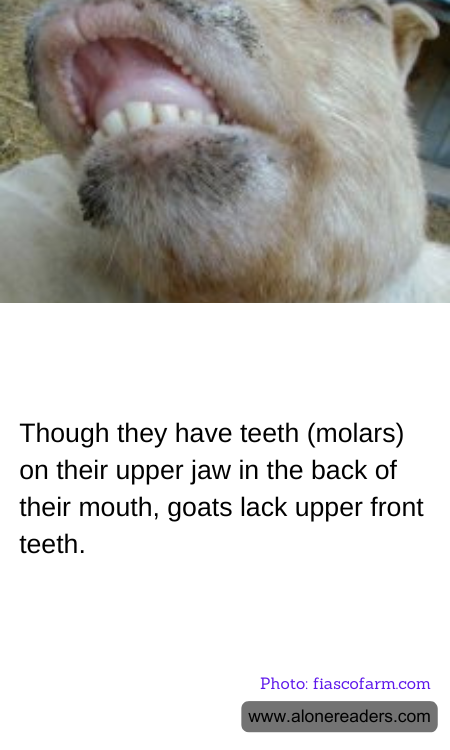
Goats are fascinating creatures that have intrigued humans for centuries, not only for their playful demeanor and adaptability but also for their unique anatomical features. One of the most interesting aspects of a goat's anatomy is its dental structure, which is quite different from what one might expect. While goats do have teeth, they lack upper front teeth, a characteristic that sets them apart from many other mammals.
Instead of upper front teeth, goats have a hard dental pad on the top of their mouths. This pad works in conjunction with their lower front teeth to help them grasp and tear vegetation. This adaptation is particularly useful for their grazing habits, as goats are natural browsers. They prefer to nibble on shrubs, leaves, and other fibrous plant materials, and their dental structure is perfectly suited for this type of diet. The absence of upper front teeth allows goats to effectively strip leaves from branches and pull up grasses with ease.
In the back of their mouths, goats do have upper molars, which are essential for grinding down the tough plant material they consume. These molars work together with the lower molars to break down food into smaller, more digestible pieces. This grinding process is crucial for their digestion, as it allows the goats to extract the maximum amount of nutrients from their food. The combination of a dental pad and molars makes goats highly efficient at processing a wide variety of vegetation, which is why they can thrive in diverse environments.
The unique dental structure of goats also plays a role in their social interactions and behaviors. For instance, when goats engage in playful head-butting or gentle nudging, the absence of upper front teeth reduces the risk of injury to themselves and others. This feature, combined with their curious and social nature, makes goats a favorite among farmers and pet owners alike.
Understanding the dental anatomy of goats not only provides insight into their dietary habits and ecological role but also highlights the incredible adaptability of these animals. Their ability to thrive in various environments, from rocky hillsides to lush pastures, is a testament to their evolutionary success. As we continue to learn more about goats and their unique characteristics, we gain a greater appreciation for these remarkable animals and the important role they play in ecosystems around the world.
In conclusion, the absence of upper front teeth in goats is a fascinating adaptation that underscores their efficiency as browsers and their ability to thrive in diverse habitats. This distinctive feature, combined with their molars, allows them to process a wide range of plant materials, ensuring their survival and success across the globe. Whether as livestock or beloved pets, goats continue to captivate us with their charm and resilience, reminding us of the wonders of nature's ingenuity.