More About This Card
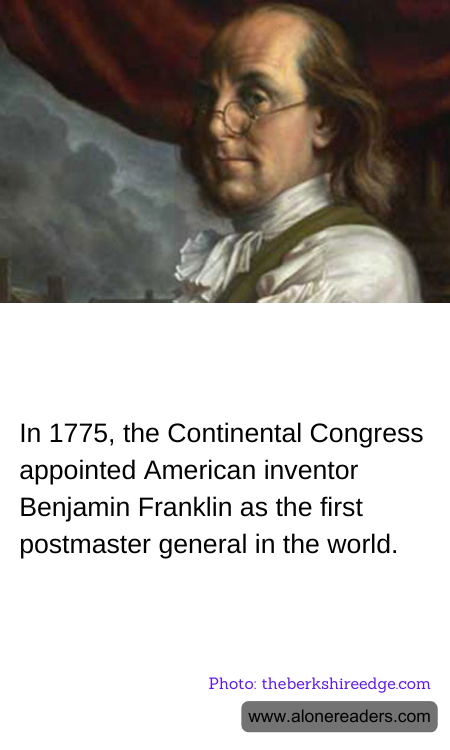
In the annals of American history, few figures stand as prominently as Benjamin Franklin, a polymath whose contributions spanned diplomacy, science, and civic organization. Among his many accomplishments, Franklin's appointment as the first Postmaster General by the Continental Congress in 1775 marks a significant milestone not only in American history but also in the development of postal services worldwide. This appointment underscored the importance of communication in the burgeoning nation and highlighted Franklin's enduring legacy as an innovator and leader.
Before his appointment, Franklin had already made significant strides in improving postal services in the American colonies. In 1753, he was appointed as the joint Postmaster General for the colonies alongside William Hunter. During his tenure, Franklin implemented numerous reforms that increased the efficiency and profitability of the postal system. He introduced standardized rates, improved delivery times, and established new routes, which greatly enhanced communication across the colonies. His efforts laid the groundwork for a more organized and reliable postal service, which was crucial for the colonies' economic and political cohesion.
When the Continental Congress convened in 1775, the need for a unified and efficient postal system became even more pressing. As tensions with Britain escalated, the colonies required a reliable means of communication to coordinate their efforts and disseminate information. Recognizing Franklin's expertise and previous successes, the Congress appointed him as the first Postmaster General of what would become the United States. This decision was not only a testament to Franklin's capabilities but also a strategic move to ensure that the fledgling nation had a robust communication network.
Franklin's tenure as Postmaster General was marked by continued innovation and expansion. He established a network of post roads that connected the colonies, facilitating the rapid exchange of information and ideas. This network played a crucial role during the American Revolution, enabling the Continental Army to communicate effectively and coordinate their strategies. Moreover, Franklin's emphasis on efficiency and service set a standard for postal operations that would influence future developments in the field.
Beyond his practical contributions, Franklin's appointment as Postmaster General symbolized the colonies' desire for independence and self-governance. By establishing their own postal system, the colonies asserted their autonomy and laid the foundation for a national infrastructure that would support their growth and development. Franklin's leadership in this endeavor demonstrated the power of innovation and foresight in shaping a nation's destiny.
In conclusion, Benjamin Franklin's appointment as the first Postmaster General in 1775 was a pivotal moment in both American and global history. His visionary leadership and commitment to improving communication systems not only supported the American Revolution but also set a precedent for postal services worldwide. Franklin's legacy as a pioneer in postal innovation continues to be felt today, reminding us of the enduring impact of his contributions to society.