More About This Card
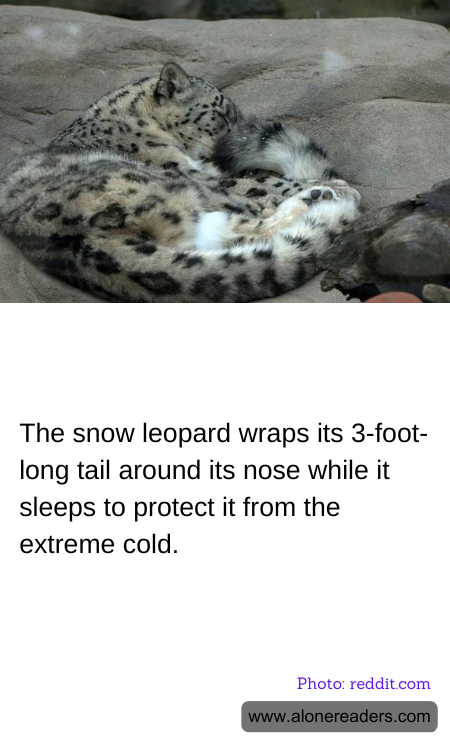
In the rugged and remote mountain ranges of Central and South Asia, a remarkable creature known as the snow leopard has adapted to survive in one of the harshest climates on Earth. Known for its elusive nature and striking beauty, the snow leopard has developed several unique adaptations to thrive in its cold, mountainous habitat. Among these adaptations is its extraordinary tail, which serves a crucial purpose beyond balance and communication. The snow leopard's tail, which can reach up to three feet in length, plays a vital role in protecting the animal from the extreme cold while it sleeps.
The snow leopard's habitat is characterized by steep, rocky terrain and frigid temperatures that can plummet well below freezing. In such an environment, conserving body heat is essential for survival. The snow leopard's thick, luxurious fur provides excellent insulation, but it is the tail that offers an ingenious solution to the problem of keeping warm during rest. When the snow leopard curls up to sleep, it wraps its long, bushy tail around its body, particularly covering its nose and face. This behavior is not merely a cozy habit; it is a critical survival strategy. By wrapping its tail around its nose, the snow leopard effectively creates a warm, insulated cocoon that helps to retain body heat and protect its sensitive nose from frostbite.
This adaptation is a testament to the snow leopard's evolutionary ingenuity. The tail's dense fur and substantial length make it an ideal tool for shielding against the biting cold winds that sweep across the high-altitude landscapes. Moreover, the tail's flexibility allows the snow leopard to adjust its position easily, ensuring maximum comfort and warmth regardless of the sleeping surface. This behavior is a perfect example of how animals can evolve specialized traits to cope with the challenges of their environment.
Beyond its practical function, the snow leopard's tail is also a symbol of the animal's grace and agility. When awake, the snow leopard uses its tail for balance as it navigates the treacherous cliffs and ledges of its mountainous home. The tail acts as a counterbalance, enabling the snow leopard to make precise and powerful leaps across rocky terrain. This dual-purpose adaptation highlights the snow leopard's status as a master of its environment, perfectly equipped to survive and thrive in the wild.
The snow leopard's tail is more than just a physical feature; it is a vital component of the animal's survival strategy. By wrapping its tail around its nose while sleeping, the snow leopard demonstrates a remarkable ability to adapt to its environment, ensuring its survival in some of the most inhospitable regions on the planet. This behavior not only underscores the snow leopard's resilience but also serves as a reminder of the intricate and fascinating ways in which nature equips its creatures to endure and flourish. As we continue to learn about and protect these magnificent animals, we gain a deeper appreciation for the delicate balance of life in the wild.